
Airbnb’s Reserve Now, Pay Later feature lets eligible guests book a vacation rental with nothing due at checkout, then pay the full amount closer to check-in. For guests, that removes a real barrier to booking. For hosts, it can reduce one of the clearest signs that a guest is financially committed to the reservation: money paid upfront.
Reserve Now, Pay Later lets eligible guests hold a booking with $0 due upfront and pay the full amount closer to check-in. Hosts worry because a guest can occupy calendar dates without making an initial payment, cancel within the applicable free-cancellation period, or fail to complete payment before the reservation is canceled.
Key Facts About Airbnb Reserve Now, Pay Later
- $0 is due at booking. The eligible balance is charged later as a single payment rather than in installments.
- The payment date depends on the cancellation policy. For eligible Flexible and Moderate reservations, the scheduled charge is tied to the applicable cancellation window.
- Failed payments can lead to cancellation. Airbnb gives guests time to complete a failed payment before canceling the reservation.
- Not every reservation qualifies. Eligibility depends on factors including how far away check-in is, the length of the stay, the remaining balance, and the listing’s cancellation policy.
How Reserve Now, Pay Later Works for Hosts
Reserve Now, Pay Later is available for eligible reservations on listings with Flexible or Moderate cancellation policies.
The guest’s payment is scheduled close to the point when the applicable free-cancellation period ends. Airbnb’s cancellation policy documentation explains how Flexible and Moderate cancellation windows work.
The option also does not apply to every booking. According to Airbnb’s Help Center, eligibility depends on factors including how far in advance the reservation is made, the length of the stay, and the remaining balance.
Reserve Now, Pay Later is not an installment plan. An eligible guest pays nothing when making the reservation, then pays the eligible amount on the scheduled date shown during checkout.
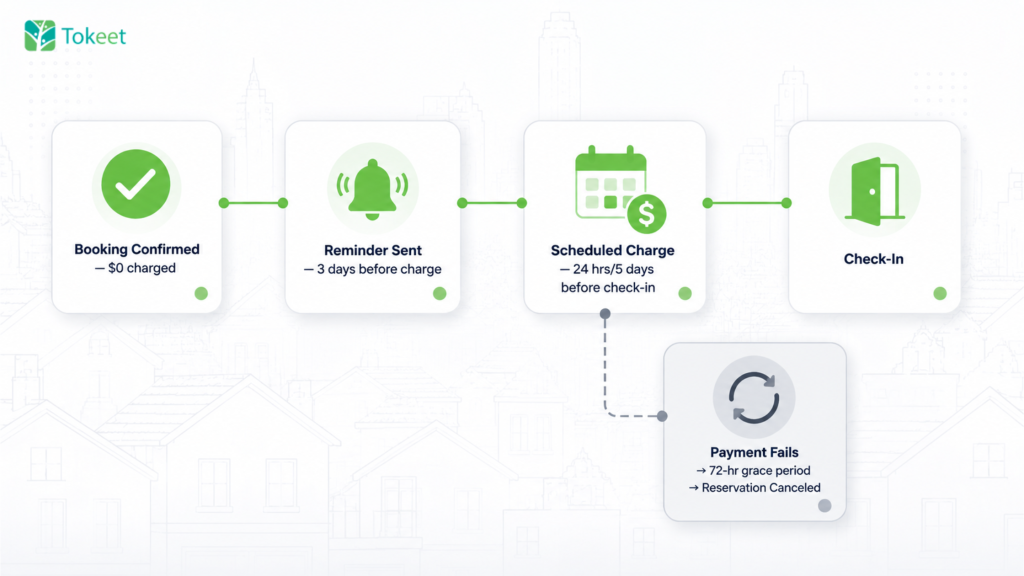
For hosts, the underlying cancellation policy still governs what happens when a guest cancels. What changes is the timing of the guest’s financial commitment. A reservation can occupy the calendar even though the guest has not yet paid the scheduled amount.
That difference explains much of the concern among hosts.
Why Airbnb Hosts Worry About Pay Later Bookings
Hosts concerned about Reserve Now, Pay Later are dealing with another variable alongside the existing challenges of Airbnb hosting.
Three scenarios are especially important.
1. Last-Minute Cancellations Can Leave Hard-to-Fill Gaps
A guest may make a reservation months in advance without paying anything upfront. If their plans change before the scheduled payment date, they may still be able to cancel within the applicable free-cancellation window.
For the host, the problem is not simply that the reservation disappeared. It is when the calendar becomes available again.
A date that was blocked for weeks or months can suddenly reopen close to check-in. That gives the host less time to attract another guest, and there is no guarantee that last-minute demand will replace the canceled reservation.
The operational risk is therefore straightforward:
Long-held reservation → late cancellation → newly opened calendar dates → shorter rebooking window
The shorter that window becomes, the fewer options the host has to recover the dates.
2. Guests Can Hold Dates Without Paying Upfront
Another concern is calendar blocking without the same financial commitment that comes with an upfront payment.
A guest considering several properties could potentially reserve an eligible listing while continuing to finalize their plans, then cancel within the applicable cancellation window if they decide not to proceed.
Hosts sometimes describe more deliberate versions of this behavior as “reservation squatting.” Claims that guests or competitors systematically use Reserve Now, Pay Later to block multiple properties should be treated cautiously unless supported by evidence.
The underlying operational concern, however, is real: an unpaid reservation can still remove dates from the host’s available inventory while it remains active.
For operators distributing the same property across multiple booking channels, accurate availability management becomes even more important. The same calendar-management practices used to prevent double bookings can help operators keep availability accurate when reservations change.
3. Failed Payments Can End in Cancellation
Another concern is what happens when the scheduled payment fails.
According to Airbnb’s Help Center, Airbnb notifies the guest when it cannot collect a scheduled payment and gives the guest time to complete it. If the payment remains unresolved, the reservation can be canceled.
For a host, that creates an additional period of uncertainty. The reservation can remain on the calendar while the payment issue is unresolved, even though the stay may ultimately be canceled.
That creates a simple operational problem:
The dates remain unavailable while the reservation is active, but the host does not yet know whether the booking will survive the payment issue.
For a host managing one property, that may be an occasional disruption. For a property manager overseeing many listings, there are more reservations, payment dates, calendar changes, and guest communications to monitor at the same time.
What Hosts Can Do About Reserve Now, Pay Later
Hosts cannot eliminate every risk associated with a platform payment policy, but they can reduce the chance of being surprised by a late change.
Review Your Cancellation Policy
Because Reserve Now, Pay Later eligibility is connected to Airbnb’s eligible cancellation policies, hosts should review whether their current policy still matches their booking strategy.
A more restrictive cancellation policy may change eligibility for the feature, but that decision involves a trade-off. Greater protection against late cancellations can also mean less flexibility for prospective guests.
Hosts should therefore evaluate the cancellation policy as a business decision rather than changing it solely to avoid Pay Later reservations.
Track Important Reservation Dates
Do not treat the booking date and check-in date as the only dates that matter.
When a reservation has a future payment event, that date can become another useful operational checkpoint. Knowing when important reservation events are approaching gives the host or property manager more time to monitor the booking and respond if its status changes.
For operators managing many reservations, this is especially important because manually remembering every relevant date becomes harder as the portfolio grows.
Communicate Proactively With Guests
A short, friendly check-in before an important reservation milestone can give hosts an earlier indication of whether the guest’s plans are still on track.
The goal is not to pressure the guest into paying. It is to maintain communication and reduce the chance that an inactive reservation goes unnoticed until something changes.
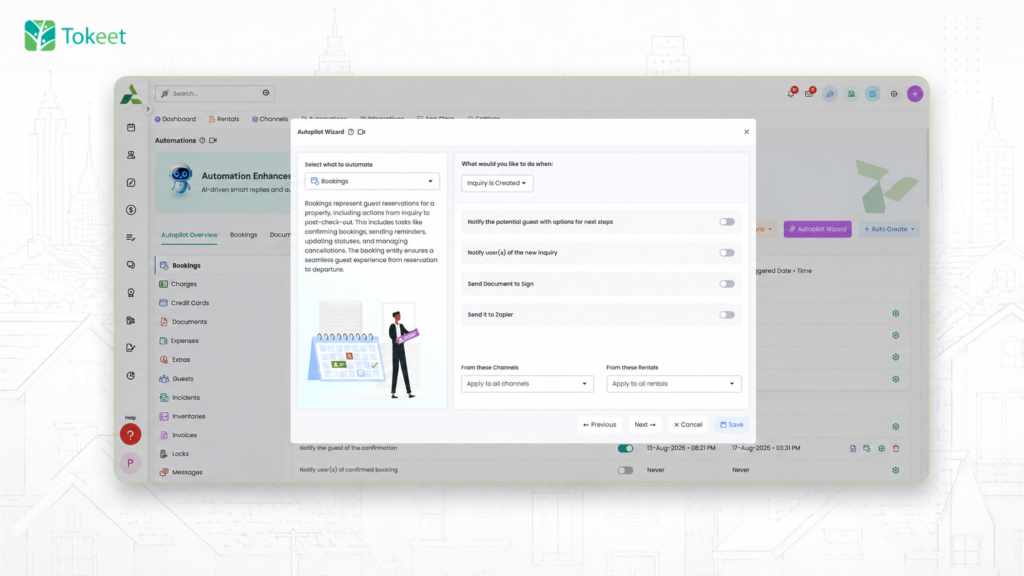
For larger portfolios, repetitive communication is also where automation may become useful.
AdvanceCM Autopilot would be a relevant product connection because the problem involves repetitive reservation monitoring and communication.
The Bottom Line
Airbnb Reserve Now, Pay Later makes eligible reservations easier to secure without an upfront payment, but that flexibility can create additional uncertainty for hosts.
The main issue is not simply whether a guest has paid. It is the effect an unpaid reservation can have on calendar availability when the guest later cancels or does not complete payment.
Hosts cannot control every guest decision, but they can pay closer attention to reservation milestones, keep calendars accurate, and communicate before important dates rather than waiting until a reservation changes unexpectedly.
See how AdvanceCM Autopilot can support automated guest workflows.
FAQs
- Can Airbnb hosts opt out of Reserve Now, Pay Later?
Reserve Now, Pay Later is tied to eligible reservations and cancellation policies rather than being a simple host-controlled payment toggle. Hosts considering a cancellation-policy change should check Airbnb’s current policy documentation before making the change solely for this reason. - What happens if a guest’s scheduled payment fails?
According to Airbnb’s Help Center, Airbnb notifies the guest when it cannot collect a scheduled payment and provides an opportunity to complete the payment. If the payment remains unresolved, the reservation can be canceled. - Does Reserve Now, Pay Later change a host’s cancellation policy?
No. Reserve Now, Pay Later changes when an eligible guest pays; it does not replace the listing’s underlying cancellation policy. Airbnb’s cancellation policy documentation should be used to confirm the terms that apply to a particular reservation. - How can hosts reduce the risk of late booking changes?
Hosts can monitor important reservation dates, maintain proactive guest communication, and keep availability synchronized across booking channels. These steps cannot prevent every cancellation, but they can reduce operational surprises when a reservation changes. - Does Reserve Now, Pay Later apply to every Airbnb booking?
No. Airbnb applies eligibility requirements to Reserve Now, Pay Later reservations. Hosts and guests should check Airbnb’s current Help Center guidance because platform eligibility rules can change. - Is “Airbnb Pay Later” the same as Reserve Now, Pay Later?
“Airbnb Pay Later” is commonly used as shorthand for Airbnb’s Reserve Now, Pay Later option. It should not be confused with a generic third-party buy-now-pay-later or installment service.

Welcome to Tokeet’s Podcast — your trusted source for insights, trends, and strategies shaping the vacation rental industry. Each episode features expert interviews, data-driven analysis, and practical tips to help property managers grow their businesses, improve guest experiences, and stay ahead in a rapidly evolving market. Whether you’re new to short-term rentals or managing a large portfolio, tune in to stay informed and inspired.
Some days just don’t work for a guest arrival, whether it’s a holiday, a maintenance window, or a turnover day your team can’t cover. This episode walks through check-in and check-out restrictions, the most requested feature in AdvanceCM, now live in the Rentals module. You’ll hear how to block arrivals or departures for a date range, such as December 24 to 26, and how to allow check-ins only on the weekdays you choose. We also cover channel-specific rules, like keeping Airbnb to Friday and Saturday arrivals while direct bookings stay open through Sunday. Finally, we explain what to check before switching rules on, from existing reservations to sync time and visibility on booking sites.
Key Takeaways:
✅ Block check-ins or check-outs for any date range
✅ Limit arrivals to the weekdays you choose
✅ Set different rules for each booking channel
✅ Existing reservations stay unchanged
✅ More restrictions mean fewer guests can book, so review rules each season
Related Links:
Company: https://www.tokeet.com/Blogs: https://www.tokeet.com/blog/Blog: Check-in and Check-out Restrictions: How to Set Them in AdvanceCM 👉 https://blog.tokeet.com/check-in-and-check-out-restrictions/
This is a public episode. If you would like to discuss this with other subscribers or get access to bonus episodes, visit podcast.tokeet.com