
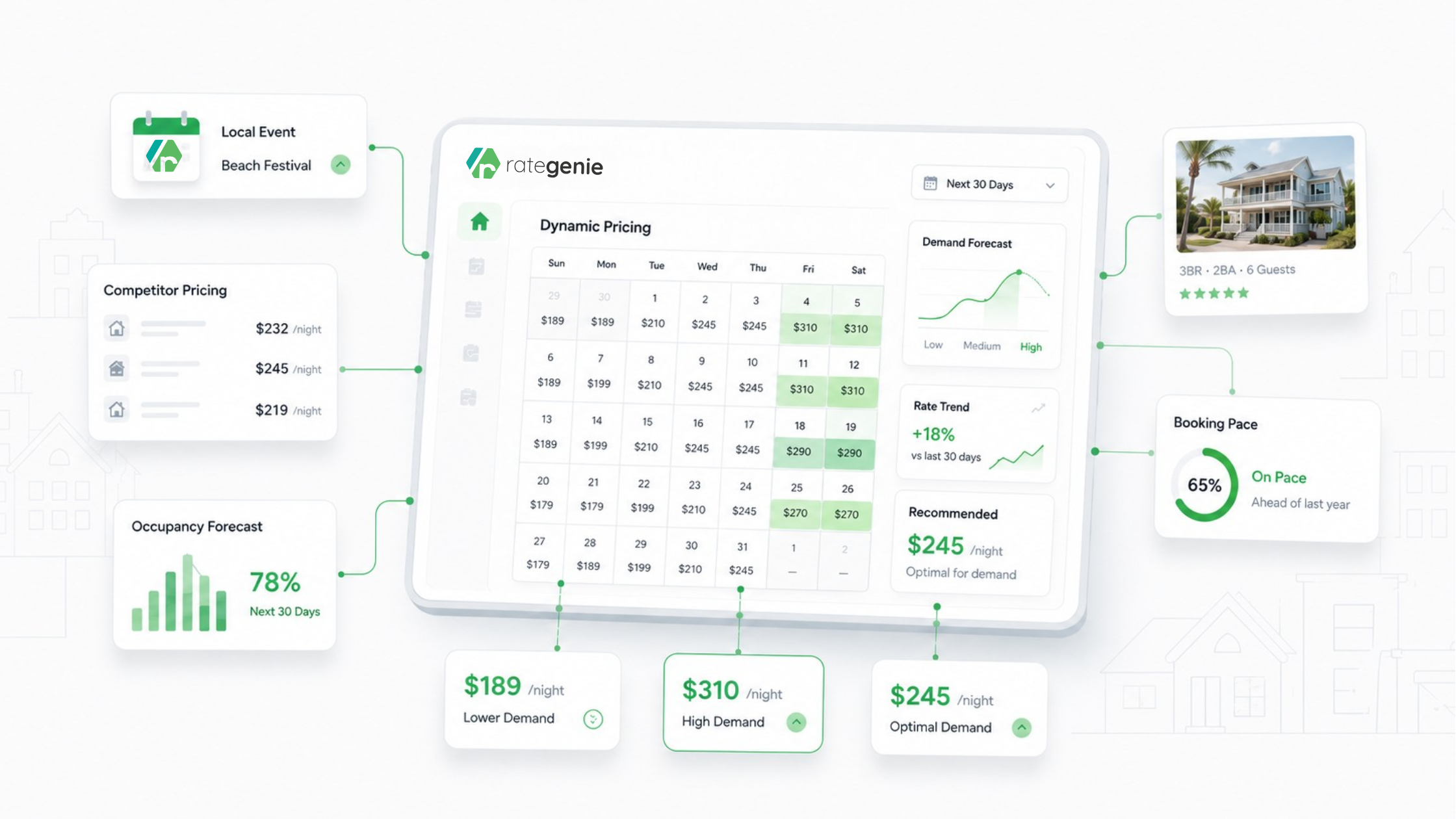
Dynamic pricing for vacation rentals helps property managers avoid one of the most common revenue mistakes: pricing every date like demand is predictable. A rate that works on a quiet weekday can be too low for an event weekend, too high for a slow-season gap, or wrong for a last-minute booking window.
The goal is not to raise prices every night. The goal is to use demand, booking pace, market context, and owner goals to decide when to raise, lower, or hold each rate.
Dynamic pricing for vacation rentals means changing nightly rates as demand changes. Instead of setting one seasonal price and leaving it untouched, property managers use market data, booking patterns, competitor behavior, and owner goals to decide when to raise, lower, or hold rates. The strongest approach combines automation with human oversight.
Quick Pricing Leak Check
Your vacation rental pricing may need a review if:
- Peak weekends book too quickly.
- Slow-season dates sit open until the last minute.
- Owners ask why similar properties appear to be earning more.
- You manually update rates on one channel but not another.
- You discount late gaps without checking booking pace or stay rules.
If two or more of these are true, the issue may not be demanded. It may be the way rates are being adjusted.
Why Pricing Is More Than a Revenue Decision
Pricing affects more than the amount collected per night. It shapes the guest mix, booking lead time, cleaning schedules, owner expectations, and how often your team has to explain performance.
When rates are too low, you may fill the calendar but create more turnover pressure. When rates are too high, occupancy can stall and owners may question whether the property is being managed well. The right price sits between those risks.
Airbnb’s Smart Pricing guidance reflects the same principle: pricing can adjust automatically, while hosts can still set custom pricing or override Smart Pricing for selected dates.
Static Pricing Creates Three Common Problems
A fixed price may feel stable, but it often hides missed opportunities.
First, high-demand nights can be underpriced. If a concert, festival, holiday, conference, or school break pushes demand up, a flat rate may sell too early and too cheaply.
Second, slow periods can stay overpriced. A rate that looked reasonable months ago may block bookings when demand softens.
Third, owner conversations become reactive. Instead of explaining pricing logic before performance shifts, managers end up defending results after the calendar already shows gaps.
For a deeper look at event-week pricing issues, read our guide on vacation rental dynamic pricing mistakes during events.
Static Pricing vs Dynamic Pricing
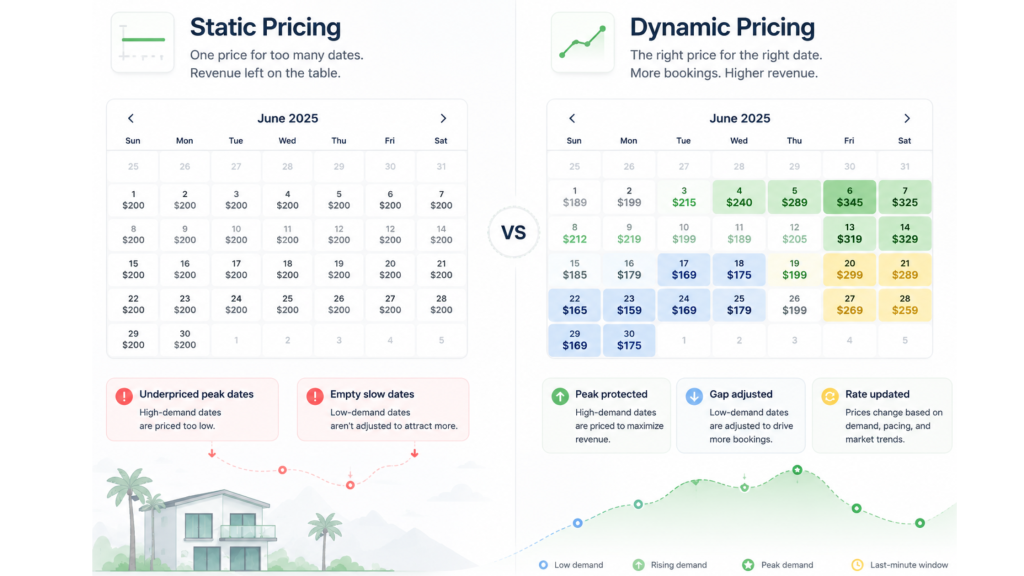
Static pricing treats too many dates the same. Dynamic pricing adjusts rates based on demand, timing, and booking context.
The practical benefit is not “set it and forget it.” The benefit is a pricing process that gives managers better signals before a date becomes a problem.
The Real Secret: Dynamic Pricing Still Needs Strategy
Dynamic pricing for vacation rentals works best when it is tied to a clear strategy. Automation can process more data than a person can review manually, but it still needs boundaries.
A good pricing strategy answers questions like:
- What is the minimum acceptable rate for this property?
- Which dates should be protected because demand is likely to rise?
- When should last-minute discounts apply?
- Do owners prefer fewer turnovers or maximum occupancy?
- Should longer stays receive different pricing treatment?
Booking.com’s rate plan guidance also shows that pricing is not only about the base nightly rate. A rate plan can group price, policies, and extras into bookable options for guests.
How Dynamic Pricing Works in Rental Management
Dynamic pricing usually combines several inputs:
Demand signals: how many travelers are searching or booking for specific dates.
Seasonality: predictable peaks and slow periods.
Local events: demand spikes caused by festivals, conferences, sports, or holidays.
Booking pace: whether a listing is booking faster or slower than expected.
Competitor rates: how similar listings are priced and whether those listings are actually booked.
Calendar gaps: short openings between reservations that may need different pricing.
Owner preferences: revenue goals, turnover tolerance, and stay-length preferences.
This is where RateGenie dynamic pricing fits into the workflow. Instead of manually rebuilding rates across every property and channel, property managers can use RateGenie to apply pricing rules, review demand signals, and keep rate changes connected to the broader booking strategy. RateGenie’s product page says its pricing can change when strategy conditions and variables change, and that it can update rates across channels after pricing changes.
Use RateGenie to turn pricing rules into a repeatable rate workflow instead of checking every calendar manually.
A Step-by-Step Dynamic Pricing Workflow
1. Set your base rate
Start with a realistic base rate for each property. This should reflect the listing’s quality, location, amenities, guest capacity, season, and owner expectations.
The base rate is not the final answer. It is the anchor that helps your pricing rules move up or down with control.
2. Map your demand calendar
Identify holidays, local events, school breaks, conferences, and recurring high-demand weekends. Mark these dates before they arrive so you are not reacting after the market has already moved.
This is where static pricing usually fails. It treats unusual demand like normal demand.
3. Define minimum and maximum rate boundaries
Every property needs guardrails. A minimum rate protects the owner from discounting too far, while a maximum rate keeps pricing from becoming unrealistic.
These boundaries are especially important when using automation. They allow the system to move quickly without ignoring business judgment.
4. Watch the booking pace
A property that books too fast may be priced too low. A property that receives views but no bookings may need a price, photo, review, or fee review.
Pricing should not be judged alone. It works alongside listing quality, channel visibility, guest fees, cancellation terms, and availability.
5. Adjust by lead time
A family vacation home may book months in advance. A city apartment may receive more last-minute demand. The right pricing logic depends on how guests actually book that property type.
Early dates may need protection. Near-term gaps may need a more flexible rate.
6. Review owner goals before applying aggressive changes
Not every owner wants the same outcome. Some prefer longer stays and fewer turnovers. Others want stronger gross revenue even if that means more operational movement.
A property manager earns trust by explaining these trade-offs before changing strategy.
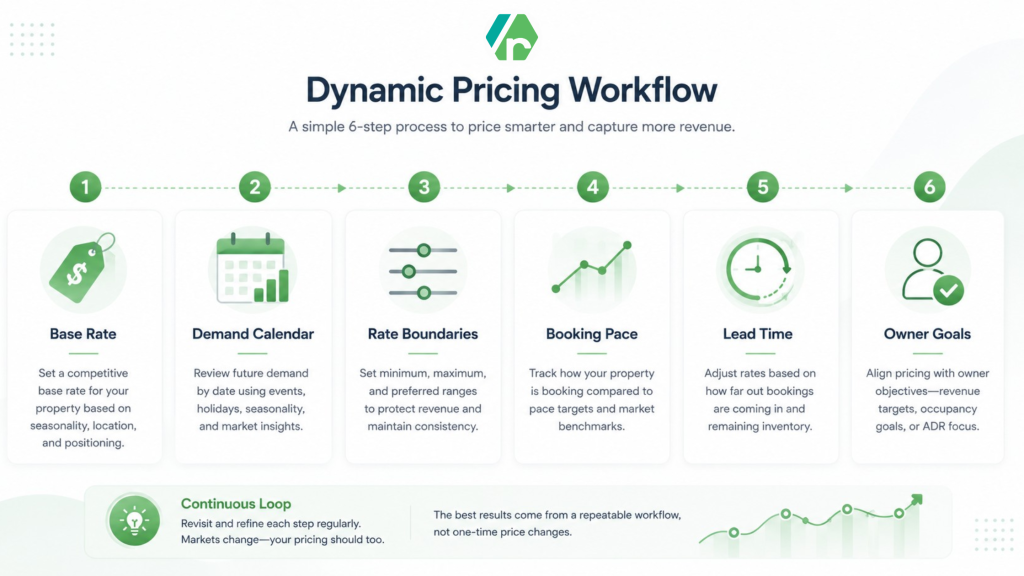
A strong pricing workflow combines market data, rate rules, booking pace, lead time, and owner goals.
Why Automation Helps, But Should Not Replace Oversight
Dynamic pricing tools are useful because they can check more signals than a person can manually review each day. But the manager still needs to decide what the pricing strategy is trying to accomplish.
For example, automation may identify a rate opportunity. The manager still needs to know whether the owner wants to accept more short stays, protect weekends, encourage longer bookings, or avoid discounts below a certain threshold. If your pricing updates depend on multiple booking platforms, this guide on vacation rental channel manager upgrades explains why channel consistency matters.
This is also why channel consistency matters. If pricing changes in one place but not another, the manager may create confusion or expose the business to outdated rates. For multi-channel operators, AdvanceCM Channel Manager is the relevant internal link because rate and availability consistency becomes part of the pricing workflow.
Pair pricing changes with channel sync checks so updated rates do not sit in one platform while another channel shows old pricing.
Dynamic Pricing Is Not Just About Higher Rates
A common mistake is treating dynamic pricing as a tool for raising rates. Sometimes the better move is holding the rate. Sometimes it is lowering the rate before a gap becomes expensive.
The purpose is to match the date to the demand.
A strong pricing decision may look like:
- Raising rates for a high-demand event weekend.
- Holding rates for a property that is booking at the expected pace.
- Reducing a short orphan gap between reservations.
- Adding a stay-length rule to reduce awkward turnover.
- Protecting premium dates from early low-price bookings.
For example, a three-bedroom beach rental may need different pricing logic for three different dates:
- A summer holiday weekend should be protected earlier because demand is likely to rise.
- A Tuesday-Wednesday gap between two bookings may need a more flexible rate.
- A weekend that is getting views but no bookings may need a review of price, photos, fees, or cancellation terms.
That is why dynamic pricing is not only about changing the number. It is about matching the rate to the booking context.
How to Balance Data With Owner Expectations
Owner trust is one of the most important parts of rental management. Dynamic pricing can improve that trust when managers explain the strategy clearly.
Instead of saying, “The system changed the rate,” explain the pricing decision:
“This weekend is pacing ahead of normal, so we are protecting the rate.”
“This midweek gap is close to arrival, so we are testing a lower rate to improve pickup.”
“This owner prefers fewer turnovers, so we are using longer-stay rules instead of chasing every short booking.”
That kind of explanation turns pricing from a mystery into a management process.
For operators using AI-assisted insights in broader portfolio decisions, AdvanceCM Advance Intelligence AI can support decision-making conversations without replacing manager judgment.
Pricing Only Works If the Listing Converts
Even the best rate will struggle if the listing does not convert. Pricing should be reviewed alongside photos, reviews, the headline, amenities, the fee display, the cancellation policy, and guest expectations.
A low nightly rate may win clicks, but hidden fees can hurt trust. A strong rate may still lose bookings if the photos do not justify the price. A discount may not fix a listing with weak reviews or unclear amenities.
If the listing is new or has weak conversion signals, this article on getting first bookings for a vacation rental with no reviews can help connect pricing with listing trust.
Dynamic pricing for vacation rentals works best when the full listing supports the price. The rate gets the guest to consider the property. The listing has to close the booking.
Review pricing and listing conversion together before assuming the nightly rate is the only problem.
Common Mistakes to Avoid
Setting automation without rules
Automation without guardrails can create rates that do not match owner goals. Always define minimums, maximums, stay rules, and review cadence.
Copying competitor prices blindly
A competitor’s high rate does not mean they are getting booked. Check whether the calendar is open or occupied before treating that rate as a signal.
Ignoring booking windows
Different property types book at different speeds. Pricing a beach house, downtown apartment, and remote cabin with the same lead-time logic can distort results.
Waiting too long to adjust
By the time a date is only a few days away, your options are narrower. Pricing reviews should happen before gaps become urgent.
Treating pricing as separate from operations
A discount may fill the calendar, but it can also create more cleaning turns, maintenance pressure, and guest communication. Revenue needs to be weighed against operational capacity.
Turn Pricing Rules Into a Repeatable Workflow
If your team is still checking calendars manually, dynamic pricing can quickly become another task instead of a strategy. RateGenie helps property managers apply pricing logic across listings so rates can respond to demand, booking pace, and market conditions with less manual work.
Explore RateGenie for vacation rental dynamic pricing.
Conclusion
Dynamic pricing for vacation rentals is not a trick or a one-click fix. It is a pricing discipline that helps property managers respond to demand, protect strong dates, fill weak gaps, and explain decisions to owners with more confidence.
The best results come from combining data, automation, and manager judgment. Use tools to surface pricing opportunities faster, but keep the strategy tied to each property, each owner, and each market.
FAQs
- What is dynamic pricing for vacation rentals?
Dynamic pricing for vacation rentals is the practice of adjusting nightly rates based on demand, seasonality, booking pace, local events, and market conditions. It replaces fixed pricing with a more flexible approach that can respond to each date on the calendar. - Is dynamic pricing only useful for large property managers?
No, dynamic pricing can help small hosts and larger managers because even one property has high-demand and low-demand dates. Smaller portfolios may start manually, while growing teams usually benefit from automation and clearer pricing rules. - Can dynamic pricing increase revenue?
Dynamic pricing can help improve revenue opportunities by protecting high-demand dates and responding to slow periods sooner. Exact results depend on the property, market, listing quality, channel mix, and how well the strategy is managed. - Should AI control vacation rental pricing completely?
No, AI or automation should support pricing decisions, not fully replace manager oversight. Owners may have different goals around stay length, turnover, discounting, and income stability that require human judgment. - How often should vacation rental rates be reviewed?
Rates should be reviewed regularly, especially around holidays, local events, booking gaps, and dates approaching arrival. Automated tools can monitor changes more frequently, but managers should still review strategy and guardrails.

Welcome to Tokeet’s Podcast — your trusted source for insights, trends, and strategies shaping the vacation rental industry. Each episode features expert interviews, data-driven analysis, and practical tips to help property managers grow their businesses, improve guest experiences, and stay ahead in a rapidly evolving market. Whether you’re new to short-term rentals or managing a large portfolio, tune in to stay informed and inspired.
Some days just don’t work for a guest arrival, whether it’s a holiday, a maintenance window, or a turnover day your team can’t cover. This episode walks through check-in and check-out restrictions, the most requested feature in AdvanceCM, now live in the Rentals module. You’ll hear how to block arrivals or departures for a date range, such as December 24 to 26, and how to allow check-ins only on the weekdays you choose. We also cover channel-specific rules, like keeping Airbnb to Friday and Saturday arrivals while direct bookings stay open through Sunday. Finally, we explain what to check before switching rules on, from existing reservations to sync time and visibility on booking sites.
Key Takeaways:
✅ Block check-ins or check-outs for any date range
✅ Limit arrivals to the weekdays you choose
✅ Set different rules for each booking channel
✅ Existing reservations stay unchanged
✅ More restrictions mean fewer guests can book, so review rules each season
Related Links:
Company: https://www.tokeet.com/Blogs: https://www.tokeet.com/blog/Blog: Check-in and Check-out Restrictions: How to Set Them in AdvanceCM 👉 https://blog.tokeet.com/check-in-and-check-out-restrictions/
This is a public episode. If you would like to discuss this with other subscribers or get access to bonus episodes, visit podcast.tokeet.com