
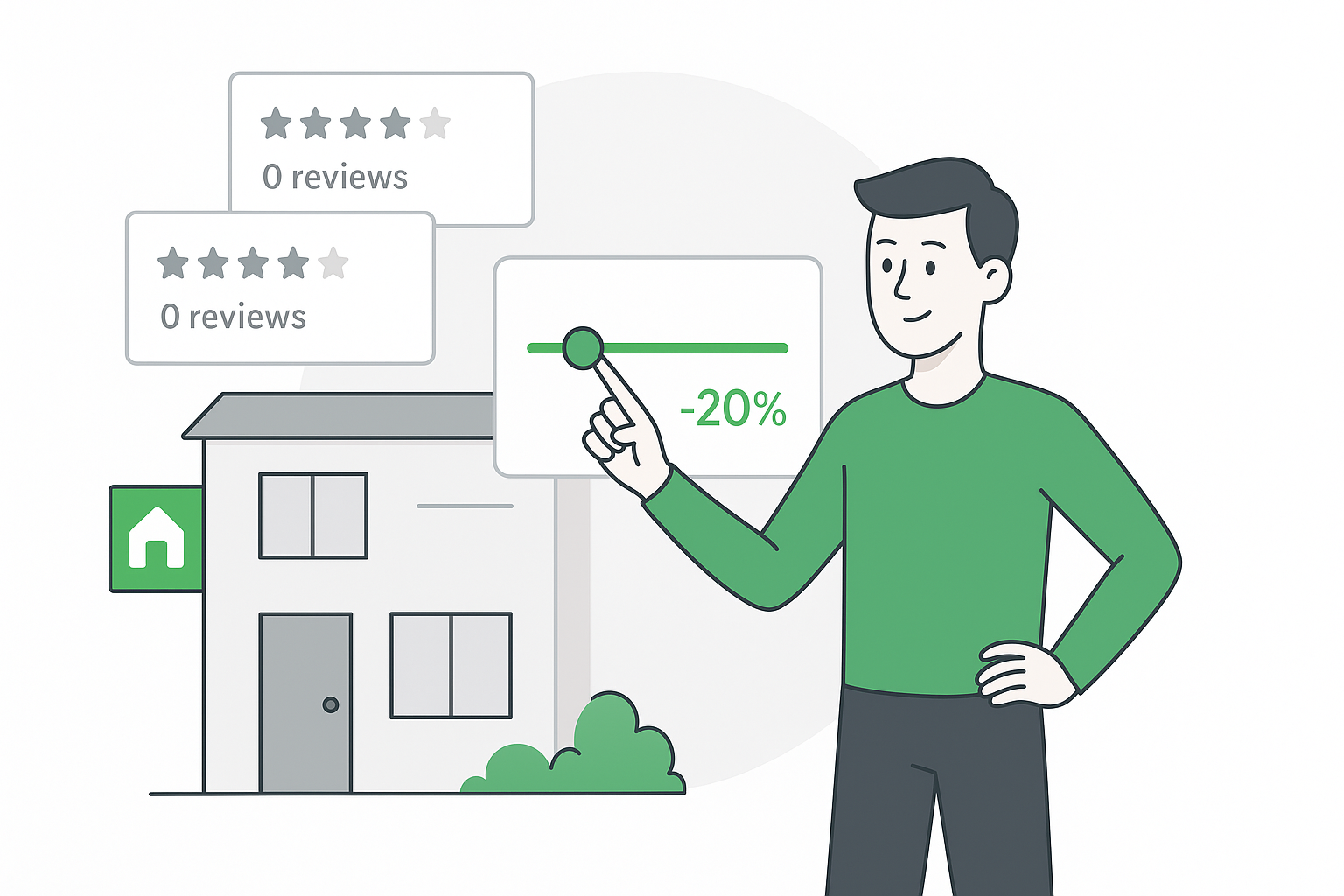
You’ve set up your vacation rental with no reviews, listed it across booking platforms, and waited for reservations to roll in. But they haven’t. Potential guests scroll past your property, choosing listings with dozens of five-star ratings instead. You’re facing the classic new host dilemma: guests won’t book without reviews, but you can’t get reviews without bookings.
This guide shows you how to break through the zero-review barrier using a proven temporary discount pricing strategy that experienced hosts rely on to launch new properties successfully.
Why Guests Avoid Vacation Rentals With No Reviews
When guests search for accommodations, they use reviews as their primary decision-making tool. A vacation rental with no reviews triggers immediate concerns. Guests wonder if the photos accurately represent the property, if the host will be responsive, and if the amenities listed actually exist. From their perspective, booking an unreviewed property feels risky.
This creates a chicken-and-egg problem. Your property might be immaculate, your hospitality outstanding, and your pricing competitive. But without that crucial first booking to generate your first review, potential guests keep scrolling to properties with established track records.
The Temporary Discount Pricing Strategy
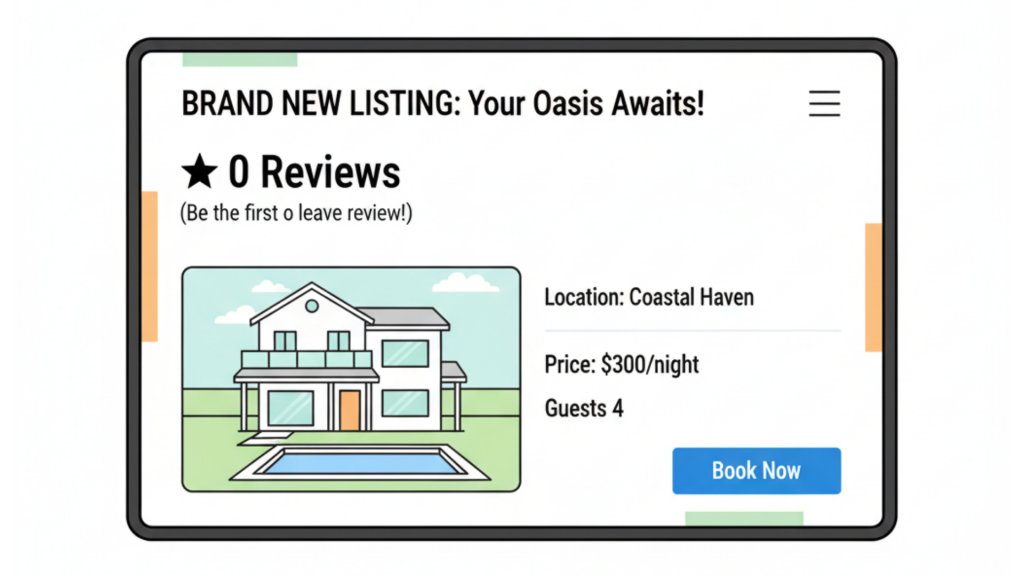
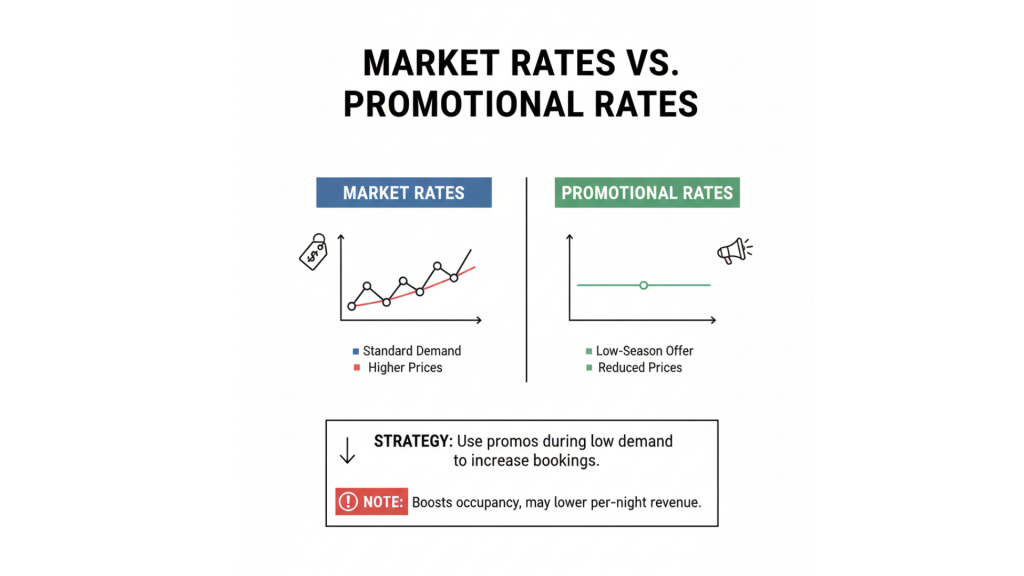
The most effective solution for vacation rentals with no reviews is implementing strategic promotional pricing. By temporarily lowering your rates, you compensate for the missing social proof and give guests a compelling reason to take a chance on your property. This approach trades short-term revenue for long-term credibility.
How Much Should You Discount?
The sweet spot for promotional pricing is approximately 20% below comparable properties in your area. This discount needs to be significant enough to grab attention but not so extreme that it raises suspicions about quality.
Start by researching properties similar to yours, same bedroom count, similar location, comparable amenities. Note their average nightly rates across different seasons. Your promotional rate should be noticeably lower but still reflect the value you’re offering. If comparable properties average $150 per night, your promotional rate should be around $120.
Avoid the temptation to slash prices by 50% or more. Extreme discounts make guests wonder what’s wrong with the property. Tools like RateGenie can help you analyze competitive pricing and optimize rates as you grow.
Setting Your Timeline
Plan to maintain promotional pricing until you’ve collected 8-10 quality reviews. This typically requires 10-15 bookings over 2-4 months, accounting for the fact that not every guest leaves a review.
Rather than jumping immediately to full price, increase rates gradually. After hitting 5 reviews, raise prices by 5-10%. After 10 reviews, move to 10-15% below market rate. Once you reach 15-20 reviews, you can price at or above market averages based on your review quality.
Setting Up Your Launch Strategy
Implementing your pricing strategy requires careful research and execution. Take time with each step to establish a solid foundation for success.
Research Comparable Properties
Identify properties that match your rental’s profile to establish accurate baseline pricing. Focus on listings with strong review counts, these represent your future competition once you’ve established credibility.
- Filter by bedroom count and property type (entire home, condo, cabin)
- Match your amenity profile, including parking, WiFi, kitchen, and outdoor spaces
- Note location advantages like waterfront, downtown, or proximity to attractions
- Document seasonal variations in pricing between peak and off-peak periods
Calculate Your Launch Price
Take the average rate from your competitive analysis and reduce it by 20%. If comparable properties average $150 per night, your promotional rate should be around $120. Be strategic about how you position this pricing across different booking windows and seasons.
Adjust this baseline up or down based on your property’s unique features. If you offer exceptional amenities like a hot tub or mountain views, you might only need a 15% discount. Properties with fewer standout features might benefit from a 25% reduction.
Distribute Across Channels
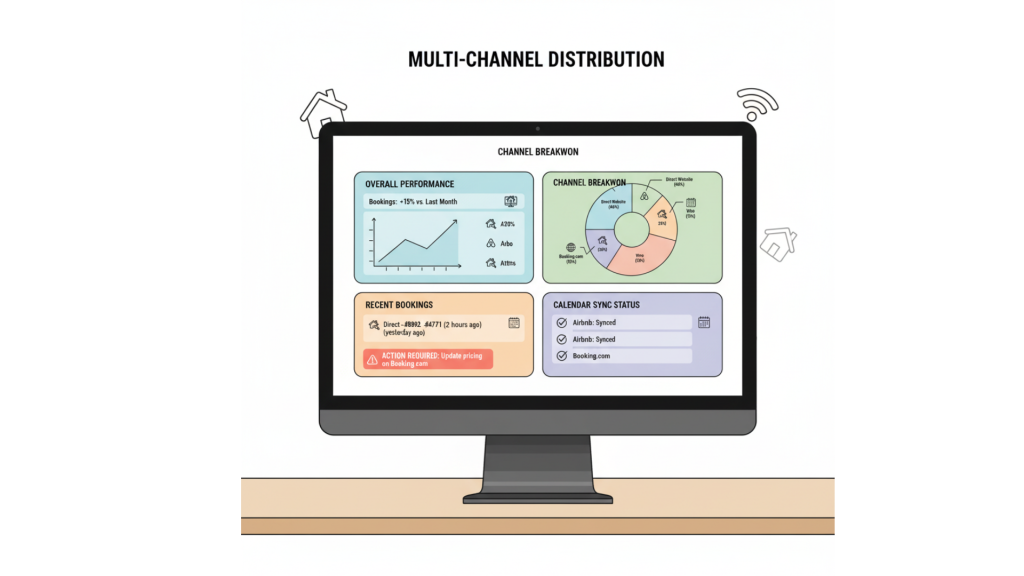
Multi-channel distribution significantly increases your visibility and speeds up your path to first bookings. Don’t limit yourself to a single platform when launching. Each platform has different user demographics and booking patterns that can work in your favor.
List on 3-5 major platforms to maximize exposure during your launch phase. Sync calendars in real-time to prevent double bookings across channels. Monitor which channels generate the most inquiries and bookings for future focus. Consider a direct booking website with WebReady to avoid commission fees once you’ve established credibility.
Optimize Your Listing Quality
While temporary discount pricing attracts bookings, your listing quality determines whether guests actually click “book now.” Professional presentation builds trust and helps overcome hesitation around vacation rentals with no reviews.
Professional Photos and Description
Invest in high-quality photography that accurately represents every room and amenity. Guests make split-second decisions based on visual appeal, and professional photos signal that you’re a serious host who cares about their experience.
Hire a professional photographer familiar with vacation rentals, expect to invest $150-400. Include 20-30 high-resolution images covering every room, outdoor space, and neighborhood context. Show unique features prominently, like fireplaces, views, hot tubs, or distinctive architecture.
Write detailed but scannable descriptions with short paragraphs highlighting features, amenities, and nearby attractions. Be completely honest about what you’re offering. New hosts sometimes exaggerate amenities to compensate for missing reviews, but this backfires when guests arrive and reality doesn’t match expectations.
Clear Communication Standards
Set expectations clearly in your listing to build confidence with potential guests. Specify your response time to inquiries (aim for under 2 hours), outline your check-in and check-out procedures in detail, and be upfront about house rules.
- State your response time and actually meet or beat it consistently.
- Detail your check-in process, including access instructions, parking, and key procedures.
- List all house rules clearly, including occupancy limits, pet policies, and noise expectations.
- Provide exact amenity details rather than vague claims (WiFi speed, TV streaming options)
- Create a digital welcome guide guests can access before arrival
Managing Launch Phase Risks
Temporary discount pricing increases exposure to fraudulent inquiries. New hosts need screening strategies to protect their property during these critical first bookings. Vigilance during your first reservations sets the tone for your hosting career.
Screening for Scammers
Lower prices draw more inquiries from bad actors trying to exploit new hosts. Watch for red flags: requests to communicate outside the platform, unusual payment arrangements, or guests who avoid providing verification information. According to recent industry reports, vacation rental scams have increased significantly, making vigilance essential.
Trust your instincts. If an inquiry feels off, it probably is. Don’t let the pressure to get your first bookings cloud your judgment. One bad experience can damage your property and harm your chances of building a strong review profile.
Setting Guest Expectations
Be transparent about your new host status without apologizing for it. Many successful property managers mention in their listing that they’re newly launched and eager to provide an excellent experience. This honesty often resonates with guests, who appreciate the authenticity and may even be more forgiving of minor oversights.
Over-deliver on your promises. When guests book your vacation rental with no reviews, they’re taking a leap of faith. Exceed their expectations with thoughtful touches, a welcome basket, local recommendations, spotless cleanliness, or quick responses to questions. Request reviews proactively but not aggressively after checkout.
Automating Your Launch Strategy
Property management software streamlines launching new vacation rentals with no reviews. AdvanceCM offers tools specifically designed to help new hosts compete effectively while building their reputation.
Automated guest communication through features like Autopilot ensures you respond promptly to every inquiry, even when unavailable. Fast, professional responses build trust with guests considering an unreviewed property. Research shows that hosts using automation tools secure their first bookings 30% faster on average.
Multi-channel distribution increases your visibility across platforms, helping you secure those crucial first bookings faster. Dynamic pricing tools help you adjust rates strategically as you build reviews, while unified inbox management ensures no guest inquiry goes unanswered.
Check AdvanceCM’s pricing options to find the right tier for your property count and growth goals.
💬Join the conversation: Share your new host launch strategies and challenges with experienced property managers in our Reddit community discussion.
Conclusion
Breaking through the zero-review barrier requires strategy, not luck. Temporary discount pricing at 20% below market rates compensates for missing social proof and gives guests a compelling reason to book your property first. Combined with professional listing quality and responsive communication, this approach generates the initial bookings you need to build credibility.
Remember that your promotional pricing is temporary. Those first 8-10 reviews are investments in your property’s long-term success. Once you’ve established your track record, you can adjust rates to match or exceed market averages based on your review quality and property features.
Start your research today. Identify comparable properties, calculate your promotional rate, and commit to delivering exceptional experiences that generate five-star reviews. Your vacation rental with no reviews won’t stay that way for long.
FAQs
Q: How long should I keep my promotional pricing active?
A: Maintain reduced rates until you’ve collected 8-10 quality reviews, which typically takes 2-4 months depending on your market. Increase prices gradually as your review count grows rather than jumping immediately to full market rates.
Q: What if 20% below market rate still isn’t generating bookings?
A: First verify that your listing quality matches competitors, photos, description, and amenities. If your presentation is strong, consider a slightly deeper discount (25-30%) or ensure you’re distributing across multiple booking platforms to maximize visibility.
Q: Should I tell guests I’m offering a promotional rate?
A: There’s no need to explicitly mention discounted pricing. Simply list your rate competitively and focus on delivering exceptional value. Some hosts mention being “newly launched” in their listing, which subtly explains lower prices.
Q: How do I screen inquiries to avoid scammers during my launch phase?
A: Verify guest identity through platform verification systems, watch for requests to communicate off-platform, trust your instincts on unusual booking requests, and maintain all communication through official channels until after a successful stay.
Q: Can I raise prices immediately after getting my first few reviews?
A: Gradual increases work better than sudden jumps. After 5 reviews, raise rates by 5-10%. After 10 reviews, move closer to market averages. This approach maintains booking momentum while recovering your full rate potential as credibility builds.

Welcome to Tokeet’s Podcast — your trusted source for insights, trends, and strategies shaping the vacation rental industry. Each episode features expert interviews, data-driven analysis, and practical tips to help property managers grow their businesses, improve guest experiences, and stay ahead in a rapidly evolving market. Whether you’re new to short-term rentals or managing a large portfolio, tune in to stay informed and inspired.
Some days just don’t work for a guest arrival, whether it’s a holiday, a maintenance window, or a turnover day your team can’t cover. This episode walks through check-in and check-out restrictions, the most requested feature in AdvanceCM, now live in the Rentals module. You’ll hear how to block arrivals or departures for a date range, such as December 24 to 26, and how to allow check-ins only on the weekdays you choose. We also cover channel-specific rules, like keeping Airbnb to Friday and Saturday arrivals while direct bookings stay open through Sunday. Finally, we explain what to check before switching rules on, from existing reservations to sync time and visibility on booking sites.
Key Takeaways:
✅ Block check-ins or check-outs for any date range
✅ Limit arrivals to the weekdays you choose
✅ Set different rules for each booking channel
✅ Existing reservations stay unchanged
✅ More restrictions mean fewer guests can book, so review rules each season
Related Links:
Company: https://www.tokeet.com/Blogs: https://www.tokeet.com/blog/Blog: Check-in and Check-out Restrictions: How to Set Them in AdvanceCM 👉 https://blog.tokeet.com/check-in-and-check-out-restrictions/
This is a public episode. If you would like to discuss this with other subscribers or get access to bonus episodes, visit podcast.tokeet.com