

Your vacation rental pet policy suddenly feels very real the day someone messages asking to bring eight large dogs into your historic home. Two Huskies, four German Shepherd mixes, tiny yard, “They’re all very well ”behaved”, you can practically see fur in every floorboard crack. It’s the slow season, the payout looks tempting, and part of you thinks maybe just this once. The other part imagines days of vacuuming, repairs, and neighbor complaints. Without clear rules, it’s very easy to say yes with your wallet and regret it with your sanity.
This guide uses that eight-dog scenario as a stress test for your vacation rental pet policy so you can decide what you will and won’t allow before the next wild request lands in your inbox. We’ll walk through cleaning risk, property damage, legal limits, neighbor impact, and how to spot red flags fast. You’ll also see simple ways to structure vacation rental pet fees so you’re paid fairly for the extra work when you do say yes. By the end, you’ll have practical, ready-to-copy rules that make “no” feel easy and “yes” feel properly protected.
Why Your Vacation Rental Pet Policy Must Protect You First
The whole point of a vacation rental pet policy is to protect your asset and your time, not to squeeze every possible booking into the calendar. In an older or historic home, your floors, trim, and doors simply aren’t built for packs of large, high-energy dogs. Eight big dogs means eight sets of claws, eight tails whipping into walls, and a lot of excited pack behavior when one starts barking or pacing. When you factor in the real hours of cleanup and potential repairs, that “great payout” often turns into one of the least profitable stays of the year.
Then there’s the hair and smell problem. Heavy shedders like Huskies and shepherds don’t just leave a bit of fur on the couch; they blow their coats into rugs, vents, radiator fins, and every gap in old floorboards. Odors cling to textiles and can spook your next guest the second they walk in. A realistic vacation rental pet policy assumes that heavy shedders and large dog counts require extra time and products and caps both size and number so your turnovers stay manageable. Without that limit, your cleaner burns out, and your reviews start mentioning smells and “doggy” vibes.
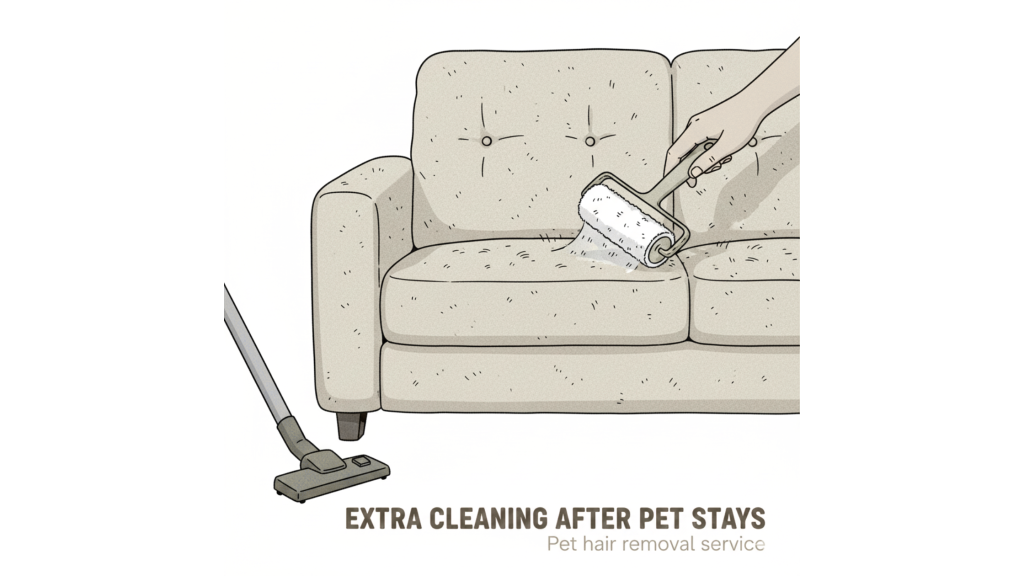
Heavy shedders can add hours of cleaning time, your pet rules and fees should reflect that reality.
Red-Flag Requests Your Policy Should Refuse
Some pet requests are simply too big a mismatch for a residential property, and your written vacation rental pet policy should draw that line clearly. Eight large dogs in a small-yard listing with close neighbors is almost always on the wrong side of that line. The risk isn’t just scratches; it’s destructive anxiety if the dogs are left alone, nonstop shedding, and pack energy that turns normal playing into full-contact chaos. You don’t need to gamble your house to be a “pet-friendly” host.
How guests answer basic questions tells you almost everything you need to know. Responsible owners can quickly explain where the dogs will sleep, how often they’ll be exercised, whether they’re crate trained, and how they handle waste. Problem guests tend to be vague, dismissive, or offended that you even asked. If the answers don’t match what your vacation rental pet policy requires, like crates, supervision, and waste cleanup, your default should be a polite no.
Quick checklist before you even consider yes
Use this checklist whenever someone wants to bring more or bigger dogs than usual:
- How many dogs, and roughly what size are they?
- How many hours a day will the dogs be alone in the house?
- Are they reliably crate trained, and will the guests bring crates and covers?
- What is the plan for waste pickup and yard protection?
- Are there close neighbors, shared walls, or strict quiet hours?
If more than one answer feels risky, your rules should back you up in saying no.
Vacation Rental Pet Fees That Match the Risk
Most hosts underprice vacation rental pet fees because they set them based on what feels “reasonable,” not what a serious pet clean actually costs. A flat $50 or $75 fee might cover an extra sweep and a load of laundry, but it doesn’t touch multiple rounds of vacuuming, lint rolling, mopping, odor control, and carpet or upholstery treatments. Ask your cleaner what they’d charge for a full “after several big dogs” clean, that number is the foundation for your pricing. Your vacation rental pet policy should assume that any dog adds real cleaning time, and your pricing should cover it so you’re not quietly subsidizing the mess.
For extreme scenarios, the math makes the decision easier. That might mean a flat pet deep-clean fee plus per-dog charges beyond your normal limit; together, those vacation rental pet fees should fully cover extra labor and supplies. It’s also smart to charge more on short stays because the heavy cleaning cost is the same whether guests stay two nights or seven. When your vacation rental pet fees are rooted in real numbers, you stop feeling pressured to accept risky bookings just to “make the fee worth it.” If you’re managing multiple listings, using a tool like AdvanceCM makes it easier to keep these pet fees consistent across all of your properties.
Sample fee structures you can use
Here are three simple ways to structure vacation rental pet fees without turning every request into a negotiation:
- Flat deep-clean fee anytime a dog stays (for example, $150–$250 per booking).
- The first one or two dogs are included, then $100–$200 per additional dog per stay.
- Higher pet fee for stays under three nights, to cover the fixed cleaning cost.
If someone balks at these fees while asking to bring a pack of big dogs, that’s usually a guest you’re happy to lose.
Laws, Neighbors, and Systems: The Hidden Side of Pet Decisions
Even if the money and cleaning sound manageable, your vacation rental pet policy has to respect basic legal and neighbor limits. Many cities and counties cap the number of dogs allowed in a normal household before it’s considered a kennel, which may require a special license and inspections. You can see how this works in practice by checking example animal control laws and ordinances from Green Bay, Wisconsin, or similar pages in your own city. An eight-dog booking could accidentally push you over that line, and one annoyed neighbor is all it takes to put you on animal control’s radar. Noise, yard damage, and safety worries can also strain relationships with neighbors and HOAs in ways that no payout can fix.
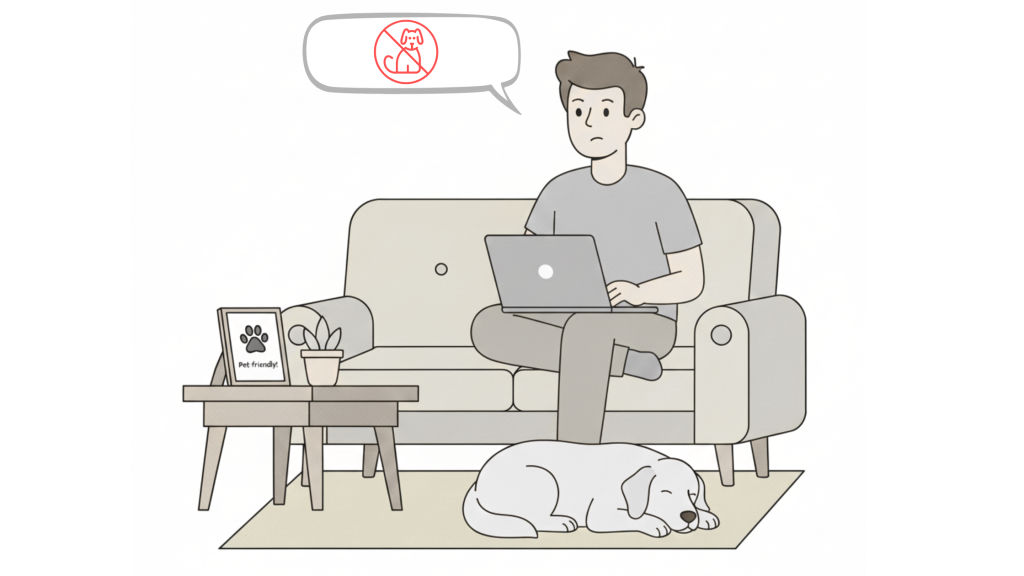
Documented pet rules and synced settings make it easier to say yes to the right guests, and no to risky requests.
It also helps to know how common pets really are. The AVMA pet ownership statistics show that a large share of households have dogs, which means pet-related requests will keep coming. Once you’ve decided on your limits and vacation rental pet fees, write them down in plain language and use the same text everywhere guests see your rules. Using a channel manager keeps those rules and fees consistent across Airbnb, Vrbo, and your direct site. When you review your rates each season, you can check that your pet pricing still matches cleaning costs, update your rules, and make sure everything lines up with your AdvanceCM Pricing plan.
💬 Want a reality check? Search Reddit for threads like “Airbnb eight dogs,” and you’ll see how often hosts regret saying yes after days of vacuuming and repairing chewed trim.
Conclusion
Saying no to a request for eight large dogs in a fragile home isn’t being unfriendly; it’s enforcing a vacation rental pet policy that protects your property, your time, and your neighbors. Once your limits, screening questions, and pet fees are written down, big pet requests become simple policy decisions instead of emotional tug-of-war. The next time a guest wants to turn your place into a temporary kennel, you can confidently point to the rules you already shared and decline. That clarity keeps your listing sustainable, your cleaners happy, and your best guests coming back.
FAQs
Q: How many dogs is reasonable for most vacation rentals?
A: For most homes or apartments, one to two well-behaved dogs is a realistic upper limit. Beyond that, noise, hair, and damage risk tend to climb much faster than your profit.
Q: Should I ever make an exception for professional dog handlers or sport competitors?
A: Maybe, but only after detailed questions about crates, supervision, grooming, and their own cleaning routine before checkout. If they can’t explain exactly how they protect your place, it’s safer to say no.
Q: How do I decide what to charge for pet cleaning?
A: Start by asking your cleaner what they’d bill for a full “post-dog” deep clean, then work backward into a flat fee and per-dog add-ons. Your goal is to fully cover labor and products, not just chip in.
Q: What if I’m not sure about local limits on dog numbers?
A: Look up your city or county’s animal ordinances or call animal control and ask directly how many dogs are allowed in a residence. Set your own limit comfortably below that number so guests can’t push you over it.
Q: How can I say no without starting a fight with the guest?
A: Keep it short and neutral: explain that your house rules, insurance, or local laws don’t allow that many dogs at the property. Thank them for understanding and, if possible, suggest boarding options or reducing the number of pets they travel with.

Welcome to Tokeet’s Podcast — your trusted source for insights, trends, and strategies shaping the vacation rental industry. Each episode features expert interviews, data-driven analysis, and practical tips to help property managers grow their businesses, improve guest experiences, and stay ahead in a rapidly evolving market. Whether you’re new to short-term rentals or managing a large portfolio, tune in to stay informed and inspired.
Some days just don’t work for a guest arrival, whether it’s a holiday, a maintenance window, or a turnover day your team can’t cover. This episode walks through check-in and check-out restrictions, the most requested feature in AdvanceCM, now live in the Rentals module. You’ll hear how to block arrivals or departures for a date range, such as December 24 to 26, and how to allow check-ins only on the weekdays you choose. We also cover channel-specific rules, like keeping Airbnb to Friday and Saturday arrivals while direct bookings stay open through Sunday. Finally, we explain what to check before switching rules on, from existing reservations to sync time and visibility on booking sites.
Key Takeaways:
✅ Block check-ins or check-outs for any date range
✅ Limit arrivals to the weekdays you choose
✅ Set different rules for each booking channel
✅ Existing reservations stay unchanged
✅ More restrictions mean fewer guests can book, so review rules each season
Related Links:
Company: https://www.tokeet.com/Blogs: https://www.tokeet.com/blog/Blog: Check-in and Check-out Restrictions: How to Set Them in AdvanceCM 👉 https://blog.tokeet.com/check-in-and-check-out-restrictions/
This is a public episode. If you would like to discuss this with other subscribers or get access to bonus episodes, visit podcast.tokeet.com