
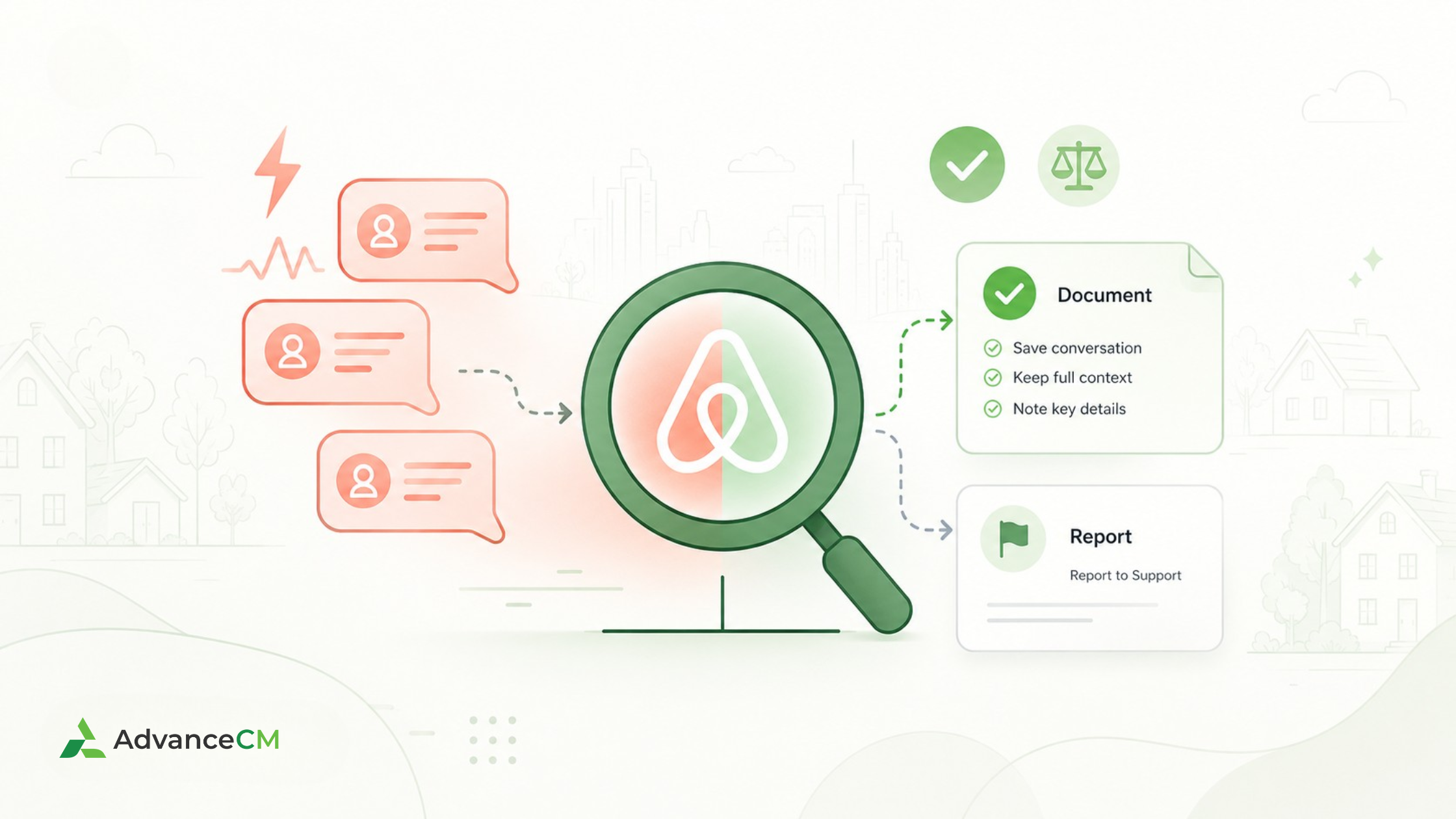
A guest saying “I’ll report you to Airbnb” usually does not meet the Airbnb extortion policy. The policy becomes relevant when a guest links a negative review to a demand for an unwarranted refund, payment, or other benefit.
That distinction matters because an aggressive complaint may still involve a legitimate property issue. Hosts should separate policy evidence from emotion, preserve the message trail, and address the underlying complaint without admitting facts they have not verified.
The Airbnb extortion policy involves using a negative review to obtain unwarranted compensation, a refund, or another benefit. A threat to report a listing is not automatically extortion. Save the exact wording, document the complete complaint, and report conduct through Airbnb’s official process.
What the Airbnb Extortion Policy Prohibits
Airbnb’s review policy says hosts and guests may not manipulate, extort, incentivize, or pressure another person to influence a review. It specifically prohibits threatening a negative review to obtain unwarranted compensation, a refund, or another incentive.
The word “unwarranted” matters. A guest who requests a refund for a documented problem and says they will contact support may be difficult, but that message alone does not establish review manipulation.
What Qualifies and What Does Not
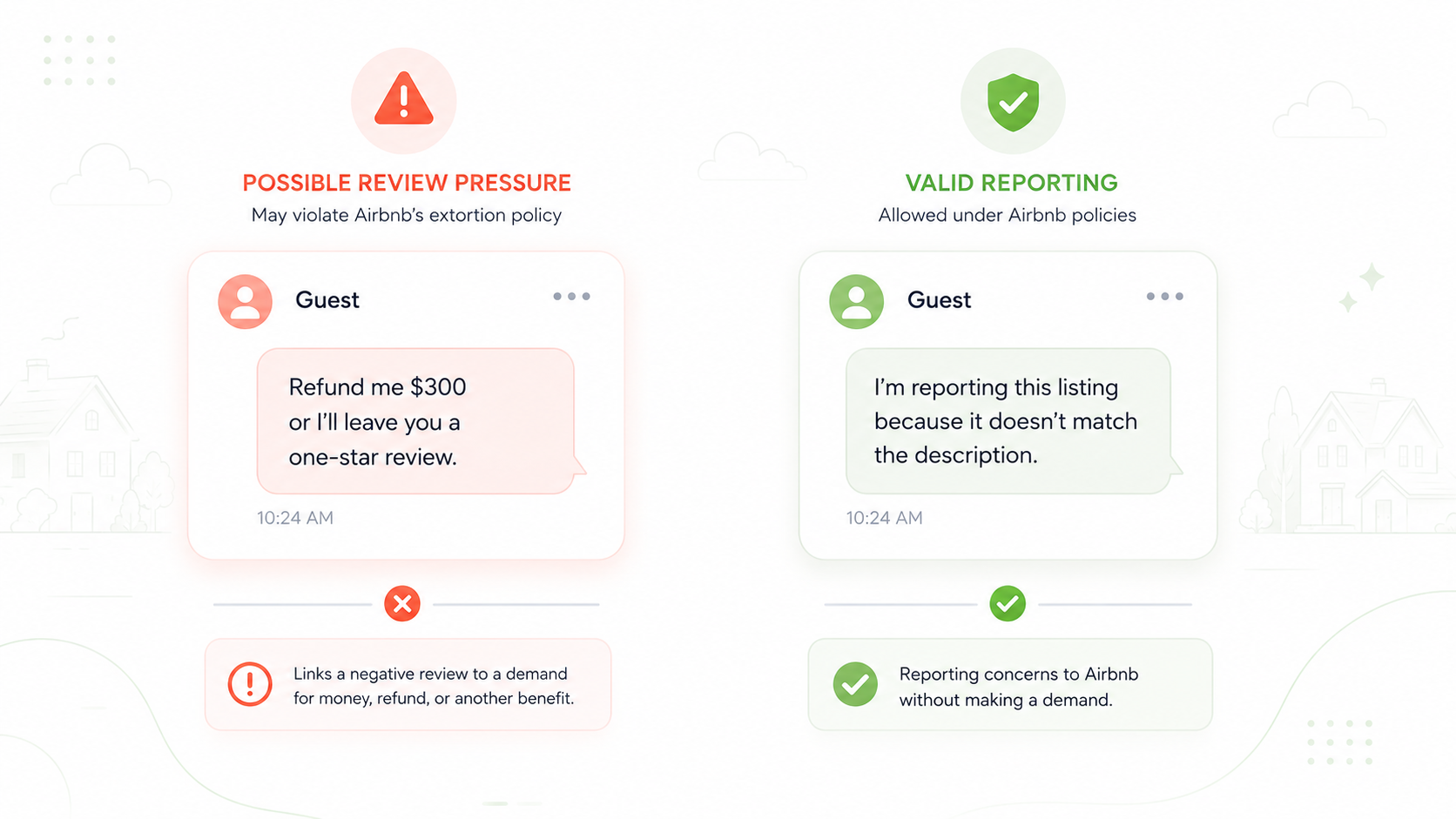
A message like “Refund me $300 or I will leave a one-star review” directly connects review pressure to compensation. Preserve the exact wording and avoid negotiating around the review.
Another message is, “I expect a refund, and if you refuse, I’ll describe everything in my review.” That may reflect a genuine complaint or improper leverage. The result depends on whether the remedy is warranted, how the review is used, and the conversation.
Does This Count as Extortion?
“Refund me or I’ll leave one star” suggests possible review manipulation. “I’m reporting the listing” suggests platform escalation alone instead.
Why “I’ll Report You” Is Not Enough
Guests can report behavior they believe is offensive, deceptive, unsafe, or otherwise inappropriate. Airbnb provides a process to report a host or guest, so the act of escalating a concern is not automatically prohibited.
Focus on the exact exchange. Did the guest identify a negative review? Did they connect that review to money, a refund, waived fees, or another benefit? If not, report any abusive conduct separately and prepare to address the substance of the complaint.
Centralize guest threads with AdvanceCM Unified Inbox so your team can find the full conversation without checking separate inboxes.
Three Signals to Document Before Reporting
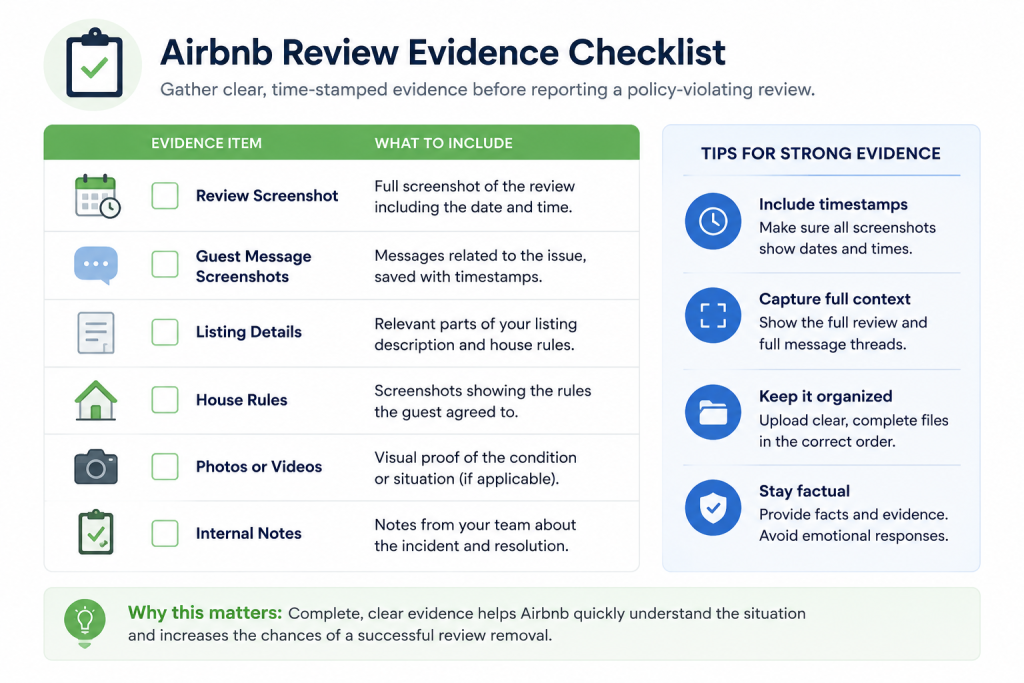
Do not present these signals as a guaranteed test. Use them to organize evidence and explain why the message may violate the Airbnb extortion policy.
- Review language. Capture the exact words referring to stars, negative feedback, publishing a review, or withholding one.
- Conditional demand. Show the sentence connecting the threatened review to a requested refund, payment, discount, waived charge, or other incentive.
- Complete context. Save earlier messages, the guest’s complaint, your response, timestamps, reservation details, photos, house rules, and any support case number.
Context protects credibility. A single cropped line may hide a legitimate complaint, while a complete timeline shows whether the demand appeared before or after the host offered a remedy.
How to Respond Step by Step
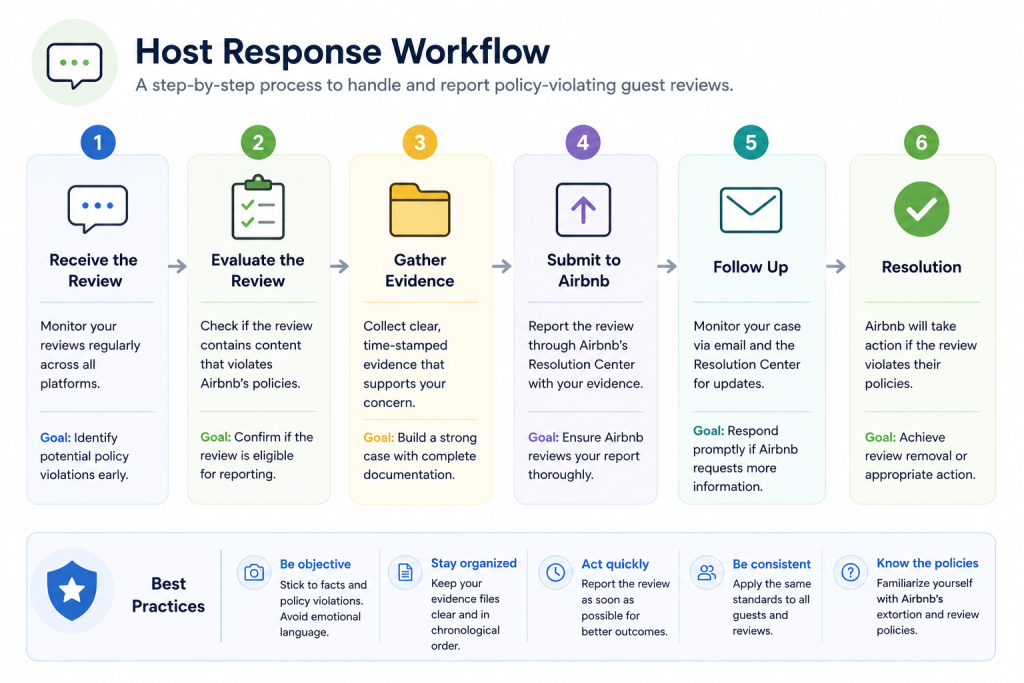
- Pause before replying. Use: “Thanks for explaining your concern. I’m reviewing the reservation and listing now. Please keep all communication in this Airbnb thread.”
- Read the complaint separately. Check photos, amenities, property type, access details, fees, house rules, and prior messages. Correct any clear listing error immediately.
- Keep communication on Airbnb. Summarize phone conversations in the platform thread and ask the guest to confirm disputed facts there. Do not delete relevant messages.
- Contact support with a concise timeline. Write: “The guest requested [remedy] and stated, ‘[exact message].’ Please review the complete thread under Airbnb’s review policy.”
- Report inappropriate conduct through Airbnb’s reporting process when necessary. Keep the review issue, abusive behavior, safety concern, and listing complaint separated so support can assess each point.
- Prepare for either outcome. Airbnb may remove content that violates policy, but removal is not guaranteed. If a review remains, use a brief factual public response.
For a focused removal workflow, follow Tokeet’s guide to retaliatory Airbnb reviews and build the appeal around policy, sequence, and evidence.
Turn repeated listing or service problems into assigned fixes with AdvanceCM Task Management instead of leaving them inside support notes.
When the Guest Has a Legitimate Complaint
A valid complaint does not excuse harassment or review manipulation, but it changes the operational response. Verify the property condition, compare the stay with the listing, and offer a proportionate remedy when the facts support one.
Do not promise a refund merely to stop a review. State what you verified, what you can correct, and which resolution you are offering. Keep the remedy tied to the guest’s documented experience, not to silence.
Tokeet’s Airbnb guest review strategy explains how calm, behavior-based documentation helps hosts manage difficult stays without turning reviews into personal arguments.
Prevent the Dispute Before It Starts
Many conflicts begin with expectation gaps. Audit property type, shared buildings, cameras, parking, accessibility, noise, construction, extra fees, amenity limits, and check-in access. Recheck descriptions and photos after renovations, policy changes, or repeated guest questions about the property.
Track patterns rather than dismissing every complaint as a difficult guest. The Airbnb quality dashboard workflow can help teams connect repeated accuracy, check-in, cleanliness, communication, and value concerns to specific operating fixes.
Use a simple weekly check: compare listing details with the property, review recurring guest questions, confirm automated instructions, and assign corrections. Prevention does not eliminate bad behavior, but it gives support a cleaner factual record.
See how AdvanceCM Unified Inbox keeps guest communication organized when several properties, channels, and team members are involved.
Conclusion
The Airbnb extortion policy is most useful when hosts treat it as an evidence standard, not a label for every threat. Preserve the exchange, separate review pressure from legitimate complaints, report misconduct calmly, and fix any verified listing or service problem before it repeats.
Explore AdvanceCM to bring guest communication, tasks, and day-to-day property operations into a more organized workflow.
FAQs
- What qualifies under the Airbnb extortion policy?
It generally involves using a negative review or withheld review to seek unwarranted compensation, a refund, or another incentive. The complete exchange matters, so preserve the demand, threat, context, and timestamps. - Is threatening to report a host extortion?
Not by itself, because reporting a concern does not necessarily manipulate the review system. Examine whether the guest separately threatened a negative review in exchange for a benefit. - Should I refund a guest who threatens a bad review?
Do not exchange money for silence. Investigate the complaint, offer only a remedy supported by the facts, and document that the resolution addresses the stay rather than the review. - Can Airbnb remove a retaliatory review?
Airbnb may remove a review when it meets the platform’s policy requirements, but a negative review after a dispute is not automatically retaliatory. Submit a concise timeline tied to the relevant rule. - What evidence should hosts save?
Save the full message thread, reservation details, timestamps, property photos, listing text, house rules, support case numbers, and any proposed remedy. Organize everything chronologically so the reviewer can understand the sequence without guessing.

Welcome to Tokeet’s Podcast — your trusted source for insights, trends, and strategies shaping the vacation rental industry. Each episode features expert interviews, data-driven analysis, and practical tips to help property managers grow their businesses, improve guest experiences, and stay ahead in a rapidly evolving market. Whether you’re new to short-term rentals or managing a large portfolio, tune in to stay informed and inspired.
Some days just don’t work for a guest arrival, whether it’s a holiday, a maintenance window, or a turnover day your team can’t cover. This episode walks through check-in and check-out restrictions, the most requested feature in AdvanceCM, now live in the Rentals module. You’ll hear how to block arrivals or departures for a date range, such as December 24 to 26, and how to allow check-ins only on the weekdays you choose. We also cover channel-specific rules, like keeping Airbnb to Friday and Saturday arrivals while direct bookings stay open through Sunday. Finally, we explain what to check before switching rules on, from existing reservations to sync time and visibility on booking sites.
Key Takeaways:
✅ Block check-ins or check-outs for any date range
✅ Limit arrivals to the weekdays you choose
✅ Set different rules for each booking channel
✅ Existing reservations stay unchanged
✅ More restrictions mean fewer guests can book, so review rules each season
Related Links:
Company: https://www.tokeet.com/Blogs: https://www.tokeet.com/blog/Blog: Check-in and Check-out Restrictions: How to Set Them in AdvanceCM 👉 https://blog.tokeet.com/check-in-and-check-out-restrictions/
This is a public episode. If you would like to discuss this with other subscribers or get access to bonus episodes, visit podcast.tokeet.com