 Property Manager’s Guide to Beating Burnout
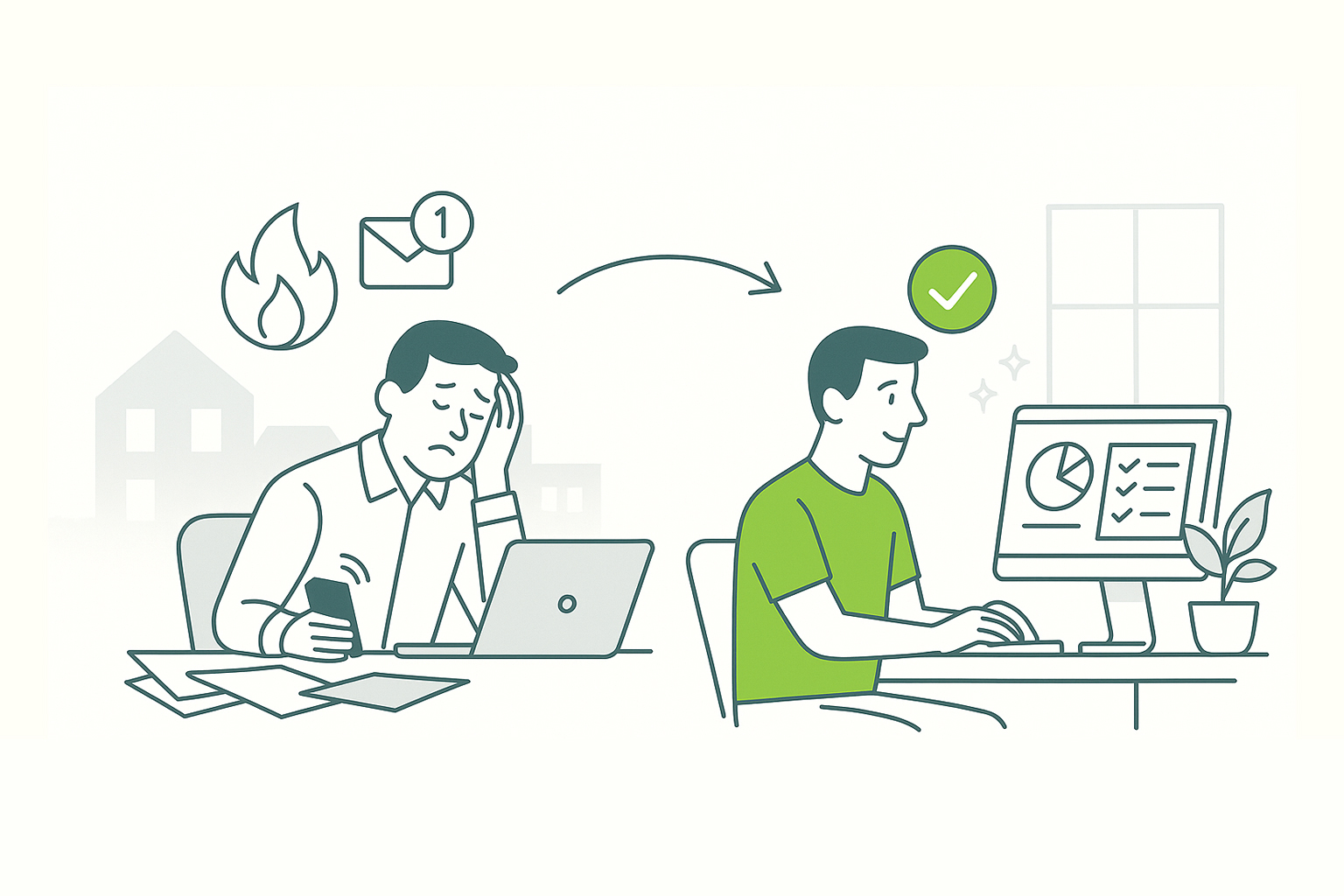
If you’re a property manager, you know the job can feel like a constant battle against an avalanche of tasks. One moment you’re handling a guest issue, and the next you have an overflowing email inbox. It’s easy to feel like you’re always putting out fires instead of getting ahead. That feeling of being overwhelmed is a major cause of property manager burnout. But it doesn’t have to be this way.
This guide will show you how you can move from being reactive to proactive, building a career you can sustain for the long haul.

A Professional’s Guide to Overcoming Burnout in Property Management
The Overwhelming Reality of the Job
It’s important to first understand what’s draining you. Property management is often a job in “reactive mode”where you’re always responding to something, and that constant state of on-demand work is exhausting. You’re a jack-of-all-trades, juggling guest relations, maintenance requests, and administrative tasks all at once. This kind of work naturally leads to high stress levels and a feeling of being completely swamped.
Understanding the Stressors:
- The Unmanageable Office: Your desk is a battlefield of papers, sticky notes, and files. It’s a physical representation of the mental clutter in your head.
- The Endless Email Inbox: You’re constantly getting new things thrown at you throughout the day, and your email inbox feels like an endless nightmare. It’s easy to feel like you can’t even remember to respond to all of them.
- Constant Guest Demands: From urgent maintenance to late-night calls, the demands of vacation rentals never seem to stop.

Strategic Pillars for Combating Burnout
You don’t have to accept this reality. Instead of just working harder, you need to work smarter by building a framework for success. These strategic pillars will help you regain control and create a more balanced career.
Embrace Technology & Automation
Getting organized starts with having the right tools. Automating repetitive tasks is a key part of beating property manager burnout. Using technology can help you get out of the weeds and focus on the most important parts of your job. For more detailed strategies, check out these top tips for preventing property manager burnout with proptech.
Centralize Your World
Imagine having all your guest communication, emails, texts, and calls in a single place. Good property management software can do this, unifying your data and providing valuable insights into your operations.Instead of jumping between different apps, everything is on one platform, like the AdvanceCM Unified Inbox, which helps you streamline how you run your office.
Automate the Mundane
Automation can take a massive administrative load off your plate. By letting software handle the simple, repetitive stuff, you free up your time for tasks that require your full attention.
- Automated Communication: Set up automatic replies for common questions or send out scheduled rent reminders. This helps guests get fast answers and reduces your workload.
- Maintenance Management: Use a system that allows guests to submit maintenance requests online. This automates the initial intake and helps you track requests without a paper trail.
- Financial Tracking: Automate financial tasks like rent collection and tracking expenses. This prevents costly errors and makes sure everything is in order.

Adopt a Proactive Mindset & Daily Habits
Technology is only one part of the solution. Your mindset and habits are just as important in managing stress. A professional content writer knows that a proactive approach can make all the difference.
Start Your Day with a Plan
According to experts, one of the most effective things you can do to manage stress is to start your day by setting your priorities before you open your email. Take a few minutes to list the top three things you absolutely must get done. This helps you focus on being proactive instead of immediately reacting to your inbox. It’s a powerful habit that gives you control over your day.
Set and Protect Your Boundaries
Burnout often happens when the line between work and personal life disappears. A great way to prevent this is by setting clear working hours and sticking to them. If you run a short-term rental business, using an out-of-hours call answering service can make a huge difference, ensuring that guest emergencies are handled even when you are off the clock. A tool like AdvanceCM can help property owners with this by providing a reliable support system.
Take “Stress Resets.”
No matter how well you plan, your day will have its challenges. Experts suggest taking mini mental breaks every 90 minutes. Even a 5-minute break to stretch, get some water, or just do a few deep breaths can help you stay grounded and calm. This is an essential habit for a career that’s full of unexpected moments. Practicing calm communication during conflict can also help you manage stress.

Delegate, Specialize, and Seek Support
Sometimes, the best solution is to not do it yourself. This is where delegation and specialization come in. Delegating tasks and seeking mentorship are effective ways to reduce stress. Learn more about how to avoid burnout in property management with effective workplace practices to create a sustainable career.
Delegate for Efficiency
You can’t be everywhere at once. One of the best ways to combat how to reduce stress in property management is to delegate tasks. Consider a virtual assistant to handle tasks like data entry, guest communication, and scheduling. This frees you up to focus on strategic work and high-level decisions.
The Power of Specialization
Instead of having one person be the “jack-of-all-trades,” your company can adopt a departmental style of management. By having specialists for things like leasing, maintenance, and accounting, you reduce the cognitive load on each individual and improve service quality. Your team can work smarter, not harder.
Build Your Support System
You are not alone in this job. Building a network of other property managers can be a lifeline. A support group can provide a safe space to share your challenges and learn from others’ experiences, reminding you that others are going through the same thing. Seeking mentorship and connecting with industry leaders can also provide guidance and new ideas.
FAQs
Q: What are the main signs of burnout in property management? A: Common signs include feeling emotionally exhausted, a loss of motivation, a feeling of being ineffective, and a negative or cynical attitude toward your job. It can also show up as physical symptoms like headaches or trouble sleeping.
Q: How can I convince my boss to invest in new software or automation tools? A: Focus on the ROI. Present a clear business case showing how automation can save money in the long run by improving efficiency, reducing errors, and increasing guest satisfaction. Use phrases like “more highly qualified leads” and “improved efficiency.”
Q: Can a virtual assistant really help with my workload? A: Yes, absolutely. A virtual assistant can handle a wide range of repetitive and administrative tasks, from screening guests and scheduling to managing emails and organizing documents. This frees you up to focus on strategic work and high-level decisions.
Q: Is it possible to have a good work-life balance as a property manager? A: It is possible, but it requires intentional effort. You need to set clear boundaries, delegate tasks, and use technology to automate processes so you are not on call 24/7. It’s about working smarter, not harder.
Q: How can I get help from AdvanceCM to manage guest communications? A: AdvanceCm offers solutions that handle guest communication and other administrative tasks for you, ensuring your guests are always taken care of while you focus on what matters most.
[Image Suggestion: A clean, uncluttered office desk with a single laptop open to a task list, perhaps a calendar. This image should feel aspirational and show the outcome of the strategies discussed in the article.]
Conclusion
Property manager burnout is real, but it is not a permanent state. By making a few key changes to your mindset and workflow, you can move toward a healthier, more sustainable career. The key is to shift from a reactive mindset to a proactive one by embracing technology, setting boundaries, and building a support network.
Start with just one of these strategies, maybe by tackling your inbox with a new system or by taking a short break today. A sustainable and rewarding career is within reach, and it all starts with taking that first step.
Welcome to Tokeet’s Podcast — your trusted source for insights, trends, and strategies shaping the vacation rental industry. Each episode features expert interviews, data-driven analysis, and practical tips to help property managers grow their businesses, improve guest experiences, and stay ahead in a rapidly evolving market. Whether you’re new to short-term rentals or managing a large portfolio, tune in to stay informed and inspired.
Some days just don’t work for a guest arrival, whether it’s a holiday, a maintenance window, or a turnover day your team can’t cover. This episode walks through check-in and check-out restrictions, the most requested feature in AdvanceCM, now live in the Rentals module. You’ll hear how to block arrivals or departures for a date range, such as December 24 to 26, and how to allow check-ins only on the weekdays you choose. We also cover channel-specific rules, like keeping Airbnb to Friday and Saturday arrivals while direct bookings stay open through Sunday. Finally, we explain what to check before switching rules on, from existing reservations to sync time and visibility on booking sites.
Key Takeaways:
✅ Block check-ins or check-outs for any date range
✅ Limit arrivals to the weekdays you choose
✅ Set different rules for each booking channel
✅ Existing reservations stay unchanged
✅ More restrictions mean fewer guests can book, so review rules each season
Related Links:
Company: https://www.tokeet.com/Blogs: https://www.tokeet.com/blog/Blog: Check-in and Check-out Restrictions: How to Set Them in AdvanceCM 👉 https://blog.tokeet.com/check-in-and-check-out-restrictions/
This is a public episode. If you would like to discuss this with other subscribers or get access to bonus episodes, visit podcast.tokeet.com