
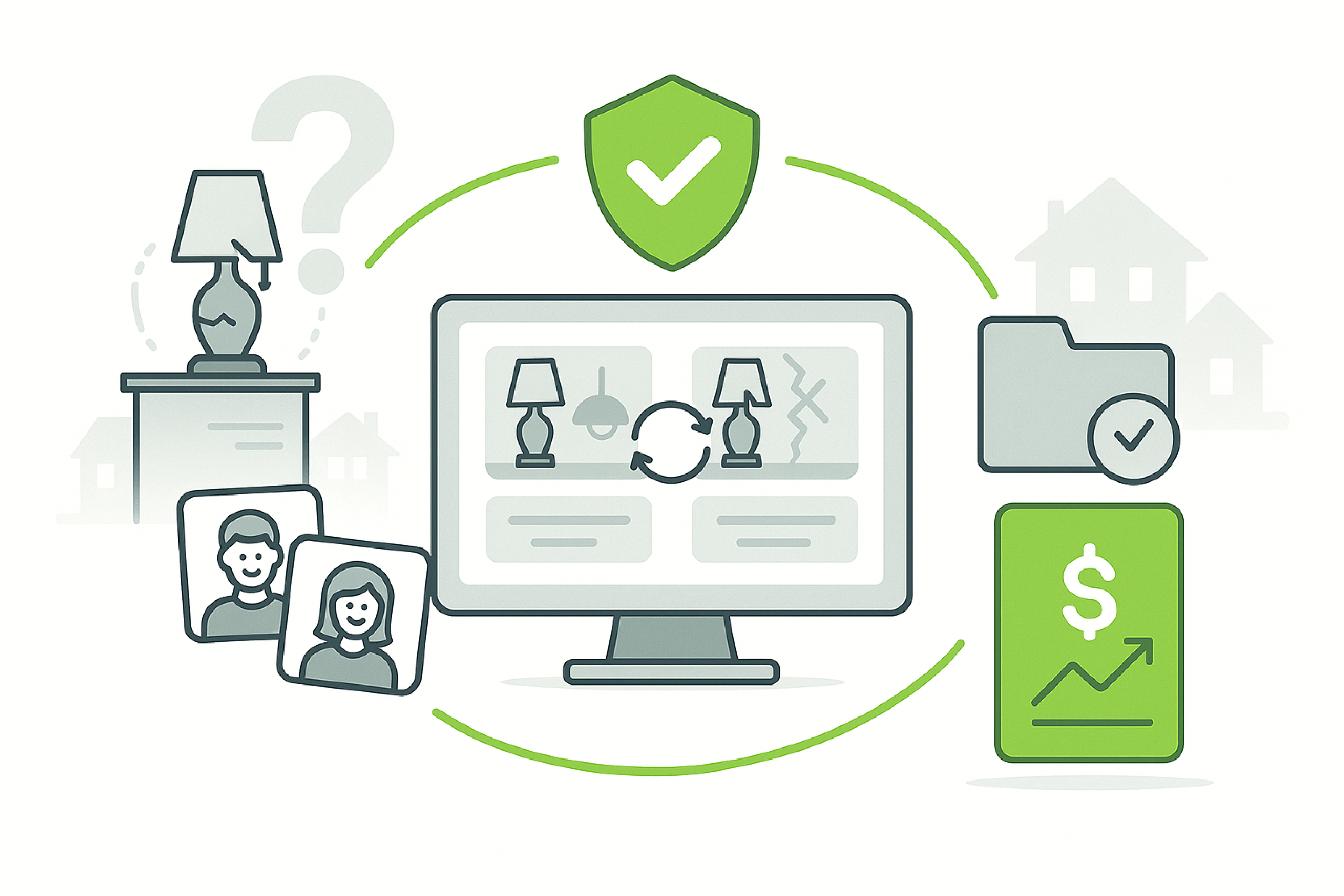

Property damage attribution, the ability to prove which guest caused damage, determines whether you recover repair costs or absorb them as losses. A vacation rental host recently discovered severe damage to wood paneling after a guest checkout, but the cleaning crew couldn’t determine which renter was responsible.
The result? The host incurred over $200 in completely irrecoverable losses, in addition to the cost of additional damage from the same booking, which included hammered nails in walls and missing TV accessories.
This isn’t an isolated incident. Attribution failures happen daily across thousands of vacation rentals, quietly draining thousands from host revenues.
What Is Property Damage Attribution (And Why It Matters)
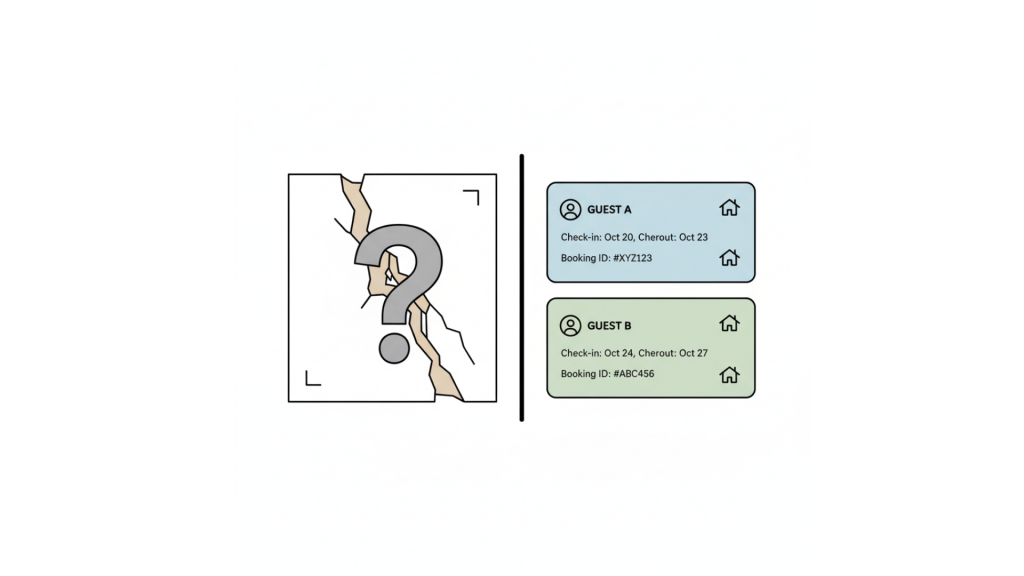
Property damage attribution is your ability to definitively link specific damage to a specific guest booking. It’s not about suspecting who did it or making educated guesses. Attribution means having irrefutable documentation that proves damage occurred during a particular stay.
Without solid attribution, platform claims fail. Security deposits can’t be charged. Insurance won’t pay out. You’re left holding the repair bill.
The financial impact compounds quickly. One attribution failure might cost $200. Ten failures per year mean $2,000 in unrecovered losses, and that’s conservative. Many hosts face attribution gaps on 20-30% of damage incidents.
The Real Cost of Attribution Failures
Most hosts only see the immediate repair cost when attribution fails. But the actual financial impact runs much deeper than the invoice from your handyman.
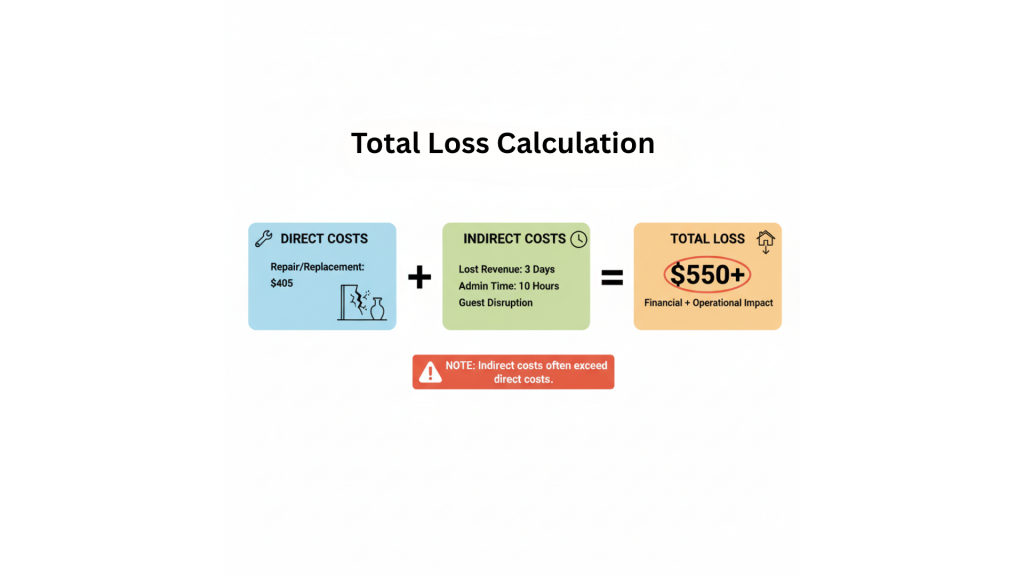
Direct Financial Losses
When you can’t prove which guest caused damage, you lose the entire repair cost immediately. No platform will approve a claim without clear evidence linking damage to a specific booking. Security deposits remain untouched because you can’t justify the charge. Your property insurance won’t cover it because you can’t demonstrate when the damage occurred. Wall repairs, missing remotes, damaged fixtures, stained linens, each unattributed incident represents 100% lost revenue recovery.
Indirect Costs
Beyond the repair bills, attribution failures create operational chaos that costs time and money. Property managers report spending 2-4 hours investigating each incident, trying to piece together what happened and when.
The hidden costs include
- $100-200 in opportunity cost per investigation
- Next guest arrivals delayed during repairs
- Reputation damage when new guests encounter issues
- Staff time consumed by disputes instead of revenue activities
- Lost booking revenue during repair periods
Why Attribution Fails in Most Vacation Rentals
Attribution doesn’t fail because of negligent staff or careless hosts. It fails because most vacation rentals lack systematic processes. The failure is structural, not personal.
The Cleaning vs. Inspection Confusion
Your cleaning crew arrives focused on one job: making the property spotless for the next guest. They’re thinking about vacuum lines, fresh linens, and bathroom shine, not forensic property inspections. When they notice obvious damage, they might mention it, but subtle damage like new scratches or missing items gets lost in the rush to finish turnover. And when damage gets discovered later, maybe by you during a personal visit or by the next guest, the critical question becomes impossible to answer: which stay did this happen during?
The Timing Gap
Most damage isn’t discovered immediately at checkout. It’s found hours or days later during cleaning, or even after the next guest has already arrived. Research from property management firms shows that damage discovered within 2 hours of guest departure has a 90% attribution success rate. After 24 hours, that rate drops to 30%. After multiple guests, it’s nearly zero. By the time multiple people have accessed the property, the evidence trail grows cold and memory becomes unreliable.
The Documentation Problem
Even hosts who try to document property conditions face challenges without systematic approaches. Photos get taken sporadically, timestamps are missing, and there’s no standardized checklist ensuring all high-risk areas get checked every single time. When platform claims require professional repair estimates and before/after documentation, hosts scramble to reconstruct evidence that should have been captured automatically. According to industry best practices, systematic documentation is the foundation of successful damage recovery.
Building a Property Damage Attribution System
A property damage attribution system isn’t complicated, but it must be systematic. Every checkout needs the same process, every time, without exception.
Pillar 1: Mandatory Post-Checkout Inspection
Create a non-negotiable inspection that happens after every guest departure. The next guest cannot check in until this inspection is complete and documented. Assign this as a specific task to a specific person, not just “whoever gets around to it”, with clear accountability and completion deadlines. This single requirement eliminates the vast majority of attribution failures.
Pillar 2: Photographic Evidence Chain
Document the property condition with photos after every single checkout. High-risk areas need coverage from multiple angles: walls, floors, appliances, electronics, and fixtures. Every photo must include automatic timestamps, and all images should be stored in organized folders by booking ID and date. This creates an unbreakable evidence chain that platforms and insurance companies accept without question.
Pillar 3: Clear Role Definition
Separate cleaning from inspection duties, even if the same person performs both tasks. If one person handles both responsibilities, inspection must be a distinct task completed before cleaning begins. Define exactly who escalates damage findings, who documents incident details, who initiates platform claims, and who contacts guests about charges. Role confusion is the most common cause of attribution gaps.
Pillar 4: Instant Incident Documentation
When damage is discovered, documentation must happen immediately, not after cleaning is finished or at the end of the day. Create a standardized incident report template that captures guest booking ID, discovery timestamp, photos from multiple angles, detailed damage description, and estimated repair cost. Professional property managers use task management systems to enforce these processes automatically, removing the possibility of human error or shortcuts.
How Technology Solves Attribution Automatically
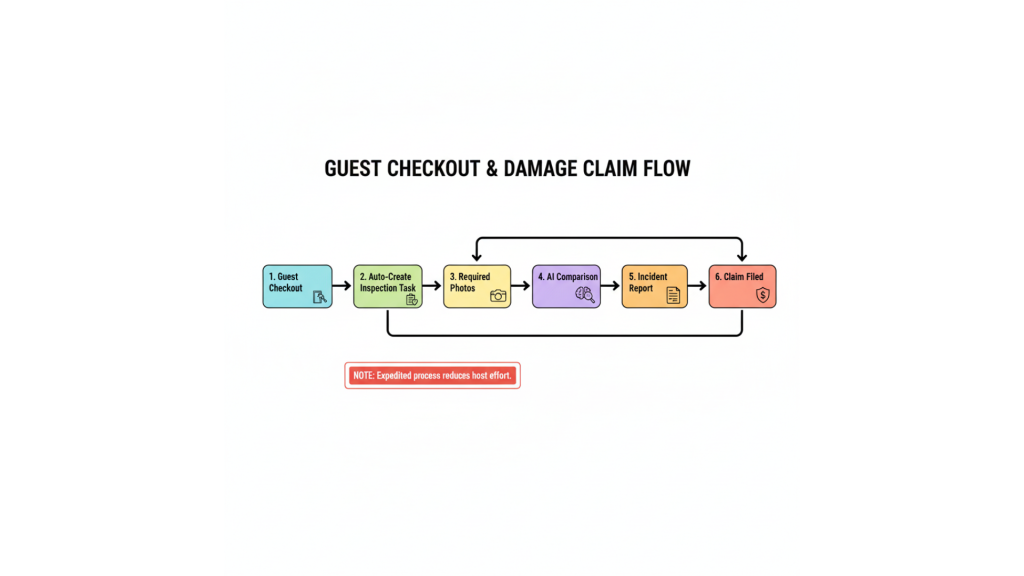
Manual attribution systems work, but they’re vulnerable to human error, time pressure, and inconsistency. Technology removes these vulnerabilities by making attribution processes automatic and unavoidable. Property management platforms like AdvanceCM turn attribution from a manual checklist into an automated certainty.
The Automated Attribution Process
When a guest checks out, the system automatically creates an inspection task assigned to your cleaning team lead. They can’t mark the turnover complete without uploading required photos of specified property areas. The platform compares new photos against the pre-arrival inspection photos using AI analysis to flag potential damage automatically. If damage is detected, the system generates a complete incident report, including time stamped before/after photos, guest booking details, suggested repair estimates, and pre-filled claim templates for platforms.
The result is 100% attribution certainty. Every piece of damage links definitively to a specific booking with evidence that platforms and insurance companies accept without question. According to vacation rental industry research, automated inspection systems reduce attribution failures by 85-95% compared to manual processes. The technology doesn’t just make attribution easier, it makes attribution failures virtually impossible.
Implementing Your Attribution System
You can start building attribution certainty today, even without automation technology. Begin with manual processes to prove the concept, then upgrade to automation for scale.
Immediate Actions
Create a simple inspection checklist covering your property’s most vulnerable areas. Print it and require your cleaning team to initial each item after every checkout, with a requirement for dated photos of walls, appliances, and high-value items. Define clear responsibilities in writing: who performs inspections versus cleaning, who receives damage notifications, who documents incidents, and who files claims. Establish a 2-hour rule where any damage must be documented within 2 hours of guest departure. This keeps the attribution window tight and evidence fresh, maximizing your chances of successful claims.
Technology Integration
Once you’ve proven the manual process works, explore automated attribution solutions that enforce these processes without requiring constant supervision. Look for platforms offering mandatory task completion before the next booking, required photo uploads with automatic timestamps, AI-powered damage detection, and integration with smart devices for real-time monitoring.
The investment in attribution technology typically pays for itself within 2-3 prevented losses. If you’re managing multiple properties, the ROI happens even faster as the system scales effortlessly across your entire portfolio.
💬 Join the discussion: Vacation rental hosts are sharing their attribution horror stories and solutions on Reddit..
Conclusion
Property damage attribution isn’t optional, it’s the difference between recovering costs and absorbing losses. The curtain rod incident cost one host $405 because they couldn’t prove which guest was responsible. With systematic attribution through proper documentation and automation, that loss becomes recoverable revenue.
Start with manual processes if needed, but plan to automate. Every day without an attribution system is another opportunity for unrecovered losses. Build your attribution system today; protect your revenue tomorrow.
FAQs
Q: How soon after guest checkout should I inspect for damage?
A: Within 2 hours of departure for best attribution certainty. After 24 hours, attribution becomes significantly more difficult, especially with back-to-back bookings.
Q: Can I file damage claims if I do repairs myself?
A: Yes, but you need professional repair estimates from at least 2-3 contractors to substantiate your claim, even if you ultimately do the work yourself.
Q: What if my cleaning crew finds damage but doesn’t know when it happened?
A: This indicates an attribution system failure. You need mandatory inspections after every checkout with photo documentation to prevent this scenario.
Q: Do booking platforms require attribution proof for damage claims?
A: Most platforms require clear evidence linking damage to a specific booking, including before/after photos and timestamps showing damage occurred during that guest’s stay.
Q: How do I handle damage discovered after multiple guests have stayed?
A: Without attribution evidence, recovery is nearly impossible. This is exactly why systematic post-checkout inspections are non-negotiable for every single booking.

Welcome to Tokeet’s Podcast — your trusted source for insights, trends, and strategies shaping the vacation rental industry. Each episode features expert interviews, data-driven analysis, and practical tips to help property managers grow their businesses, improve guest experiences, and stay ahead in a rapidly evolving market. Whether you’re new to short-term rentals or managing a large portfolio, tune in to stay informed and inspired.
Some days just don’t work for a guest arrival, whether it’s a holiday, a maintenance window, or a turnover day your team can’t cover. This episode walks through check-in and check-out restrictions, the most requested feature in AdvanceCM, now live in the Rentals module. You’ll hear how to block arrivals or departures for a date range, such as December 24 to 26, and how to allow check-ins only on the weekdays you choose. We also cover channel-specific rules, like keeping Airbnb to Friday and Saturday arrivals while direct bookings stay open through Sunday. Finally, we explain what to check before switching rules on, from existing reservations to sync time and visibility on booking sites.
Key Takeaways:
✅ Block check-ins or check-outs for any date range
✅ Limit arrivals to the weekdays you choose
✅ Set different rules for each booking channel
✅ Existing reservations stay unchanged
✅ More restrictions mean fewer guests can book, so review rules each season
Related Links:
Company: https://www.tokeet.com/Blogs: https://www.tokeet.com/blog/Blog: Check-in and Check-out Restrictions: How to Set Them in AdvanceCM 👉 https://blog.tokeet.com/check-in-and-check-out-restrictions/
This is a public episode. If you would like to discuss this with other subscribers or get access to bonus episodes, visit podcast.tokeet.com