

A guest cancels three days before arrival, citing a “family emergency.” Your calendar is blocked, the property is prepped, and you’re facing a week of lost income with no chance to rebook. The guest wants a full refund despite your policy.
This happens constantly in vacation rentals. Hosts feel torn between running a viable business and showing compassion. The financial stakes are real, but so is the emotional weight of saying no.
This guide shows how experienced hosts handle last-minute guest cancellations while protecting their bottom line.
Why Last-Minute Cancellations Hurt Your Business
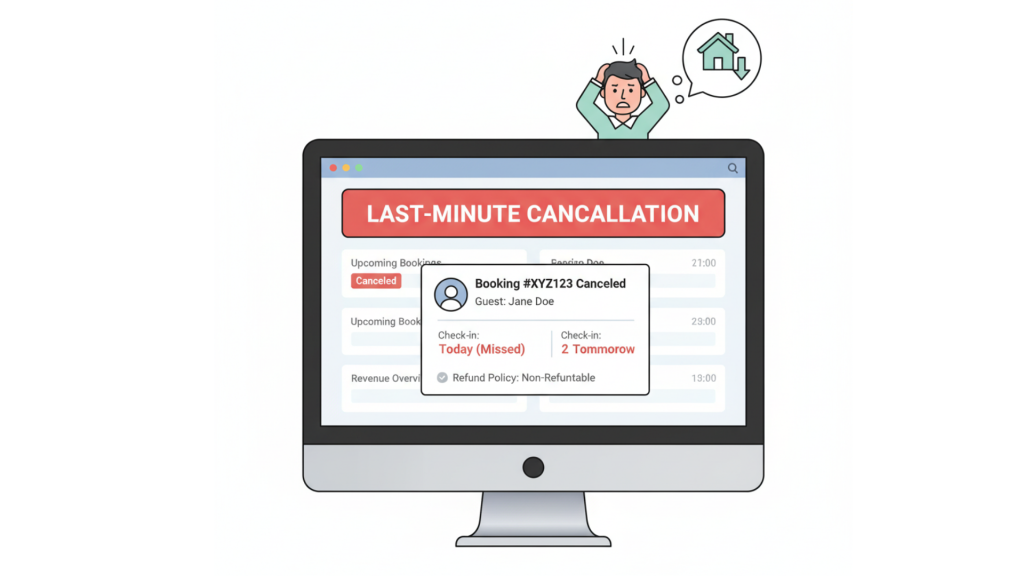
When guests cancel with little notice, hosts absorb multiple financial hits. Lost rental income is obvious, but you’ve also invested in cleaning prep, blocked your calendar, and turned away other bookings. According to vacation rental industry research, last-minute cancellations during peak seasons are nearly impossible to recover from.
Beyond money, these situations create stress. Many hosts entered this business to provide great experiences, not to enforce strict contracts during claimed emergencies.
The Real Costs
Lost rental income tops the list, nightly rate multiplied by reservation length, gone completely. But you’ve scheduled cleaning services, restocked supplies, and coordinated maintenance. Your calendar showed “booked” across platforms, meaning you rejected other inquiries. Some hosts lose 25-75% of potential revenue when cancellations happen too late. A single lost week can derail quarterly targets.
Most Hosts Say: Enforce Your Vacation Rental Cancellation Policy
Most experienced hosts advise one action: enforce your cancellation policy without exception. This isn’t heartless, it’s sustainable business practice. Your vacation rental cancellation policy exists for exactly these situations. Making exceptions based on emotional appeals undermines the framework protecting your revenue.
The business case is simple. You have bills to pay and a business to sustain. Guests who book enter a contractual agreement. They hold your property off the market, preventing other bookings. That agreement includes cancellation terms both parties accepted.
Direct Guests to Travel Insurance
Travel insurance exists to cover unexpected events that prevent travel. Family emergencies and medical issues are exactly what policies cover. Guests who don’t purchase insurance accept the financial risk of cancellation.
Many hosts use this template: “I’m sorry to hear about your situation. Family emergencies should be covered under your travel insurance. Please file a claim with your provider.” This maintains professionalism while directing guests to their proper recourse.
Tools like AdvanceCM’s Autopilot automate these policy communications, sending consistent messages about insurance and cancellation terms throughout the booking process.
Not All “Emergencies” Are Real
Not every “family emergency” qualifies as one. Experienced hosts report widespread skepticism. The vacation rental community has seen everything, from missed hair appointments to minor family disagreements. Some guests use the term strategically, hoping hosts will waive policies.
Genuine crises do happen. But the frequency of “family emergency” as a cancellation reason has created industry-wide caution.
Most Common Claims
The frequent excuses include
- Family emergency—ranging from legitimate deaths to vague “situations”
- Sudden illness—from hospitalizations to mild symptoms appearing pre-travel
- Work conflicts—claimed mandatory meetings or sudden trips
- Weather concerns—rain forecasts triggering cancellations
The problem isn’t that emergencies never happen, it’s that the term covers everything and is impossible to verify.
The Verification Problem
Some hosts request documentation, but asking for death certificates or medical records feels intrusive. Without verification, you’re relying on trust in an industry where trust is frequently violated.
The middle ground is treating all cancellations the same regardless of reason. Your policy applies uniformly, whether the guest changed their mind or faces a genuine crisis. Guests with real emergencies can file insurance claims with proper documentation.
Three Compromise Options That Protect Revenue
If strict enforcement doesn’t align with your values, several middle-ground strategies show flexibility while protecting revenue. The key is setting clear expectations upfront and documenting everything in writing.
Conditional Refund
This is straightforward: refund any nights you successfully rebook. Immediately refund non-recoverable fees like cleaning charges. Then actively try to fill canceled dates. Whatever revenue you recover goes back to the original guest.
The reality is harsh. If you can’t rebook with three-day notice, the guest receives nothing beyond initial fee refunds. One host kept a 25% deposit when their property didn’t rebook, noting, “Guests lost 25%, but we lost 75%.” Platforms like AdvanceCM with Channel Managers push newly available dates across multiple platforms, maximizing recovery chances.
Reschedule Option
Instead of refunds, offer to move the booking to future dates. Give the guest 12 months to reschedule, applying full payment to the new reservation. This maintains revenue while accommodating their situation.
The catch: guests can game this. Some rebook beyond your cancellation window, then cancel again. Others never rebook, leaving dead credit. Set clear terms, one reschedule only, credit expires after one year. Automata can automate reschedule workflows and expiration reminders.
Partial Refund
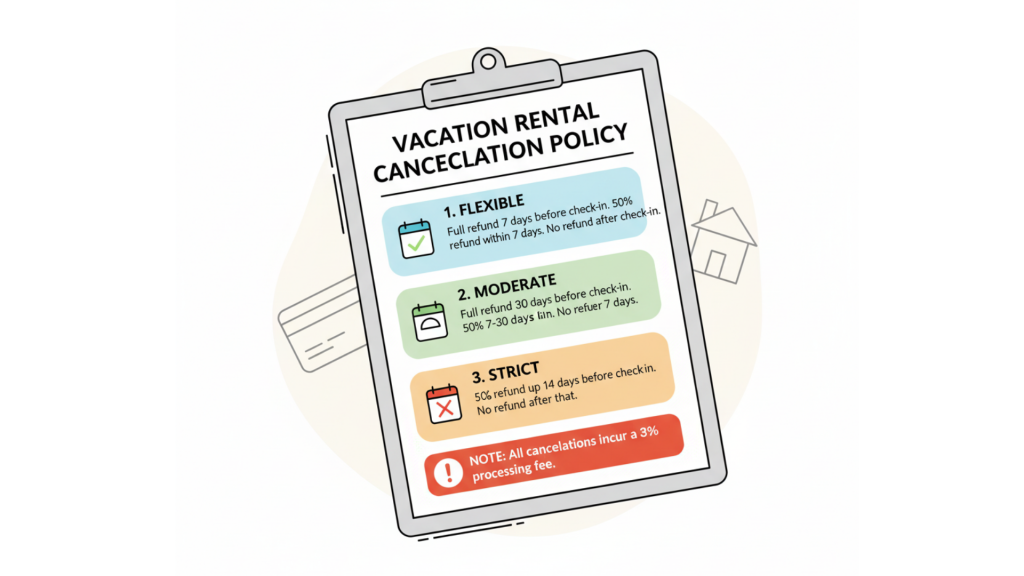
A partial refund splits the loss. Common structures include keeping 25-50% as a cancellation fee. Some use graduated scales: 50% refund for 7-14 days’ notice, 25% for 3-7 days, and nothing under 72 hours.
This acknowledges the guest’s situation while recognizing your lost opportunity. It’s more predictable, the guest knows exactly what they’ll receive.
Prevent Disputes Before They Happen
Smart hosts build systems that prevent disputes before they start. The time to address last-minute cancellations is during listing creation, not when an emergency email arrives.
Promote Travel Insurance
Add explicit recommendations in your listing description. Include insurance reminders in booking confirmations and pre-arrival messages. Some hosts link to insurance comparison sites in automated communications.
According to travel industry data, guests who purchase insurance rarely dispute cancellations, they file claims instead. Promoting insurance shifts the financial protection burden to the proper place.
Write Clear Policies
Use specific language that leaves no room for interpretation. Define exactly what “no refund” means and when it applies. Outline graduated cancellation windows.
Include this statement: “We understand unexpected situations arise. Guests are strongly encouraged to purchase travel insurance. Our cancellation policy applies uniformly to all cancellations regardless of reason.” This removes gray areas.
Automate Everything
Manual enforcement creates inconsistency and emotional fatigue. Automation solves both. Use tools like AdvanceCM’s Unified Inbox to create template responses that maintain professionalism while stating your policy clearly.
Set up automated reminders about insurance at booking, 30 days before arrival, and 14 days before arrival. Every cancellation request and response gets archived with timestamps. Check out AdvanceCM pricing to see how automation protects revenue.
Platform Override Risks
Your vacation rental cancellation policy isn’t necessarily final. Booking platforms can override host policies, sometimes repeatedly. One host’s platform reopened a dispute six times, eventually ruling for the guest and extracting a refund from the host’s next payout.
Platform terms typically allow them to resolve disputes at their discretion:
- Disputes reopen repeatedly—even after you “win.”
- Guest satisfaction prioritized—Platforms protect guest retention over hosts
- Override authority—They can refund despite your policy.
- Direct extraction—money taken from future payouts
Documentation is your only defense. Save every message and screenshot your policy as guests saw it. Consider direct booking alternatives using WebReady. Direct bookings mean you control the relationship and disputes without platform interference.
💬 Dealing with a last-minute cancellation right now? Share your story here, by joining the discussion.
Conclusion
Last-minute guest cancellations force hosts to choose: strict enforcement, compromise solutions, or empathetic flexibility. There’s no universal answer, it depends on your financial position, values, and risk tolerance.
Most successful hosts enforce policies backed by clear insurance communication. This protects sustainability while directing guests to proper channels. Others use conditional refunds or rescheduling to share the loss.
Whatever you choose, consistency matters most. Automated systems enforce your policy uniformly, protecting you from emotional decisions during stress. Build those systems now, before the next cancellation arrives.
FAQs
Q: Should I refund a guest who cancels at the last minute due to a family emergency?
A: Most hosts recommend enforcing your cancellation policy regardless of reason. Direct guests to file claims with their travel insurance, which covers emergencies. Making exceptions creates inconsistency and puts you in the position of judging which emergencies qualify.
Q: What’s a conditional refund, and how does it work?
A: A conditional refund means you’ll refund the guest only for nights you successfully rebook. You immediately refund non-recoverable fees like cleaning charges, then try to fill canceled dates. Whatever revenue you recover goes back to the guest. If you can’t rebook, guests receive only initial fee refunds.
Q: Can booking platforms override my cancellation policy?
A: Yes. Platforms can reopen disputes multiple times and rule for guests even when your policy clearly states no refunds. They may extract refunds from future payouts. Document everything and consider direct booking alternatives where you control dispute resolution.
Q: How can I prevent last-minute cancellation disputes?
A: Prominently recommend travel insurance in listings and communications. Use clear cancellation policy language that applies uniformly regardless of reason. Automate policy reminders at booking, 30 days before arrival, and 14 days before arrival.
Q: Is rescheduling better than refunding?
A: Rescheduling can work for guests with legitimate conflicts who still want to visit. Give them 12 months to rebook with payment applied to new dates. However, some guests may game this by rebooking and then canceling again. Limit to one reschedule with clear expiration terms.

Welcome to Tokeet’s Podcast — your trusted source for insights, trends, and strategies shaping the vacation rental industry. Each episode features expert interviews, data-driven analysis, and practical tips to help property managers grow their businesses, improve guest experiences, and stay ahead in a rapidly evolving market. Whether you’re new to short-term rentals or managing a large portfolio, tune in to stay informed and inspired.
Some days just don’t work for a guest arrival, whether it’s a holiday, a maintenance window, or a turnover day your team can’t cover. This episode walks through check-in and check-out restrictions, the most requested feature in AdvanceCM, now live in the Rentals module. You’ll hear how to block arrivals or departures for a date range, such as December 24 to 26, and how to allow check-ins only on the weekdays you choose. We also cover channel-specific rules, like keeping Airbnb to Friday and Saturday arrivals while direct bookings stay open through Sunday. Finally, we explain what to check before switching rules on, from existing reservations to sync time and visibility on booking sites.
Key Takeaways:
✅ Block check-ins or check-outs for any date range
✅ Limit arrivals to the weekdays you choose
✅ Set different rules for each booking channel
✅ Existing reservations stay unchanged
✅ More restrictions mean fewer guests can book, so review rules each season
Related Links:
Company: https://www.tokeet.com/Blogs: https://www.tokeet.com/blog/Blog: Check-in and Check-out Restrictions: How to Set Them in AdvanceCM 👉 https://blog.tokeet.com/check-in-and-check-out-restrictions/
This is a public episode. If you would like to discuss this with other subscribers or get access to bonus episodes, visit podcast.tokeet.com