
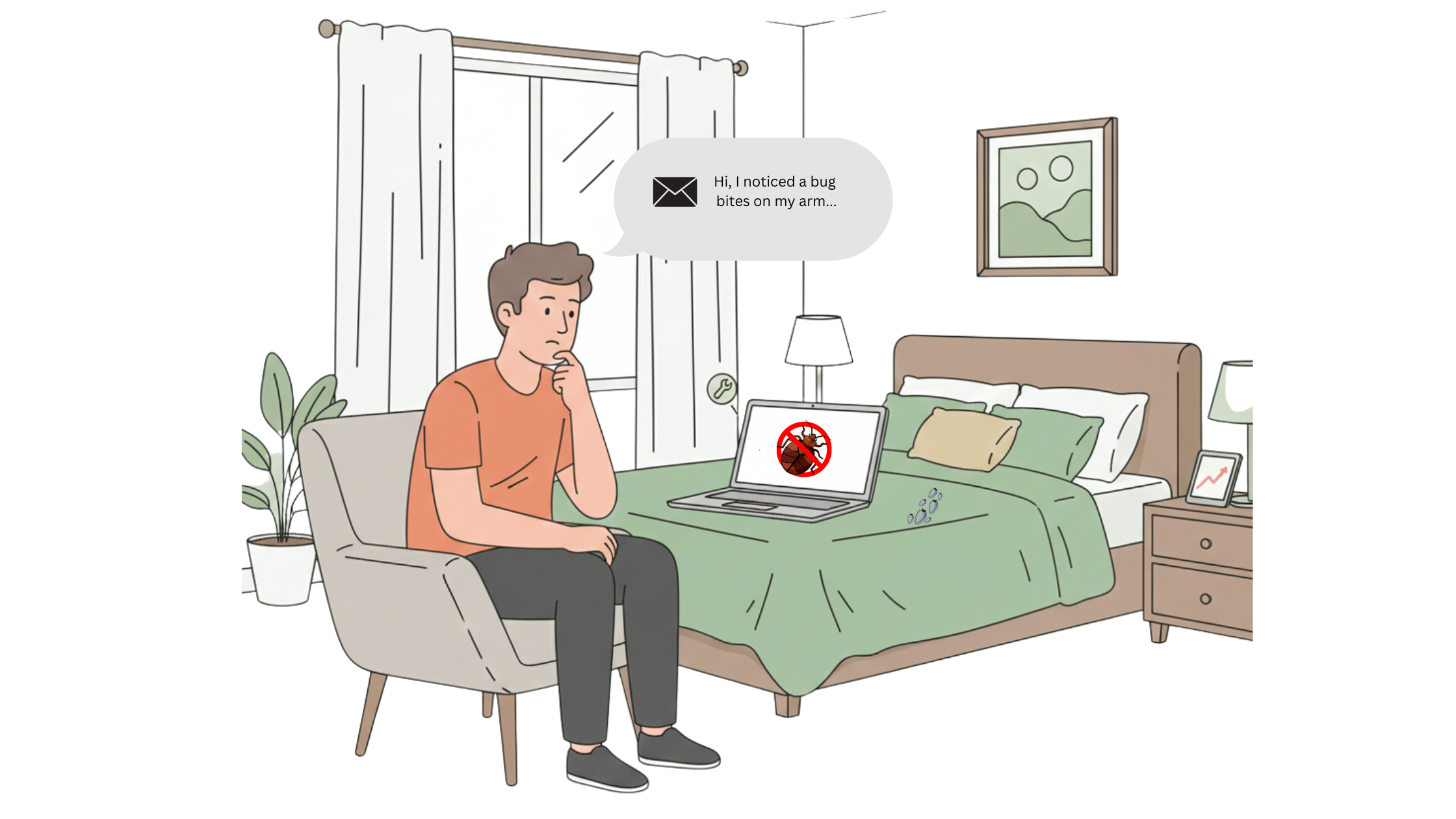
When a guest messages to say they’ve got bites and think it’s bedbugs, knowing how to handle bedbug complaints can be the difference between a calm process and a week-long headache. You’re suddenly dealing with guest safety, platform rules, and the worry that this might be either a real infestation or a refund grab. Photos of bites rarely help, because they all look similar and everyone has an opinion. It’s very easy to panic, over-refund, or dismiss the claim and regret it later.
This article walks you through a clear process for how to handle bed bug complaints, from the first guest message to the final resolution. It’s written for short-term rental hosts dealing with vacation rental bed bugs, where reviews and calendar availability are on the line. You’ll learn what to ask, when to call a professional, how to document everything, and how to make refund decisions based on facts instead of fear. You can turn this into a simple SOP your team can follow even on a busy Saturday.
Step 1 – Stay Calm and Get the Facts
The first rule of how to handle bed bug complaints is to respond quickly but not emotionally. Your goal is to show the guest you take this seriously while you gather enough detail to understand what’s going on. This first conversation becomes your record if the situation escalates with the platform. Think of it as a structured intake, just written in friendly language.
Ask when the guest first noticed the bites, which room and bed they used, and whether anyone else in their group had bites. Ask for clear photos of the bites and of any bugs they think they saw, while explaining that photos alone can’t confirm bed bugs. It also helps to ask whether they stayed anywhere else recently, because guests often bring potential exposure with them, especially in vacation rental bed bug cases.
What to Say (and Not Say) in Your First Reply
Your tone should be empathetic but neutral. Thank them for telling you, ask those key questions, and say you’ll arrange a professional inspection as soon as possible. Avoid phrases like “we definitely have bed bugs” or “we’ll refund your whole stay” before you have any evidence. In this early stage of how to handle bed bug complaints, you’re collecting facts, not diagnosing anything.
Step 2 – Book a Professional Inspection
The most important step in how to handle bed bug complaints is to bring in a licensed pest professional quickly. Your opinion, the guest’s opinion, and even your cleaner’s opinion are far less powerful than a written inspection report. Health authorities like the Centers for Disease Control and Prevention explain that proper identification and inspection are the foundation of effective bed bug control. CDC.
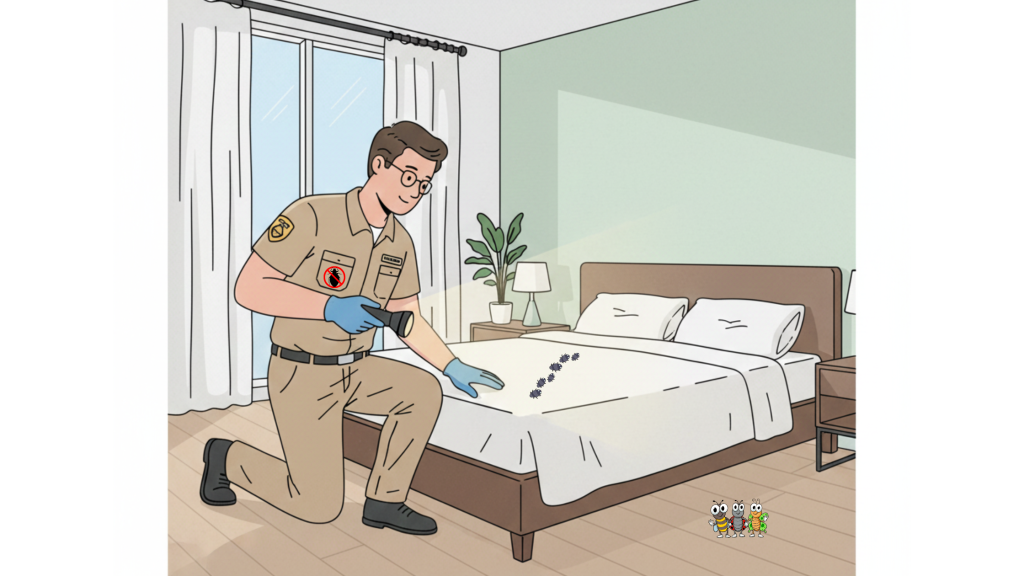
A licensed pest professional and their written report are your strongest evidence in any bed bug complaint.
A good inspector will check mattresses, box springs, frames, headboards, sofas, and baseboards. They’re looking for live bugs, but also for telltale signs like fecal spots, shed skins, eggs, and blood stains. University extension programs note that these clues are often more reliable than bite patterns, which can vary widely between people. University of Minnesota Extension: This kind of inspection is critical in vacation rental bed bug situations, where missing a problem can affect your next guest.
Why the Written Report Matters So Much
When the inspection is done, ask for a written report and invoice, even if they don’t find anything. If bedbugs are confirmed, the report documents the problem and recommends treatment so you can justify blocking nights and issuing refunds. If no evidence is found, the report is your best support when a guest insists on a full refund or files a complaint. In most cases the host pays for the inspection, but that cost is usually far less than multiple free nights or replacing furniture unnecessarily.
Step 3 – Document Everything in Your System
If you want to know how to handle bed bug complaints to feel less chaotic over time, treat documentation as part of the job. Every message, photo, and PDF you save is something you can point to later with guests, platforms, or insurers. You want to be able to say, “Here’s what was reported, and here’s everything we did” without digging through old texts.
Start by keeping all guest conversations in one place, instead of across multiple inboxes. A tool like the Unified Inbox lets you pull in Airbnb, Booking, email, SMS, and WhatsApp so you don’t lose the original complaint or your replies. Save screenshots or exports of the conversation, the guest’s photos, and your own photos if you visit the property. Then attach the exterminator’s report, invoices, and notes about which rooms were inspected and cleared for future stays in case a vacation rental bed bug claim appears later.
Use Tasks So Nothing Gets Missed
Treat the incident like a mini project. Create tasks for inspection, post-treatment cleaning, re-inspection, and reopening the calendar. With something like Task Management, you can assign those tasks to cleaners, maintenance staff, or yourself and track what’s done. This is especially helpful if you manage several listings and never want to rely on memory for a serious issue like this.
Step 4 – Make Evidence-Based Refund Decisions
This is the business side of how to handle bed bug complaints: deciding what you will do for the guest once you have the inspection results. Here you’re balancing empathy, fairness, and your long-term reputation. The key is to decide based on the report, not on who sounds more convincing in the messages.
If the inspection confirms bedbugs, you need to act decisively and ethically. That usually means refunding unused nights, helping guests relocate if possible, and blocking dates until treatment is completed and the unit is cleared. It also means being transparent about what you’re doing so the guest doesn’t feel ignored or dismissed in a genuine vacation rental bed bug situation. Clear communication can soften review language even when the experience itself was rough.
When the Report Finds No Evidence
If the inspector finds no bed bugs or signs of an infestation, you’re in a different branch of how to handle bed bug complaints. Share the report through the platform, thank the guest again for raising the concern, and explain that an independent professional did not find evidence of bed bugs. You might still offer a small gesture if you feel it’s appropriate, but a full refund is not automatically required when the facts don’t support it. Many experienced hosts also report review-extortion attempts in these moments, so keep everything on-platform and report any “refund or bad review” threats.
Step 5 – Prevent Future Bed Bug Complaints
The best way to deal with how to handle bed bug complaints is to make them much less likely in the first place. You can’t control what guests bring in their luggage, but you can make your units easier to inspect and issues easier to catch early. Public health and extension experts often recommend mattress encasements, reducing clutter, and regular inspections as practical steps for rentals. extension.entm.purdue.edu.
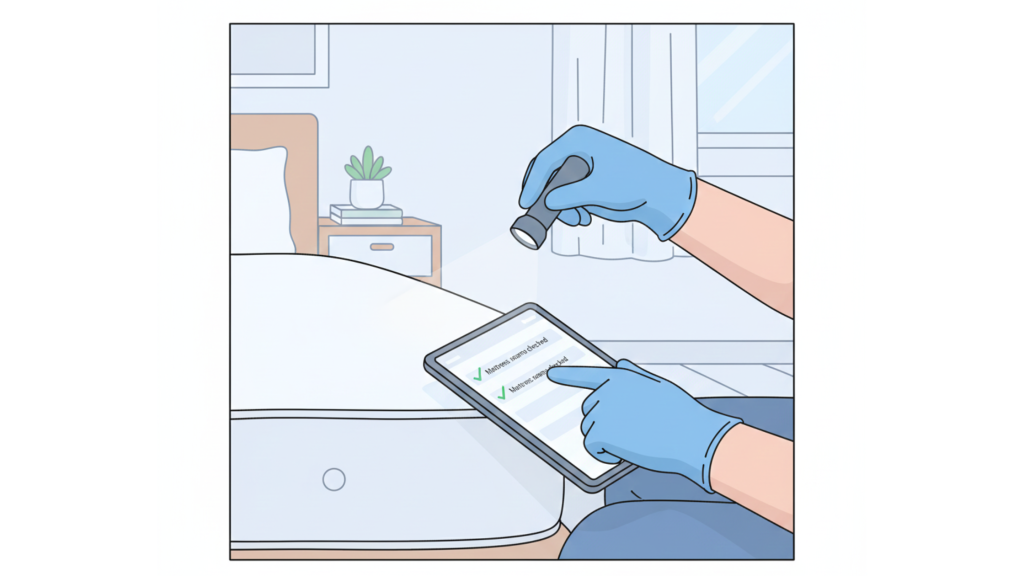
Simple prevention checklists and trained cleaners help you catch issues early and avoid repeat complaints.
Create a simple prevention checklist for every unit: mattress and box-spring encasements, light-colored linens, vacuuming around bed frames and baseboards, and a quick visual check during each turnover. Build in a deeper inspection monthly or quarterly for your busiest listings. Train your cleaners and maintenance team on what bedbugs and their signs look like using reputable photos and guides so they know when to raise a flag about possible vacation rental bed bugs.
Turn Your Process into a System
Finally, turn this playbook into a written SOP and connect it to your tools so it actually gets used. Add inspection and re-inspection tasks to your turnover checklists, and set reminders for deeper checks. When you’re ready to put more structure around communication, tasks, and property workflows, you can explore AdvanceCM to see how automation supports this across all your listings without adding more manual work.
💬 Want more real-world examples? Reading host threads on Reddit or other communities can help you see how others respond to similar claims..
Conclusion
Bed bug allegations are always stressful, but they don’t have to be chaotic when you know how to handle bed bug complaints step by step. Respond calmly, gather clear information, book a professional inspection, and document everything so you’re never relying on memory. Then make refund and relocation decisions based on what the report says, not on pressure at the moment.
Add prevention, training, and simple checklists so vacation rental bed bugs become rare and short-lived problems instead of disasters that tank your revenue. Turn this article into a simple SOP, share it with your team, and plug it into your systems. The next time that dreaded message arrives, you’ll have a plan to follow instead of improvising.
FAQs
Q: Can you tell if bites are from bed bugs just by looking at photos?
A:No, photos alone usually can’t confirm what caused a bite, and even doctors say bite appearance is unreliable. That’s why a professional inspection is such a key part of how to handle bed bug complaints.
Q: How quickly should I get a professional inspection after a guest complains?
A: Aim for the same day or within 24 hours if you can, especially with back-to-back bookings. Fast action shows you take vacation rental bed bugs seriously and helps protect future guests.
Q: Do I have to give a full refund if the inspector finds nothing?
A: Not necessarily. When a qualified inspector finds no evidence of bed bugs, many hosts offer a small goodwill gesture at most and rely on the report when discussing the outcome with the guest and platform.
Q: What if the guest threatens a bad review unless I refund them?
A: That’s review extortion, so keep your replies on the platform and report it through official channels. Stick to your documented process for how to handle bed bug complaints, and let your inspection report and records support you.
Q: How can I reduce the chances of bed bugs spreading from my rental to a guest’s home?
A: If an infestation is confirmed, follow the treatment plan fully and don’t reopen the unit until a professional clears it. Clear communication, proper treatment, and ongoing prevention routines are your best defenses against vacation rental bed bugs traveling home with guests.

Welcome to Tokeet’s Podcast — your trusted source for insights, trends, and strategies shaping the vacation rental industry. Each episode features expert interviews, data-driven analysis, and practical tips to help property managers grow their businesses, improve guest experiences, and stay ahead in a rapidly evolving market. Whether you’re new to short-term rentals or managing a large portfolio, tune in to stay informed and inspired.
Some days just don’t work for a guest arrival, whether it’s a holiday, a maintenance window, or a turnover day your team can’t cover. This episode walks through check-in and check-out restrictions, the most requested feature in AdvanceCM, now live in the Rentals module. You’ll hear how to block arrivals or departures for a date range, such as December 24 to 26, and how to allow check-ins only on the weekdays you choose. We also cover channel-specific rules, like keeping Airbnb to Friday and Saturday arrivals while direct bookings stay open through Sunday. Finally, we explain what to check before switching rules on, from existing reservations to sync time and visibility on booking sites.
Key Takeaways:
✅ Block check-ins or check-outs for any date range
✅ Limit arrivals to the weekdays you choose
✅ Set different rules for each booking channel
✅ Existing reservations stay unchanged
✅ More restrictions mean fewer guests can book, so review rules each season
Related Links:
Company: https://www.tokeet.com/Blogs: https://www.tokeet.com/blog/Blog: Check-in and Check-out Restrictions: How to Set Them in AdvanceCM 👉 https://blog.tokeet.com/check-in-and-check-out-restrictions/
This is a public episode. If you would like to discuss this with other subscribers or get access to bonus episodes, visit podcast.tokeet.com