
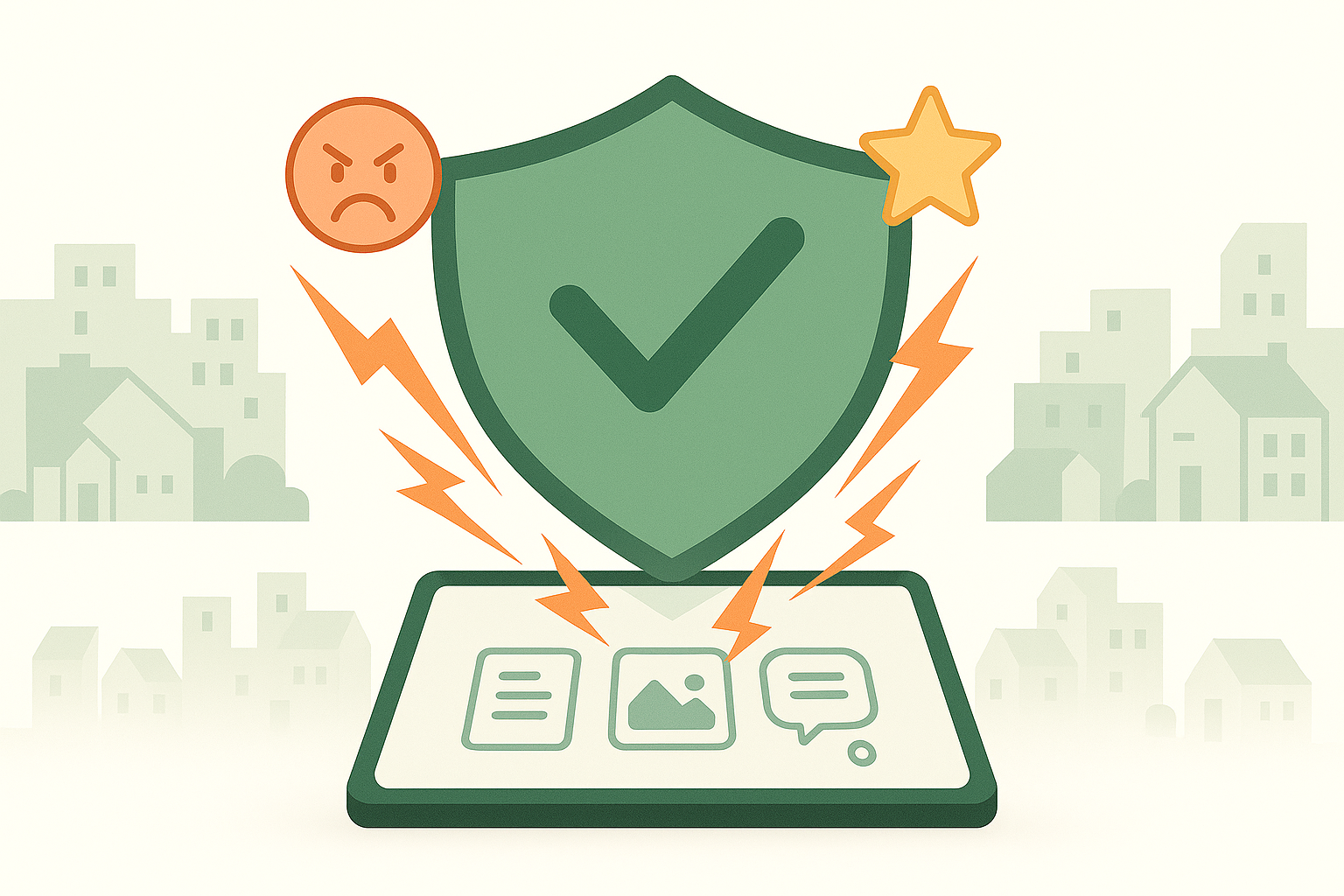
You enforce a no-smoking policy and catch a guest violating it on camera. You send a polite message. They apologize. Twenty-four hours after checkout, a one-star review appears calling you aggressive and confrontational. Your rating drops, and bookings slow to a trickle. After managing vacation rental properties for five years and handling over 500 guest interactions, I have seen this pattern destroy countless host businesses.
This guide shows you how to handle bad guest reviews before they happen and after they land. You will learn seven strategies to prevent retaliatory reviews, respond professionally without looking defensive, and protect your rating when enforcing house rules. These methods work for hosts managing any size property portfolio.
Why Bad Guest Reviews Destroy Your Airbnb Business
Bad guest reviews are not just annoying feedback. They directly control your search ranking, booking conversion rate, and pricing power on every platform. One retaliatory one-star review can cost you thousands in lost bookings, according to Cornell University research on review revenue impact. Platform algorithms prioritize listings above 4.8 stars, while guests filter out anything below 4.7 stars automatically. Even a 0.1-star drop pushes you from page one to page three in search results.
The revenue damage compounds quickly. Bad reviews lead to fewer bookings, which means less income to maintain your property. A declining property attracts more complaints, creating a downward spiral. Hosts describe this as living and dying by their reviews because ratings directly determine business survival. Your listing is not competing on amenities alone anymore but on reputation that one angry guest can destroy.
Why Guests Leave Retaliatory Bad Reviews
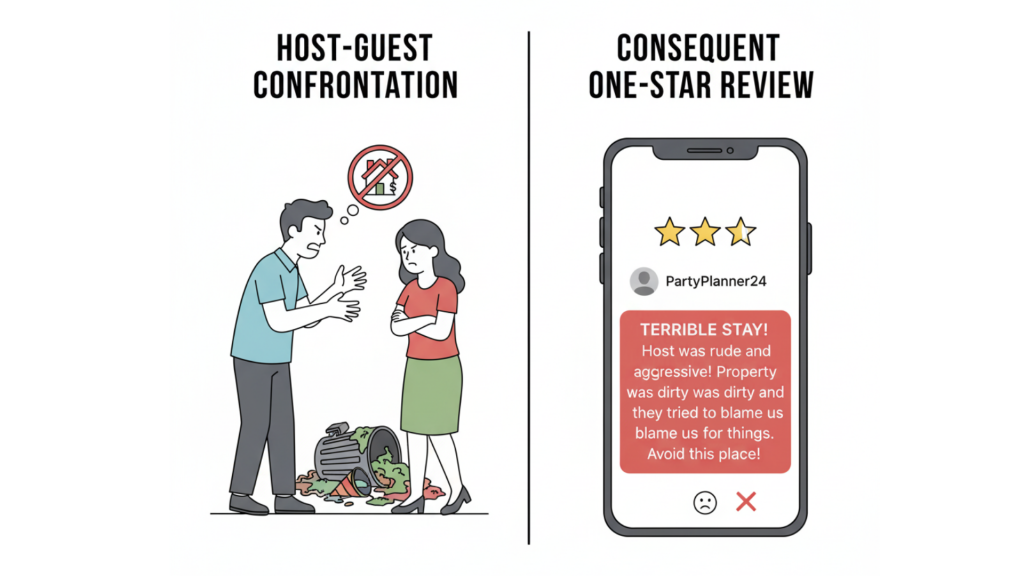
Retaliatory bad guest reviews follow a predictable pattern. The guest breaks a rule, the host enforces a boundary, the guest feels embarrassed or criticized, and the guest strikes back through reviews. Most negative reviews are not about legitimate property problems but retaliation against hosts who dared say no. Understanding this psychology helps you interrupt the cycle before reviews get posted.
The two-way review system creates a hostage situation. Guests know you need their five-star review to survive. They weaponize this leverage when you enforce policies they agreed to at booking. Even professional polite enforcement gets framed as aggressive in their revenge review, creating impossible choices for hosts.
The Enforcement Trap
Enforce rules and risk your rating, or ignore violations and lose control of your property. Hosts call this being caught between a rock and a dumpster fire. The system penalizes you for maintaining standards while rewarding rule-breaking guests with power over your business survival.
Seven Prevention Strategies Before Bad Reviews Happen
Prevention beats damage control every time. The most successful hosts build systems that reduce both violations and retaliation simultaneously. These seven strategies address problems at the source by setting expectations clearly and enforcing them systematically. Guests cannot claim surprise when rules are documented everywhere and automation handles enforcement.
Strategy implementation happens in stages from screening to documentation. Start with guest screening before accepting bookings, then layer in communication, automation, and documentation systems. Each strategy builds on the previous one, creating multiple barriers against both violations and retaliatory reviews.
Strategy 1 – Screen Guests at Booking
Review guest profiles for red flags like no reviews, new accounts, or evasive messages about trip purpose. Ask qualifying questions about house rules before accepting. Problem guests reveal themselves through pushback or non-response to simple policy confirmation requests.
Strategy 2 – Document Rules Everywhere
Triple-document your top three rules in the listing description, house rules section, and pre-arrival message. Use bold text and bullet points for visibility. Require acknowledgment responses so guests cannot later claim ignorance.
Strategy 3 – Automate Rule Enforcement
Technology removes personal conflict from enforcement. Property management platforms with device integration capabilities automate monitoring violations without manual surveillance. Systems can detect issues and send pre-written correction messages automatically.
- Noise monitoring alerts to violations automatically
- Message templates depersonalize corrections
- Guests cannot accuse you of being aggressive when systems enforce rules.
Strategy 4 – Send Pre-Violation Reminders
Proactive friendly reminders about key rules create paper trails showing you communicated expectations. Frame messages as helpful, not confrontational. Send same-day reminders about quiet hours, checkout times, and occupancy limits.
Strategy 5 – Document Everything in Real Time
Photograph your property before and after every stay. Screenshot all guest communications and time-stamp violations with photos or device data during the stay, not after. Real-time documentation carries weight, while retroactive evidence looks fabricated.
Strategy 6 – Address Violations Gently
Use concerned language instead of an accusatory tone when contacting guests about violations. Offer solutions, not just criticism. Say I noticed the camera picked up additional guests rather than you violated occupancy rules.
Strategy 7 – Calculate Enforcement Cost-Benefit
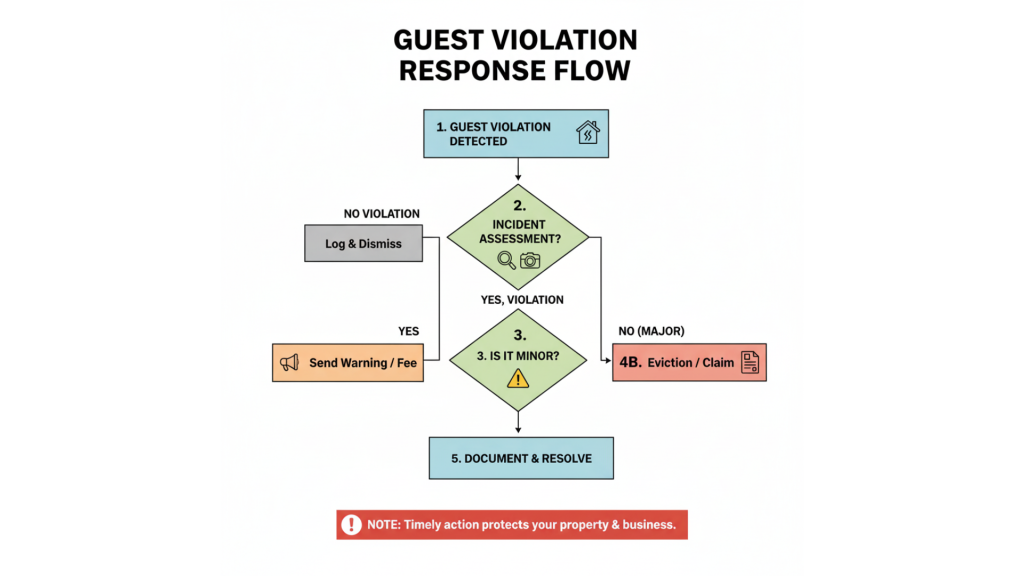
Minor violations on the last day may not be worth the confrontation risk. Reserve enforcement energy for serious violations like smoking indoors, unauthorized parties, or property damage. A guest who did not sort recycling correctly is not worth risking a retaliatory review.
How to Respond to Bad Guest Reviews Professionally
Your response is not for the angry reviewer. It is for the next hundred people reading your listing before booking. Harvard Business Review research shows professional responses to unfair reviews build more credibility than pages of five-stars alone. Wait 24 to 48 hours before responding to avoid emotional replies that confirm guest accusations.
Keep responses under 150 words, focusing on facts, not feelings. Acknowledge their perspective briefly, state relevant facts without arguing, reinforce your standards for all guests, and thank them for feedback. Future guests reading your calm, professional response will side with you over emotional accusations, especially when dozens of other reviews contradict the complaint.
The Response Formula
Structure every response the same way for consistency. Start with a brief acknowledgement like, “I am sorry you felt uncomfortable during your stay.” State one or two key facts, such as our records show we addressed the issue following our clearly stated policy. Reinforce standards by noting you maintain high standards for all guests. Close with simple thanks for their feedback.
When to Correct False Claims
Correct factual errors in one sentence, then pivot to professionalism immediately. Use evidence language like Our security footage confirms checkout occurred at the stated time. For vague complaints without specifics, acknowledge disappointment and point to your track record of positive reviews from hundreds of satisfied guests.
Building Your Review Buffer as Defense
The best protection is not preventing all bad reviews but building such a strong foundation that one or two negatives become statistical noise. Hosts with 200-plus positive reviews can absorb retaliatory one-stars without meaningful damage to search rankings or booking rates. Volume matters more than perfection since listings with mostly five-stars plus a few one-stars look more authentic than suspiciously perfect scores.
Most guests will not review unless asked directly. Request reviews within 24 hours of checkout with simple, grateful messages, avoiding pressure or begging. Centralized communication platforms streamline review requests across multiple properties, triggering personalized messages based on checkout dates automatically. Property managers can explore pricing options for automation platforms that handle review requests and guest communication at scale. Aim for one review per three bookings as your baseline success metric, and adjust your request timing or messaging if response rates drop below that threshold.
💬 Dealing with a retaliatory review right now? You are not alone in navigating the impossible choice between enforcing rules and protecting your rating. Join the discussion with other hosts sharing real strategies that worked when guests struck back.
Conclusion
Bad guest reviews will keep happening in a system where rule-breakers have equal voice with rule-followers. But hosts who protect themselves build crystal-clear expectations, document violations as they happen, respond professionally to unfair criticism, and create review buffers so strong that single bad reviews become irrelevant. Your business is too valuable to leave exposed to guest retaliation. Implement these prevention strategies this week.
FAQs
Q: Can I be penalized for declining a booking after seeing red flags in the guest profile?
A: No, most platforms allow hosts to decline bookings without penalty if you have legitimate concerns about guest suitability. The key is declining before accepting since canceling after acceptance carries penalties affecting your search ranking.
Q: How long should I wait before responding to a bad guest review?
A: Wait 24 to 48 hours minimum before responding to any negative review. This cooling period prevents emotional responses that make you look unprofessional to future guests reading your listing.
Q: What is the fastest way to build a review buffer if I am a new host?
A: Request reviews within 24 hours of every checkout using automated messages and focus on hosting frequently to accumulate volume. Aim for 20 to 30 positive reviews within your first six months to create meaningful protection.
Q: Should I leave a review for a guest who violated my rules but has not reviewed me yet?
A: If the two-week review window is almost closed and they have not reviewed you, leave an honest review about the violation since future hosts deserve to know. Your review protects the host community even if it does not help your current situation.
Q: Do automated noise monitoring devices actually prevent parties or just alert me after they start?
A: Quality monitoring devices prevent parties through deterrence since guests see the property has noise monitoring in your listing, plus real-time alerts let you intervene within minutes. Early intervention stops problems before they escalate into full parties requiring eviction.

Welcome to Tokeet’s Podcast — your trusted source for insights, trends, and strategies shaping the vacation rental industry. Each episode features expert interviews, data-driven analysis, and practical tips to help property managers grow their businesses, improve guest experiences, and stay ahead in a rapidly evolving market. Whether you’re new to short-term rentals or managing a large portfolio, tune in to stay informed and inspired.
Some days just don’t work for a guest arrival, whether it’s a holiday, a maintenance window, or a turnover day your team can’t cover. This episode walks through check-in and check-out restrictions, the most requested feature in AdvanceCM, now live in the Rentals module. You’ll hear how to block arrivals or departures for a date range, such as December 24 to 26, and how to allow check-ins only on the weekdays you choose. We also cover channel-specific rules, like keeping Airbnb to Friday and Saturday arrivals while direct bookings stay open through Sunday. Finally, we explain what to check before switching rules on, from existing reservations to sync time and visibility on booking sites.
Key Takeaways:
✅ Block check-ins or check-outs for any date range
✅ Limit arrivals to the weekdays you choose
✅ Set different rules for each booking channel
✅ Existing reservations stay unchanged
✅ More restrictions mean fewer guests can book, so review rules each season
Related Links:
Company: https://www.tokeet.com/Blogs: https://www.tokeet.com/blog/Blog: Check-in and Check-out Restrictions: How to Set Them in AdvanceCM 👉 https://blog.tokeet.com/check-in-and-check-out-restrictions/
This is a public episode. If you would like to discuss this with other subscribers or get access to bonus episodes, visit podcast.tokeet.com