
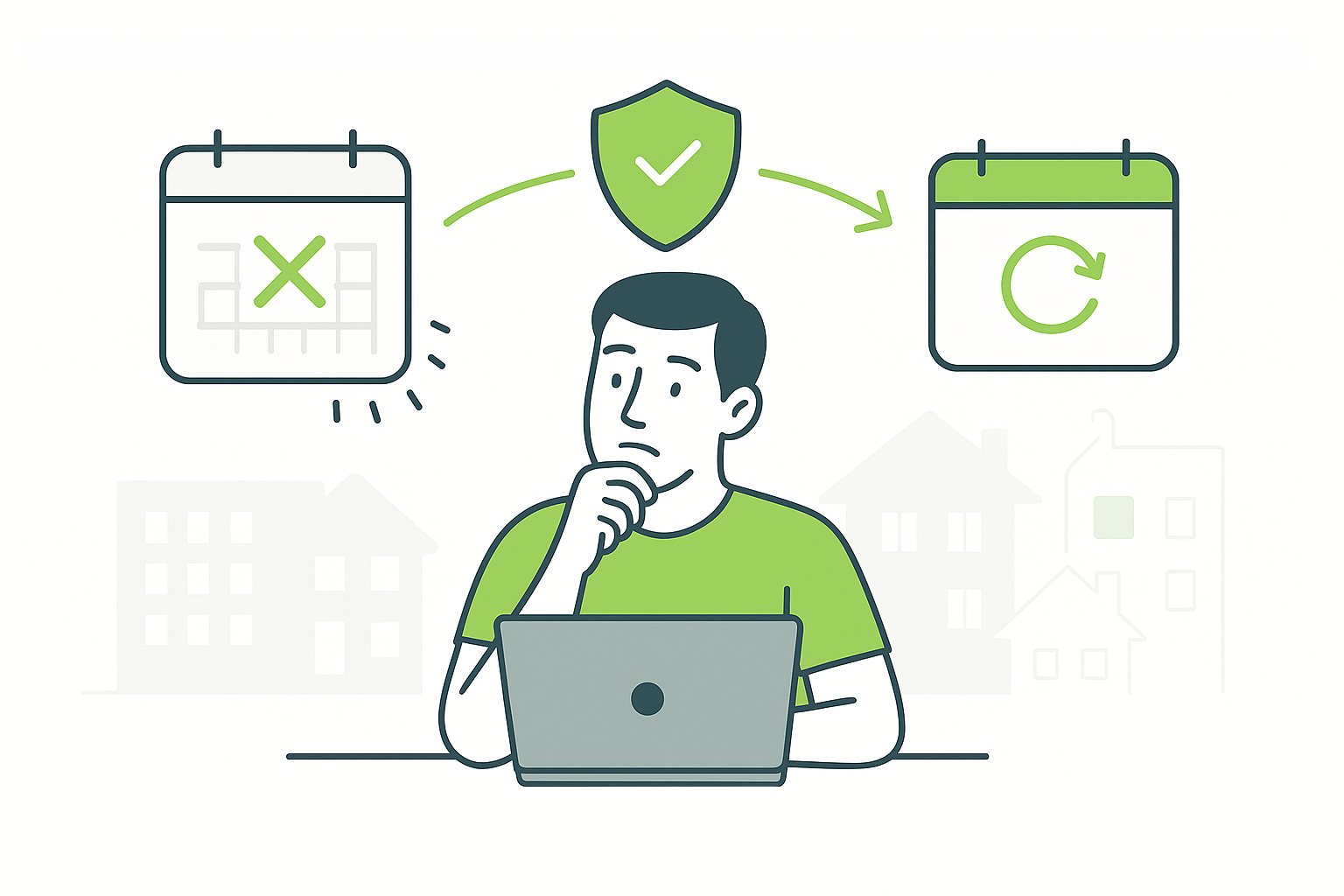
Guest rebooking after cancellation creates one of the trickiest situations property managers face. A guest officially cancels their reservation under your strict policy, and hours later they’re asking to come back. You want to be compassionate, but experienced hosts will tell you this scenario has “problem” written all over it.
This guide walks you through the risks, red flags, and protection strategies you need when guests request to reverse their cancellation.
Why Guests Request Rebooking After Cancellation
Understanding the motivation behind reversal requests helps you assess risk and respond appropriately. Some requests are legitimate. Others are scams designed to exploit your empathy and platform policies.

Legitimate Reasons
Real circumstances do change rapidly. A doctor might clear someone for travel after initially advising against it. Family emergencies sometimes resolve. Work situations shift. When genuine reversals occur, they typically come with apologetic communication and a willingness to adhere to your procedures.
The guest typically reaches out before officially canceling to discuss options. They understand they’re asking for a favor, not demanding a right.
Red Flags That Signal Problems
The pattern that concerns experienced property managers goes like this: the guest cancels first through the platform, then messages asking for a refund. This backward sequence suggests they expected the cancellation alone would trigger a full refund.
Watch for these warning signs:
- Cancels before asking questions—gets the refund first, explains later
- Overnight medical clearances—serious surgery concerns that vanish in hours
- Pressure tactics—demands immediate decisions or special treatment
- Resistance to procedures—won’t follow official booking channels
- Inconsistent details—The story changes when you ask follow-up questions.
A guest with stellar reviews isn’t automatically trustworthy in this situation. According to Hospitable’s analysis of guest behavior patterns, scammers often build positive review histories specifically to exploit trust later.
The Refund-Then-Cancel-Again Scam
This is the core risk that makes cancellation scam protection essential. Experienced property managers recognize this pattern immediately because they’ve either fallen victim to it or know someone who has. Understanding how this fraud works is your best defense against losing income twice on the same reservation.
How the Scam Works
You refund the guest’s original canceled booking out of goodwill. The guest makes a new booking for the remaining available dates. Within the platform’s free cancellation window (usually 24-48 hours), they cancel the new booking and receive a full refund. Now they’ve received two refunds for the same stay, and you’ve lost the income completely.
The scam is effective because it exploits the gap between platform policies and your good intentions. Once you’ve issued that first refund, there’s no clawing it back if they cancel again. Property managers who’ve lost thousands of dollars to this pattern now share a common piece of advice: never refund until after the new stay is complete.
Why Hosts Fall for It
We want to believe people are honest, especially when they present plausible reasons and have good reviews. The guest might mention family issues, medical problems, or other sympathetic circumstances that trigger our empathy. They’ve also left excellent reviews for past hosts, which creates false confidence.
Platforms often favor guests in disputes, which means you’re already operating from a defensive position. The fear of a negative review or platform penalty makes hosts more likely to bend rules.
The Overbooking Complication
Here’s where rebooking requests get even messier. Between canceling the original reservation and requesting its reversal, you accepted another booking that overlaps with some of those dates. Now you have competing commitments.
You can’t simply “uncancel” a reservation. Platform systems don’t work that way. The original booking is closed. Any new arrangement requires creating a completely separate reservation. Meanwhile, you have a legal obligation to honor the commitment you’ve already made to the guest who booked during that window.
This is where robust channel management becomes critical. Real-time calendar syncing across platforms prevents these conflicts from happening in the first place.
Professional Response Strategies
When a guest asks to rebook after canceling, follow these protection protocols regardless of how sympathetic their situation seems.
Immediate Actions
Don’t commit to anything immediately. Thank them for reaching out and explain you need to review the situation. Here’s your checklist:
- Pause before responding—take at least a few hours to assess the situation.
- Check all calendars—Verify availability across every platform you use.
- Review guest history—look for patterns in past bookings and communication.
- Keep it on-platform—only discuss through official messaging systems.
- Document everything—screenshot conversations and save all correspondence.
Setting Clear Boundaries
Treat the cancellation as final. If you choose to accommodate them, position it as a completely new booking with no connection to the canceled one. They don’t get special pricing or terms because of the situation. Some hosts explicitly include “non-rebookable after cancellation” language in their policies to avoid this back-and-forth entirely.
Be direct about this. “I understand your situation has changed. The original booking is canceled according to the strict policy terms. If the dates are available, you’re welcome to make a new booking as any guest would.”
Payment Protection Protocols
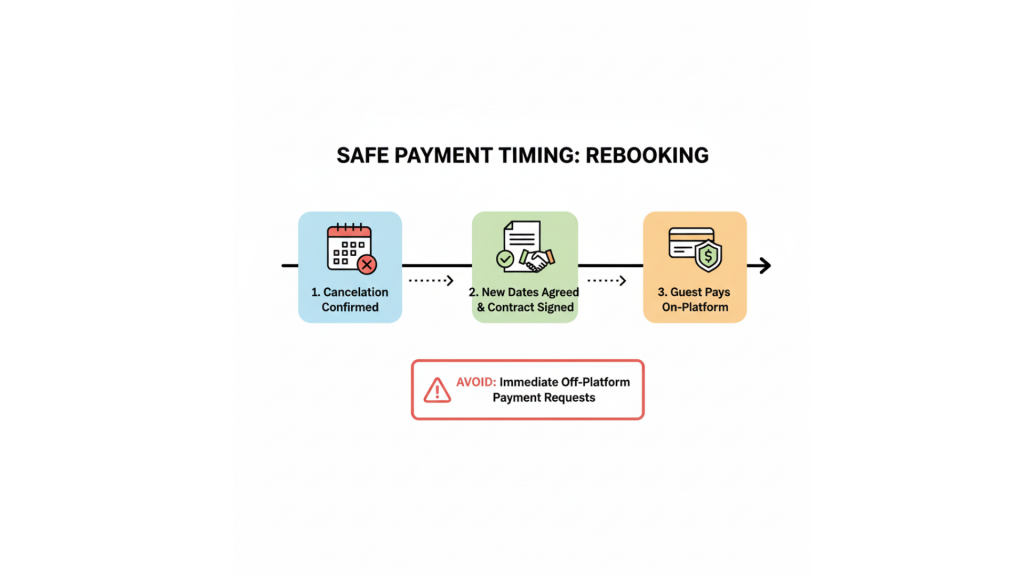
This is non-negotiable: never issue a refund for the canceled booking until after the new stay is complete. According to the Vacation Rental Management Association’s best practices, this timing protects you from the double-refund scam while still allowing you to be generous if the rebooking goes well.
Follow these payment rules:
- No early refunds—wait until checkout day of the new stay
- Official channels only – Require platform booking, not direct arrangements
- Written agreements – Document all terms in platform messaging
- Standard payment methods – Use platform payment processing systems exclusively
- No exceptions—Apply these rules even for guests with perfect reviews
When to Say Yes (and When to Say No)
Not every rebooking request is a scam. Here’s how to assess whether accommodation makes sense.
Green Light Indicators
The dates are genuinely available with no conflicts. The guest has a strong history with multiple positive stays and reviews. They’re willing to follow your protection protocols without argument. They clearly understand this is a new, separate transaction. Their explanation is consistent, and they’re not pressuring you for immediate decisions.
Look for these positive signs:
- Full availability—All requested dates are genuinely open
- Strong track record—multiple completed stays, not just reviews
- Protocol acceptance – Agrees to all your payment protection terms
- Patient communication—Gives you time to review and respond
- Consistent story—Details remain the same across messages
Red Light Situations
Trust your instincts when you see these warning patterns:
- Date conflicts—They want you to cancel another guest’s booking.
- Off-platform pressure—Suggests handling payment outside the system
- Refund demands—insists on immediate refund before new stay
- Story inconsistencies—Explanation changes or doesn’t add up
- Multiple exceptions—Has already requested other policy breaks
- Aggressive tone—threatens reviews or complaints
The Gray Zone
Sometimes the situation falls in the middle. You have partial availability but not all the original dates. The guest seems genuine, but something feels slightly off. They’re willing to compromise on dates or terms.
In these cases, many hosts offer alternative solutions: different available dates, referrals to nearby properties, or splitting the stay between your property and alternatives. You can be helpful without putting yourself at risk.
Automation as Your First Line of Defense
Technology prevents many of these situations from becoming problems in the first place. Automated communication tools send policy information the moment a guest books, so they understand cancellation terms upfront. Calendar synchronization prevents the overbooking complications that make rebooking logistically difficult.
Payment automation through systems like AdvanceCM handles the timing issues automatically. You can set holds, schedule refunds for specific dates, and maintain documentation trails without manual tracking. Professional message templates help you maintain boundaries while staying courteous.
The platforms that succeed at scaling from a handful of properties to larger portfolios do so by removing the manual decision-making from routine situations. That doesn’t mean eliminating human judgment. It means your systems handle the standard procedures so you can focus your energy on the truly unique circumstances.
Many property managers find that clear automated communication actually reduces rebooking requests. When guests receive detailed policy information and understand the terms before booking, they’re less likely to assume cancellations are flexible. See the current pricing for automation tools to understand how affordable prevention has become.
💬 Dealing with a tricky rebooking situation right now? Join the conversation with fellow hosts.
Conclusion
Guest rebooking after cancellation puts you in an uncomfortable position between compassion and business protection. The key is having clear procedures before these situations arise. Treat cancellations as final transactions. If you choose to accommodate a rebooking request, structure it as a completely new booking with payment protections in place.
You’re not heartless for maintaining boundaries. You’re running a business that requires consistent policies to remain viable. The hosts who succeed long-term are those who balance empathy with procedures that protect their income and prevent exploitation.
Start by documenting your rebooking policy today, even if you’ve never faced this situation. When it happens, you’ll respond from a position of clarity rather than scrambling under pressure.
FAQs
Q: Should I refund a guest who cancels due to a medical emergency?
A: Follow your stated cancellation policy regardless of the reason. If you offer a partial refund for rebooked nights, honor that commitment. Platforms have their own extenuating circumstances policies that guests can appeal through.
Q: Can a guest “uncancel” a reservation after officially canceling?
A: No. Once a cancellation is processed, that reservation is closed. Any new arrangement must be a separate booking. There’s no technical “undo” function on booking platforms.
Q: How do I prevent being scammed by the refund-then-cancel-again trick?
A: Never issue refunds for canceled bookings until after a new stay is complete. Require all rebookings to go through official platform channels. Document everything in platform messaging.
Q: What if a guest’s rebooking request seems genuine but the dates are partially booked?
A: Offer alternative solutions like different dates or referrals to other properties. You’re not obligated to cancel an existing booking to accommodate a rebooking request, even if the situation seems legitimate.
Q: Should I include a “non-rebookable after cancellation” clause in my policies?
A: Yes. Explicit language prevents back-and-forth negotiations and sets clear expectations. Many hosts add this after experiencing rebooking requests to establish firm boundaries upfront.

Welcome to Tokeet’s Podcast — your trusted source for insights, trends, and strategies shaping the vacation rental industry. Each episode features expert interviews, data-driven analysis, and practical tips to help property managers grow their businesses, improve guest experiences, and stay ahead in a rapidly evolving market. Whether you’re new to short-term rentals or managing a large portfolio, tune in to stay informed and inspired.
Some days just don’t work for a guest arrival, whether it’s a holiday, a maintenance window, or a turnover day your team can’t cover. This episode walks through check-in and check-out restrictions, the most requested feature in AdvanceCM, now live in the Rentals module. You’ll hear how to block arrivals or departures for a date range, such as December 24 to 26, and how to allow check-ins only on the weekdays you choose. We also cover channel-specific rules, like keeping Airbnb to Friday and Saturday arrivals while direct bookings stay open through Sunday. Finally, we explain what to check before switching rules on, from existing reservations to sync time and visibility on booking sites.
Key Takeaways:
✅ Block check-ins or check-outs for any date range
✅ Limit arrivals to the weekdays you choose
✅ Set different rules for each booking channel
✅ Existing reservations stay unchanged
✅ More restrictions mean fewer guests can book, so review rules each season
Related Links:
Company: https://www.tokeet.com/Blogs: https://www.tokeet.com/blog/Blog: Check-in and Check-out Restrictions: How to Set Them in AdvanceCM 👉 https://blog.tokeet.com/check-in-and-check-out-restrictions/
This is a public episode. If you would like to discuss this with other subscribers or get access to bonus episodes, visit podcast.tokeet.com