

Your early checkout refund policy is the only thing standing between you and a panicked “Can I get my money back? ” message at 11:47 p.m.
A guest decides to leave early due to bad weather at their next destination, a schedule change, or just changing their mind, and suddenly you’re caught between keeping the booking, keeping the guest happy, and keeping your rating.
This guide shows hosts how to turn early departure chaos into a clear early checkout refund policy you can actually enforce. You’ll see how experienced hosts handle “review hostage” threats, what to say about Airbnb early checkout refund expectations, and where tools like AdvanceCM fit in so you’re not improvising in every chat.
Continue reading →
Why your early checkout refund policy matters more than you think
In short-term rentals, your early checkout refund policy is not just a line in your house rules; it’s how you protect highly perishable inventory. Hotels can often absorb one empty night out of 300 rooms; a single-unit host who loses one night loses 100% of that day’s revenue. That’s why experienced hosts talk about each booked night as a “storefront” that exists for only 24 hours; once it’s gone, it’s gone.

Map your early checkout refund policy into a simple five-step workflow instead of guessing on every request.
Guests don’t always see it that way. Many arrive with a legacy hotel mindset and assume Airbnb early checkout refund rules work like the big chains: leave early, pay less, no big deal. A lot of friction comes from this mismatch. The fix is to make your policy boringly clear, repeat it in multiple touchpoints, and keep it aligned with your cancellation rules and local law, ideally supported by a simple short-term rental operations guide.
Before vs. after a clear early checkout refund policy
Before you write anything down, decisions tend to be made on emotion. One guest cries about stormy weather at their next stop and gets a full refund; the next guest in the same situation gets nothing and leaves a one-star review. Messages are buried in the app, you can’t remember what you promised, and any Airbnb early checkout refund request feels like a fresh fight.
After you lock in a clear rule, everything gets calmer. You know when you refund (and when you don’t), guests see the policy before they book, and every conversation follows the same script. You’re not being “mean”; you’re sticking to a written early checkout refund policy that’s visible and consistent, backed up by your message history and your listing details.
Before:
- Last-minute refund requests trigger panic and guesswork.
- You cave when guests hint at bad reviews.
After:
- You respond with one clear policy every time.
- You can show platforms exactly what the guest agreed to.
5 steps to build an early checkout refund policy you can enforce
Step 1 – Decide your baseline rule
Start by deciding what kind of early checkout refund policy fits your risk tolerance. Some hosts go strict: no refunds after check-in if the property is usable and as described. Others use a “rebook-to-refund” rule; if the dates get rebooked, they’ll refund all or part of the unused nights.
There’s also the “future credit” model, where you keep the cash now but offer a free or discounted night later, often with a one-year limit. Seasoned hosts like this because it shows goodwill while preserving cash flow, and if the guest redeems, they usually book extra nights at full price. Choose the baseline that fits your occupancy, market demand, and how much emotional bandwidth you want to spend on refund debates.
Step 2 – Define exceptions and your travel insurance stance
Next, decide where you draw the line on exceptions. Many experienced hosts will only bend their early checkout refund policy for major events: mandatory evacuations, genuine emergencies, or platform-verified issues with the property. Bad weather at the guest’s next destination or a change of heart usually doesn’t qualify.
This is where you point guests to travel insurance instead of your wallet. A lot of travelers don’t realize standard plans often only kick in for serious events, while “Cancel for Any Reason” covers more but still rarely pays 100%. Setting this expectation early makes later Airbnb early checkout refund conversations feel less like a surprise and more like a reminder of what they agreed to.
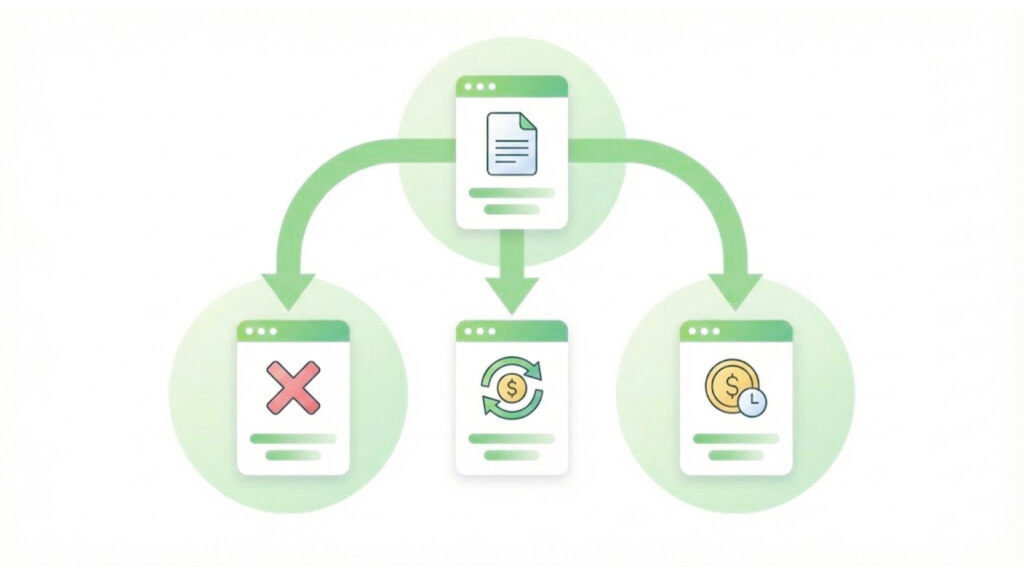
Choose your rule once, no refund, rebook-to-refund, or future credit, and let every early checkout case follow the same path.
Step 3 – Write guest-facing wording in plain language
Now turn your rules into short, guest-friendly text you can reuse. One expert move: spell out that any refund or re-booking help depends on the guest officially modifying or cancelling their reservation in the platform so your calendar is open. If they keep the dates blocked, you can’t resell the nights, and you can’t reasonably refund.
Keep it simple and specific. For example, your early checkout refund policy clause might say that unused nights aren’t refunded unless you rebook the dates, that guests must submit changes through the app, and that travel insurance is the right place to claim for non-property issues. This wording belongs in your listing, house rules, pre-arrival message, and digital guidebook so it never feels like a rule you made up after the fact.
Step 4 – Map the “what if” scripts and review risk
This is where your early checkout refund policy turns into a simple playbook. List the top four scenarios you’ve seen or are afraid of: bad weather elsewhere, flight changes, “we just want to go home early,” and “refund me or I’ll review you.” Then write a two-to-three sentence response for each, aligned with the rule you chose in Step 1.
Hosts swap a lot of “review hostage” stories for a reason. Platforms usually allow a guest to be angry in a review because you didn’t refund; they only step in when there’s clear extortion (“refund me or I’ll leave one star”). Your script should be calm, consistent, and fully on-platform so, if you do need support, your side of the story is right there.
Step 5 – Turn it into a workflow with AdvanceCM features
A policy that lives in your head will fail the first time you’re tired, busy, or dealing with three check-ins at once. This is where AdvanceCM features help you turn words into workflow: pre-arrival templates that repeat your policy, in-stay check-ins that remind guests how to change their booking, and a clean timeline of every message when support gets involved.
You can store your scripts, tag conversations that include Airbnb early checkout refund requests, and keep every “we want money back” thread in one place instead of scattered across apps. Start with one property.
Try it on one property for free. →
Using AdvanceCM to protect your policy (and your rating)
Once your policy is written, your messaging tool should enforce it for you. When you run communication through AdvanceCM messaging and automation, the same early-checkout scripts fire for every stay: booking confirmation, pre-arrival reminder, mid-stay check-in, and any refund request. That means no more rewriting your stance from scratch while a guest hovers in your inbox.
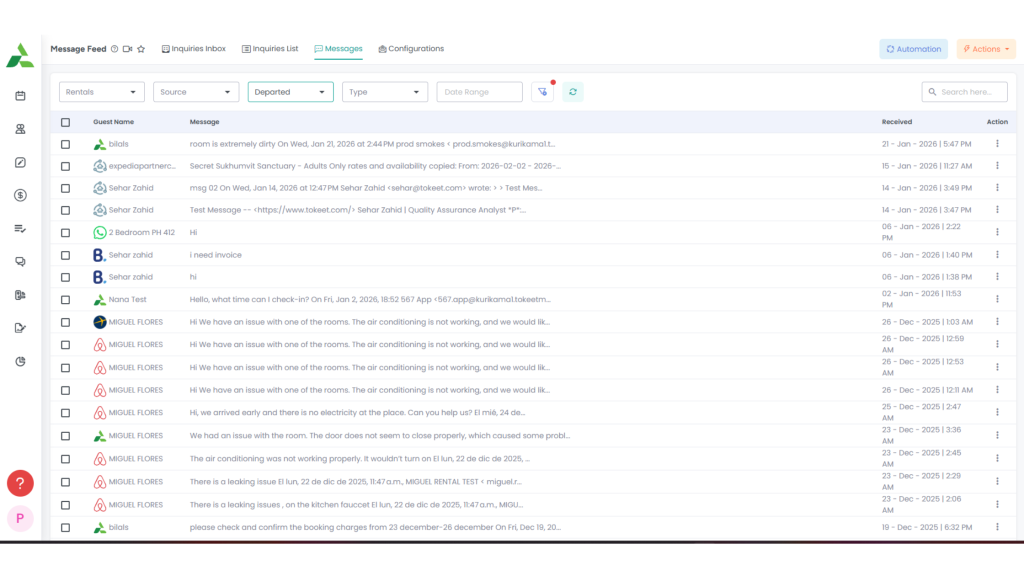
AdvanceCM turns your early checkout refund policy into reusable templates, tags, and a clear message history when you need proof.
If you’re a Tokeet user, centralizing guest chats and notes makes it much easier to prove you followed your early checkout refund policy consistently. You can tag guests who push hard for refunds as “refund seekers,” see patterns over time, and show platforms that you gave guests clear, documented options. That’s a very different story from “We argued in DMs, and I can’t remember what I said.”
Handling real-world refund requests without panicking
When the early checkout message lands, your first move is to slow the conversation down and follow your own script. Thank the guest, confirm their new checkout date, and remind them of the Airbnb early checkout refund rules you shared earlier, especially the need to submit a date change or cancellation so the calendar can be opened. If you’re using a rebook-to-refund or future-credit model, lay out those options clearly and give them a simple “yes/no” choice.
Here’s a simple reply you can adapt:
“Thanks for letting me know you’ll be checking out early. I’m happy to follow the policy you agreed to when booking: if you submit a change through the app and I can rebook the unused night, I’ll refund that portion. If it doesn’t rebook, the original nightly rate still applies, but I’m glad to help with a future-night credit if that’s useful.”
If a guest hints at a bad review, stay calm and bring the conversation back to your written early checkout refund policy: “I need to follow the policy you agreed to when you booked, but here’s what I can do for you.” If they cross into outright threats, keep everything in the platform and contact support with the message history. Some hosts also use a “diary”-style note in their system to flag guests who pushed hard for refunds so future stays are assessed with eyes wide open, not on instinct alone, and you can read more approaches in pieces like Handling Difficult Airbnb Guests.
Conclusion
The real goal isn’t to win arguments with guests; it’s to design a clear early checkout refund policy that stops those arguments from starting. When your rule, your scripts, and your tools all match, refund requests become routine instead of emotional, and your ratings reflect the stay, not the fight. Write your early checkout refund policy once, make it visible, and let it quietly protect every booking.
Try it on one policy, then roll it out across your calendar.
FAQs
1. Do I have to offer any refund for early checkout?
In most short-term rentals, if the property is safe, clean, and as described, you don’t have to refund unused nights. What matters is that your early checkout rules are clearly shown before booking and enforced consistently.
2. How does Airbnb handle early checkout refund requests?
An Airbnb early checkout refund usually falls under the host’s cancellation policy, and Airbnb’s own Help Center article on guest cancellations and host payouts confirms that refunds are calculated based on the policy you’ve chosen. Airbnb can step in when safety, accuracy, or serious disruption is involved, but not just because a guest’s plans changed.
3. Can I get a refund only if I rebook the dates?
Yes, many hosts use a “rebook-to-refund” model as part of their early checkout refund policy. Just make sure guests know they must officially change or cancel their stay so the calendar opens before you can try to resell the nights.
4. What should I do if a guest threatens a bad review over a denied refund?
Stay calm, restate your policy, and keep everything inside the booking platform so there’s a clear record. If the guest explicitly trades a good review for money, that can qualify as extortion and may be removable by support.
5. Where should I show my early checkout refund policy to guests?
Put it everywhere guests naturally look: the listing description, house rules, pre-arrival message, and your digital guidebook. For deeper policy work, backing it up with posts like vacation rental cancellation policy templates makes it easier for guests and staff to stay on the same page.

Welcome to Tokeet’s Podcast — your trusted source for insights, trends, and strategies shaping the vacation rental industry. Each episode features expert interviews, data-driven analysis, and practical tips to help property managers grow their businesses, improve guest experiences, and stay ahead in a rapidly evolving market. Whether you’re new to short-term rentals or managing a large portfolio, tune in to stay informed and inspired.
Some days just don’t work for a guest arrival, whether it’s a holiday, a maintenance window, or a turnover day your team can’t cover. This episode walks through check-in and check-out restrictions, the most requested feature in AdvanceCM, now live in the Rentals module. You’ll hear how to block arrivals or departures for a date range, such as December 24 to 26, and how to allow check-ins only on the weekdays you choose. We also cover channel-specific rules, like keeping Airbnb to Friday and Saturday arrivals while direct bookings stay open through Sunday. Finally, we explain what to check before switching rules on, from existing reservations to sync time and visibility on booking sites.
Key Takeaways:
✅ Block check-ins or check-outs for any date range
✅ Limit arrivals to the weekdays you choose
✅ Set different rules for each booking channel
✅ Existing reservations stay unchanged
✅ More restrictions mean fewer guests can book, so review rules each season
Related Links:
Company: https://www.tokeet.com/Blogs: https://www.tokeet.com/blog/Blog: Check-in and Check-out Restrictions: How to Set Them in AdvanceCM 👉 https://blog.tokeet.com/check-in-and-check-out-restrictions/
This is a public episode. If you would like to discuss this with other subscribers or get access to bonus episodes, visit podcast.tokeet.com