
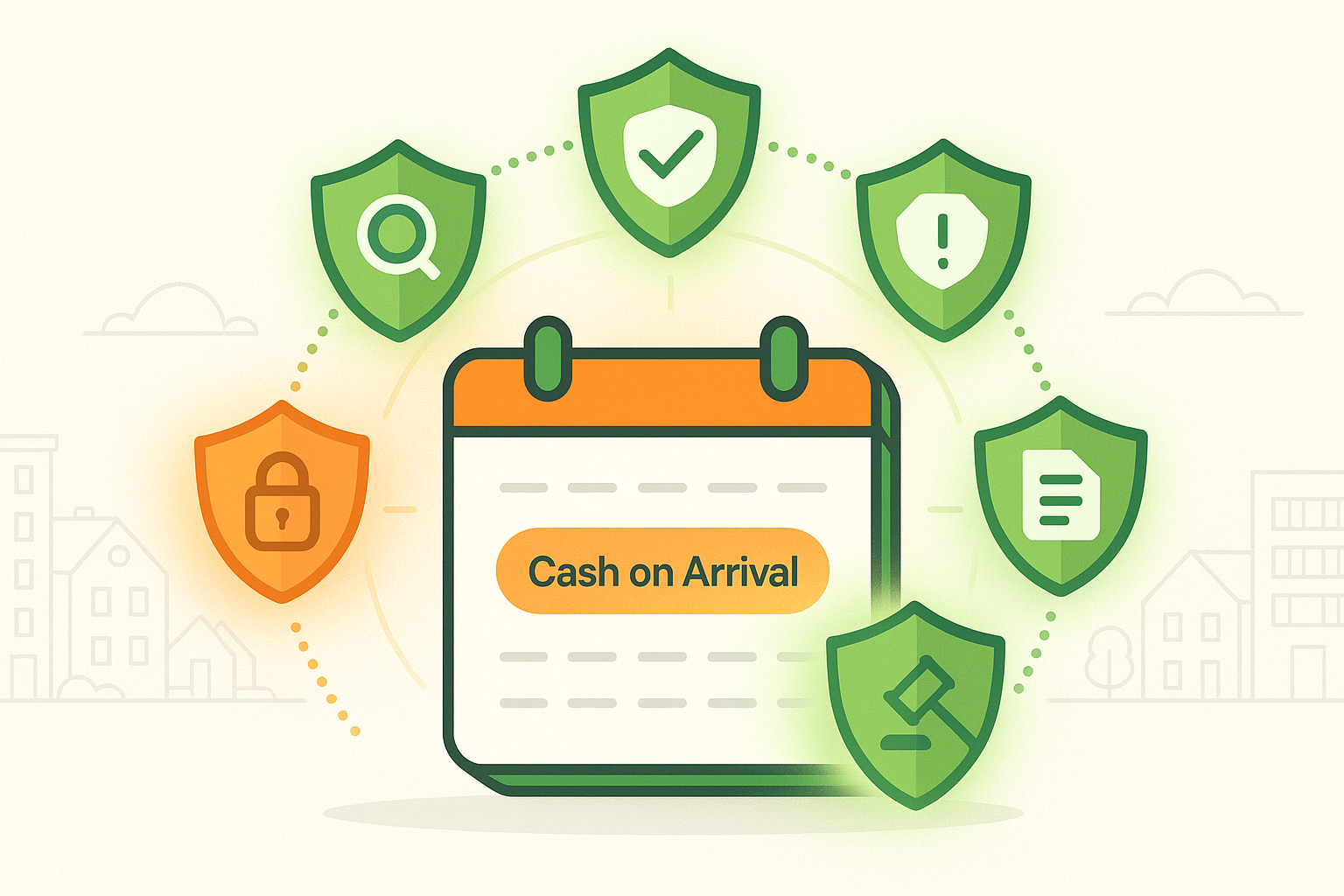
Cash on arrival bookings are a necessary reality for many vacation rental hosts, especially in emerging markets where requiring prepayment limits visibility and starves the calendar of much-needed reservations. However, reliance on cash creates a critical financial vulnerability for hosts, leaving businesses exposed to no-shows and outright fraudulent calendar blocking. Hosts often find they have zero financial recourse when guests simply fail to appear for a cash reservation, as there is no credit card on file to enforce any fee. This unmitigated risk places the entire financial burden of a lost booking solely on the host’s business, where platform support is often described as slow and completely ineffective.
This guide reveals five proven strategies you can implement right now to secure these reservations and protect your income against both genuine no-shows and malicious competitor activity. You will learn specific steps to guarantee payment in case of a no-show, how to identify and immediately deal with competitor calendar blocking, and practical methods for overcoming platform shortcomings. By adopting these essential strategies, you can minimize your financial exposure and maximize the profitability of every cash on arrival booking that you choose to accept.
1. The Core Risk: Unmitigated Loss of Cash Bookings
The core problem with unsecured cash-on-arrival bookings is the complete absence of any financial mechanism to enforce your policies, leaving you with no way to recover lost funds. When a guest doesn’t show up, you lose both the nightly rate and the entire opportunity cost of the room being blocked from other potential customers. This exposure is magnified by the platform’s inability to provide immediate host support or impose meaningful guest penalties for the misuse of the system.
The lack of effective recourse means dishonest guests face no punishment for poor behavior or outright deception, encouraging the same conduct toward other hosts across the globe. This systemic failure allows a small number of guests to continually create financial loss for hosts who rely on this booking model for necessary market access. If you accept cash on arrival bookings, you must proactively treat every single cash reservation as potentially high-risk until a financial security layer is put into place that protects your revenue.

Why Platform Support Fails to Help
Support teams are frequently slow and ineffective when handling suspicious bookings or no-show disputes that arise from cash on arrival bookings. By the time a host receives a reply, often 48 hours later, the booking is usually already marked as a waived no-show, and the incident is effectively closed without penalty. This delayed response confirms that hosts must implement their own preemptive defense systems instead of waiting for platform intervention to resolve a financial loss. According to recent research into host-platform relations on booking vulnerability, dissatisfaction with support services is a primary driver for hosts seeking to use third-party automation tools to manage risk on their own terms.
2. Strategy 1: Implement a Payment Guarantee Requirement
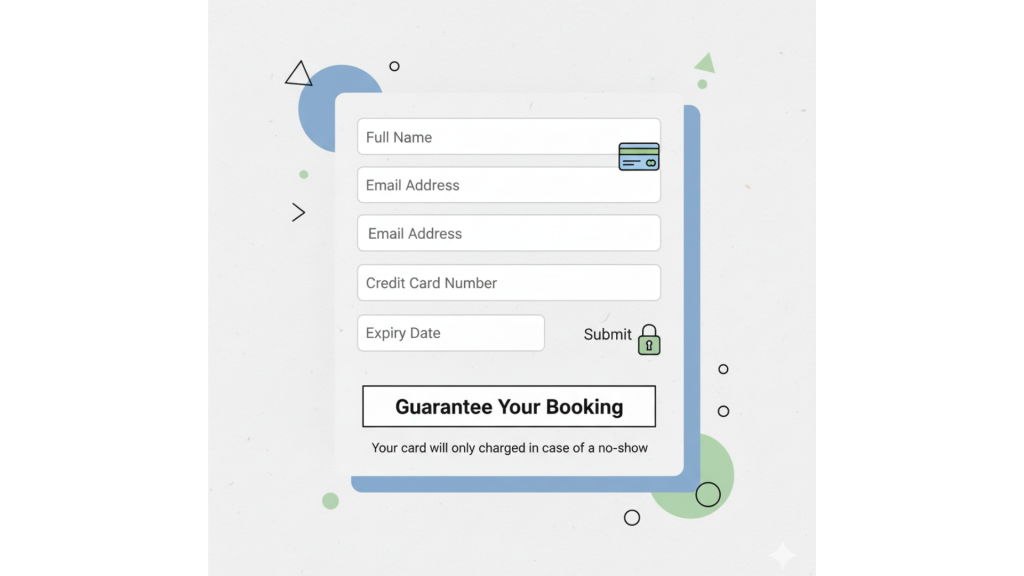
The single most effective way to secure a cash reservation is to require a payment guarantee, even for cash on arrival bookings. This crucial step involves collecting a small, verified financial commitment from the guest immediately after the booking is confirmed, often using a method outside the main booking platform system. This guarantee is not the full payment but a verifiable mechanism to charge a fee if your strict no-show policy is breached.
This simple payment requirement provides a crucial financial buffer that protects you from lost income and also helps prevent vacation rental calendar blocking by malicious actors. By requiring a valid credit card authorization or a small, refundable security deposit through a secure third-party payment link, you ensure the guest has skin in the game. This financial hurdle instantly deters competitors or dishonest guests who rely on the anonymity and lack of commitment offered by the unsecured cash system.
Vetting High-Risk Guests with Communication
Use centralized tools like AdvanceCM’s Unified Inbox to centralize all guest communication and verify the guest’s intent immediately after they book. High-risk profiles should be flagged for proactive cancellation if they fail to complete a simple verification step.
- Action: Politely ask the guest to confirm their arrival time and contact details.
- Flag: Be suspicious of new accounts, vague messages, or unusual booking patterns.
- Outcome: Failure to respond to verification should result in proactive cancellation.
3. Strategies 2 & 3: Stop Competitors and Secure the Reservation
The host briefing highlighted that local competitors will actively exploit unsecured reservations to prevent vacation rental calendar blocking during busy seasons, often making fake bookings to lock down inventory. When a competitor makes a fake, cash-only booking, they lock down your room inventory for days with zero financial penalty to themselves. This loophole costs you revenue by steering legitimate customers toward their own properties while yours appears unavailable.
To combat this malicious exploitation, you must set strict criteria for your cash on arrival bookings that help to filter out malicious actors and low-intent reservations. Your second strategy is to implement a firm 24-hour verification window requiring contact validation from the guest, either via phone or a specific reply email. The third strategy is to automatically require a minimum two-night stay for all cash reservations, which significantly raises the cost and inconvenience for a competitor attempting to block your schedule.

Enforcing the Verification Window
If the guest does not confirm their identity or complete the external guarantee process within the designated 24-hour window, you should proactively cancel the reservation immediately, stating the policy breach. This proactive approach immediately releases blocked dates back into your available inventory, stopping the competitor’s attempt to sabotage your business.
- Window: Use a firm 24-hour verification period for all unsecured bookings.
- Automation: Utilize automated systems, like AdvanceCM Autopilot, to manage verification emails and policy enforcement.
- Goal: Immediately release blocked inventory back to legitimate customers.
4. Strategies 4 & 5: Clear Policy, Penalty, and Enforcement
Cash-on-arrival bookings demand a bulletproof, publicly stated policy that defines exactly what happens in the event of a no-show or last-minute cancellation. This policy must explicitly state that while payment is due in cash upon arrival, a verified payment method or security guarantee is mandatory for reservation assurance. Strategy four is to prominently display this policy in three different places for the guest to see: the listing description, the confirmation email, and your direct follow-up communication.
Strategy five focuses on enforcement and penalty communication for these cash on arrival bookings. You must inform the guest that failure to show or a last-minute cancellation will result in the forfeiture of the security deposit or a charge equal to the first night’s stay, executed through the verified payment method held on file. Transparency about this penalty system, reinforced by industry standards, deters casual no-shows and minimizes disputes. According to the Vacation Rental Management Association (VRMA), clear, documented policies are the single most effective tool for dispute resolution in the short-term rental industry.
Setting Competitive Cancellation Terms
To attract cash-on-arrival bookings while maintaining crucial security, your actual refund policy must remain competitive in your local market. Review your current financial setup and compare plans to ensure your payment processor can handle pre-authorization requests efficiently and reliably every time.
- Balance: Ensure your policy balances security with necessary local market flexibility.
- Check Rates: Compare your refund terms and penalty structure with neighboring hosts.
- Finance Check: Verify your payment processor can handle pre-authorization requests efficiently.
5. Handling Disputed No-Shows and Platform Ignorance
Despite all precautions, you will occasionally face a dishonest guest who claims they arrived, as reported in the host briefing, in an attempt to avoid the no-show designation on cash on arrival bookings. When this occurs, it is absolutely critical to document every communication, every attempt to contact the guest, and your own physical presence at the property if possible. This meticulously gathered documentation is your only defense against frivolous guest complaints and false claims.
Do not allow the guest’s dishonesty to prevent you from taking the appropriate platform action, which is marking them as a no-show after midnight to protect your financial standing. While the platform’s support may be useless and unresponsive, maintaining an immaculate record protects your status and prevents the guest from successfully manipulating the system. This proactive documentation thereby helps to prevent vacation rental calendar blocking by the same actor, as they will have a negative history on the platform.
💬 Dealing with competitor calendar blocking or no-show financial loss on your cash on arrival bookings right now? Join the discussion with other hosts navigating the same challenges and share your best strategies.
CONCLUSION
The practice of accepting cash on arrival bookings should not mean accepting unmitigated risk and guaranteed financial loss for your business. Hosts who thrive in competitive markets understand the need to layer security protocols and demand some form of payment guarantee for every reservation. Your business is far too valuable to leave exposed to the dishonesty of a few guests or the malicious intent of competing properties. Implement these five essential strategies now to ensure every reservation is a guaranteed booking that strengthens your revenue and reduces your daily stress.
FAQs
Q: Should I ever accept cash on arrival bookings without collecting any form of card guarantee?
A: No, accepting an unbacked reservation leaves you completely exposed to financial loss in case of a no-show. Always require a valid credit card authorization or a small, refundable security deposit to guarantee the booking.
Q: How do I prevent vacation rental calendar blocking by competitors using the cash payment option?
A: Implement a strict 24-hour verification window and require new or suspicious guests to complete a security step or payment guarantee. Also, consider setting a minimum two-night stay requirement for all cash-only reservations to increase the cost of sabotage.
Q: Can I charge a guest for a cash on arrival no-show if they did not provide a credit card?
A: If you failed to collect a verified payment method, you have no recourse to charge a fee against it, as the platform does not possess this information. Your only action is to mark the guest as a no-show after midnight and waive the fee.
Q: What is the best way to handle a dishonest guest who claims they arrived but you know they lied?
A: Document all your communication and evidence of the no-show, including your own physical presence or camera footage if available. Report the guest to the platform, noting the false claim and providing your documented evidence of their failure to show up.
Q: Does requiring a guarantee hurt my competitiveness when accepting cash on arrival bookings?
A: While requiring a guarantee may deter the lowest-intent guests, it protects you from competitor sabotage and financial loss, making your business more profitable and stable overall. You can offset this by offering a slightly better cancellation policy than your local competitors.

Welcome to Tokeet’s Podcast — your trusted source for insights, trends, and strategies shaping the vacation rental industry. Each episode features expert interviews, data-driven analysis, and practical tips to help property managers grow their businesses, improve guest experiences, and stay ahead in a rapidly evolving market. Whether you’re new to short-term rentals or managing a large portfolio, tune in to stay informed and inspired.
Some days just don’t work for a guest arrival, whether it’s a holiday, a maintenance window, or a turnover day your team can’t cover. This episode walks through check-in and check-out restrictions, the most requested feature in AdvanceCM, now live in the Rentals module. You’ll hear how to block arrivals or departures for a date range, such as December 24 to 26, and how to allow check-ins only on the weekdays you choose. We also cover channel-specific rules, like keeping Airbnb to Friday and Saturday arrivals while direct bookings stay open through Sunday. Finally, we explain what to check before switching rules on, from existing reservations to sync time and visibility on booking sites.
Key Takeaways:
✅ Block check-ins or check-outs for any date range
✅ Limit arrivals to the weekdays you choose
✅ Set different rules for each booking channel
✅ Existing reservations stay unchanged
✅ More restrictions mean fewer guests can book, so review rules each season
Related Links:
Company: https://www.tokeet.com/Blogs: https://www.tokeet.com/blog/Blog: Check-in and Check-out Restrictions: How to Set Them in AdvanceCM 👉 https://blog.tokeet.com/check-in-and-check-out-restrictions/
This is a public episode. If you would like to discuss this with other subscribers or get access to bonus episodes, visit podcast.tokeet.com