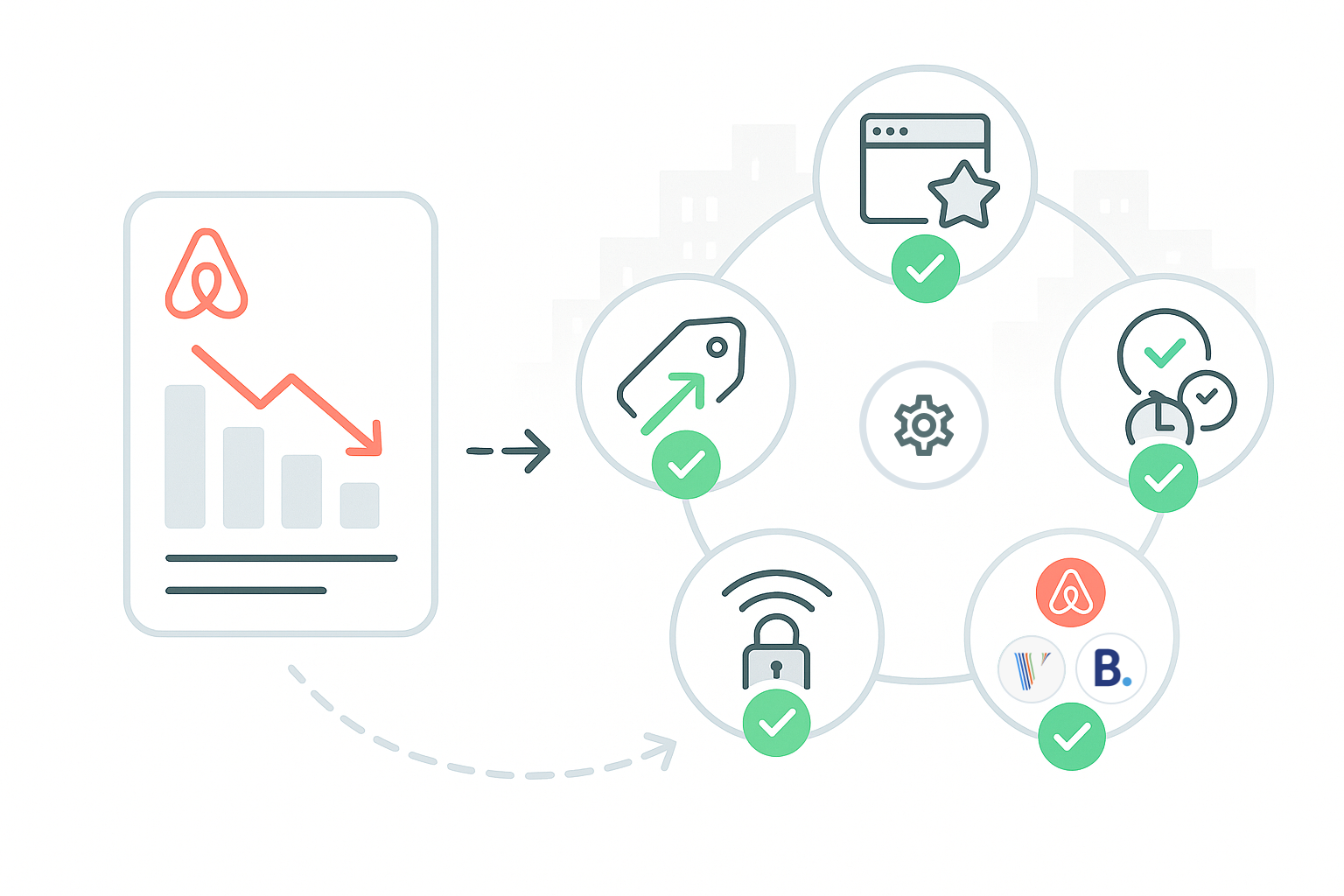
The short-term rental market hit some rough patches in 2024. RevPAR dropped 4.9% early in the year, and occupancy rates fell from 54% to 47%. But here’s the thing, successful hosts aren’t just surviving. They’re actually thriving.
The market turned around by May 2024, with demand jumping 11.4% and RevPAR growing 3.4% by year-end. Supply growth, which peaked at a crazy 22.3% in 2022, slowed down to a more manageable 6.9% in 2024. The oversupply problem that hurt so many hosts is finally balancing out.
Markets like Austin, Phoenix, and Nashville saw 30-40% booking drops, but smart hosts in these areas found ways to bounce back. Regulatory changes hit hard too, NYC lost 80% of its listings, and new rules popped up in France, Spain, and Canada.
But there’s good news. The supply-demand balance is back, and 2025 projections show 4.9% demand growth beating 4.7% supply growth. The hosts seeing success right now aren’t waiting for things to get better. They’re using proven strategies that work today.
Strategy 1: Implement Dynamic Pricing That Actually Works
Static pricing is leaving money on the table. When demand changes daily and you’re still charging the same rate from three months ago, you’re missing out.
The solution isn’t guessing, it’s using tools that track real market data. Here’s what’s working:
Top Dynamic Pricing Tools:
- PriceLabs: Used by 500,000+ properties worldwide and connects with 150+ management systems
- Wheelhouse: The industry standard showing 40% average profitability increases
- Beyond Pricing: Performance-based model with hosts reporting 30-40% revenue bumps
- Rategenie: Automated daily pricing updates with up to 30% revenue increases, includes local event data and market intelligence
How to Set It Up Right:
- Set minimum rates that cover your costs plus desired profit
- Check competitor pricing weekly using AirDNA market data
- Use last-minute discounting for unsold inventory (but be strategic about it).
One host in San Diego saw their revenue jump 35% after switching from manual pricing to PriceLabs. They stopped guessing and started using actual market data to set rates.
The key is finding that sweet spot between maximizing revenue and maintaining occupancy. Hosts using these tools consistently report 30-40% revenue increases over static pricing.
Strategy 2: Optimize Your Listing for Airbnb’s Algorithm
Airbnb cleaned houses recently, removing 400,000+ low-quality listings. Their algorithm now heavily favors properties that meet guest expectations and maintain high standards.
The Guest Favorites program drives 21% more bookings for top-rated properties. Getting into this program isn’t luck, it’s about understanding what the algorithm wants.
SEO Tactics That Move the Needle:
- Enable Instant Book (major ranking factor)
- Use specific keywords: “pet-friendly cabin near Lake Tahoe” beats “vacation rental.”
- Fill out every single amenity field
- Keep your response rate above 90% and cancellation rate under 1%.
Photo Strategy: Professional photos make a huge difference in click-through rates. Airbnb offers free photography in select markets, but even hiring a local photographer pays off. Make sure your image file names include keywords too.
Many hosts overlook the basics. Complete listings with professional photos and full amenity descriptions rank higher in search results. It’s that simple.
Strategy 3: Automate Operations to Cut Costs and Boost Reviews
Manual management becomes impossible when margins get tight. Guests expect quick responses and consistent experiences, but doing everything by hand burns you out fast.
Smart hosts are automating the repetitive stuff so they can focus on what matters, creating great guest experiences.
Automation That Actually Saves Time:
Cleaning & Maintenance:
- Turno: Automated cleaning scheduling with local cleaner networks
- Breezeway: Customers save 3+ hours weekly on scheduling.
Guest Communication:
- Automated messaging for check-ins, check-outs, and review requests
- Digital guidebooks that answer common questions
- Bulk pricing management across multiple platforms
AdvanceCM’s automation features handle 90% of repetitive tasks, from guest messaging to invoice generation. One property manager with 12 units cut their daily admin time from 4 hours to 1.5 hours.
The impact is measurable. Properties using automation maintain higher guest satisfaction scores and save an average of 5 minutes per transaction on payment processing alone.
Strategy 4: Strategic Amenity Upgrades Based on 2024 Guest Data
Not all amenities are created equal. Spending money on the wrong upgrades won’t move the needle, but the right ones can justify 15-25% higher nightly rates.
High-Impact Amenities Guests Actually Want:
- High-speed WiFi (non-negotiable in 2024)
- Smart locks for contactless check-in
- Streaming services (Netflix, Disney+)
- Well-equipped kitchens with “starter kit” supplies
- Premium bedding and blackout curtains
Local Experience Enhancements:
- Welcome baskets with local treats
- Detailed local guidebooks (digital or printed)
- Outdoor gear that matches your location (beach chairs, ski equipment)
Contactless check-in is now expected by 75% of guests. Smart home features aren’t just nice to have anymore, they’re becoming standard.
The trick is surveying your guests after checkout. Ask what they would have liked to see. One host in Colorado added ski equipment storage and saw bookings increase 20% during ski season.
Focus on amenities that solve real problems for your guests. A coffee maker is good, but a high-quality coffee maker with local coffee beans is memorable.
Strategy 5: Diversify Revenue Beyond Traditional Bookings
The traditional weekend warrior strategy isn’t enough anymore. Successful hosts are finding new revenue streams and targeting different guest types.
Market Opportunities That Are Working:
- Long-term stays: Digital nomads and remote workers need month-long accommodations.
- Corporate housing: Properties with dedicated workspaces see higher midweek demand.
- Secondary markets: Areas like San Gabriel, CA (709% growth) and Davenport, FL (707% growth) are booming.
Platform Strategy: Direct bookings now represent 34% of the market and are growing toward 40% by 2025. Building your own booking channel reduces platform fees and gives you more control.
77% of NYC hosts shifted to monthly rentals when regulations changed. They adapted instead of giving up.
Multi-Platform Approach: List on Airbnb, Vrbo, and Booking.com simultaneously. Each platform has different guest types and booking patterns. AdvanceCM’s channel management syncs availability across all platforms automatically, preventing double bookings.
The key is not putting all your eggs in one basket. Diversification protects you when one platform changes its rules or algorithm.
🚀 Want to see what other hosts are saying about these strategies? Check out the latest discussions on Reddit.
Conclusion
The vacation rental market has stabilized and is growing again. The hosts succeeding in 2025 are taking action on data-driven strategies instead of hoping things get better on their own.
Start with dynamic pricing this week, it’s the fastest way to see immediate revenue improvement while you work on the other strategies.
The market is there. The demand is growing. The question is whether you’ll adapt with proven strategies or keep doing things the way you always have.
FAQs
Q: How quickly can I expect to see results from dynamic pricing? A: Most hosts see changes within 2-4 weeks. Revenue improvements typically show up in the first month, with 30-40% increases common after 60 days of consistent use.
Q: Is it worth investing in expensive amenities when bookings are down? A: Focus on high-impact, lower-cost amenities first. Smart locks, premium bedding, and quality WiFi give better ROI than expensive renovations. Survey your guests to see what they actually want.
Q: Should I lower my prices to compete with other hosts? A: Avoid the race to the bottom. Instead, use dynamic pricing tools to find the right balance. Sometimes raising prices for certain dates while lowering others actually increases total revenue.
Welcome to Tokeet’s Podcast — your trusted source for insights, trends, and strategies shaping the vacation rental industry. Each episode features expert interviews, data-driven analysis, and practical tips to help property managers grow their businesses, improve guest experiences, and stay ahead in a rapidly evolving market. Whether you’re new to short-term rentals or managing a large portfolio, tune in to stay informed and inspired.
Some days just don’t work for a guest arrival, whether it’s a holiday, a maintenance window, or a turnover day your team can’t cover. This episode walks through check-in and check-out restrictions, the most requested feature in AdvanceCM, now live in the Rentals module. You’ll hear how to block arrivals or departures for a date range, such as December 24 to 26, and how to allow check-ins only on the weekdays you choose. We also cover channel-specific rules, like keeping Airbnb to Friday and Saturday arrivals while direct bookings stay open through Sunday. Finally, we explain what to check before switching rules on, from existing reservations to sync time and visibility on booking sites.
Key Takeaways:
✅ Block check-ins or check-outs for any date range
✅ Limit arrivals to the weekdays you choose
✅ Set different rules for each booking channel
✅ Existing reservations stay unchanged
✅ More restrictions mean fewer guests can book, so review rules each season
Related Links:
Company: https://www.tokeet.com/Blogs: https://www.tokeet.com/blog/Blog: Check-in and Check-out Restrictions: How to Set Them in AdvanceCM 👉 https://blog.tokeet.com/check-in-and-check-out-restrictions/
This is a public episode. If you would like to discuss this with other subscribers or get access to bonus episodes, visit podcast.tokeet.com