

You’ve just finished checkout when the guest drops the bomb: “The toilet was leaking the entire stay. Give me a full refund or I’ll leave a terrible review and ruin your reputation.” Your stomach drops. You never heard about any leak, and now you’re stuck between appeasing an angry guest or risking a one-star review.
If this sounds familiar, you’re not alone. More vacation rental hosts face guests who use the threat of bad reviews as leverage for refunds or compensation. Here’s what most property managers don’t realize: giving in to these threats damages your reputation more than standing firm.
This guide shows you how to respond to bad reviews strategically when guests try to manipulate you. The key is understanding that your response matters far more than the review itself.
Why Guests Threaten Bad Reviews (And Why It Works)
Guests who use this tactic follow a deliberate playbook. They wait until checkout to mention problems, eliminating your opportunity to fix the issue. They target staff they perceive as vulnerable, younger employees or night shift workers. The language is dramatic: “I’ll ruin your reputation” or “make sure nobody books here again.”
The timing isn’t accidental. By waiting until checkout, they’ve enjoyed their stay while keeping their leverage intact. If they’d reported the leaking toilet on day one, you would have fixed it immediately. But that wouldn’t get them a refund.
Most hosts cave because they believe one bad review will destroy their business. Here’s the uncomfortable truth: when guests threaten bad reviews, they’re going to post them either way. You’ll give the refund and still get the one-star rating. Worse, you’ve trained them, and encouraged others to try the same tactic.
Why You Shouldn’t Give In
Standing firm against threats protects your reputation better than giving in. A TripAdvisor survey found that 62% of users are more likely to book when they see management responses to reviews. But they’re not just looking for apologies, they’re judging whether a complaint is legitimate.
Future guests understand that problems happen. What they want to see is how you handle conflict. When your response calmly explains that the guest never reported the issue during their stay, readers understand what really happened. When they see you offered a future stay credit that was rejected, they recognize your attempt at fairness.
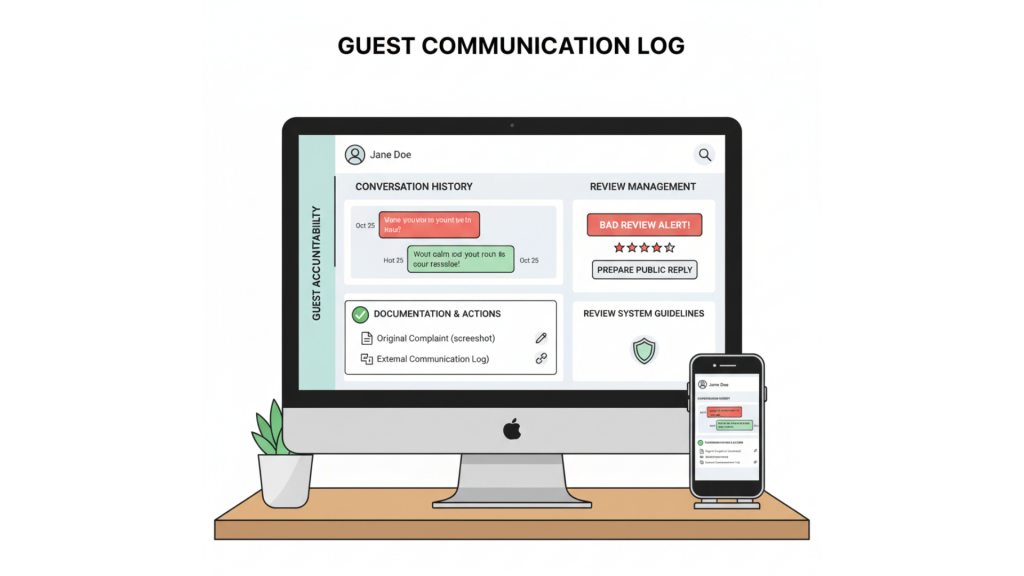
Documentation tools like a unified inbox create a paper trail showing exactly when guests contacted you, or didn’t contact you at all.
How to Respond to Bad Reviews: The Strategic Framework
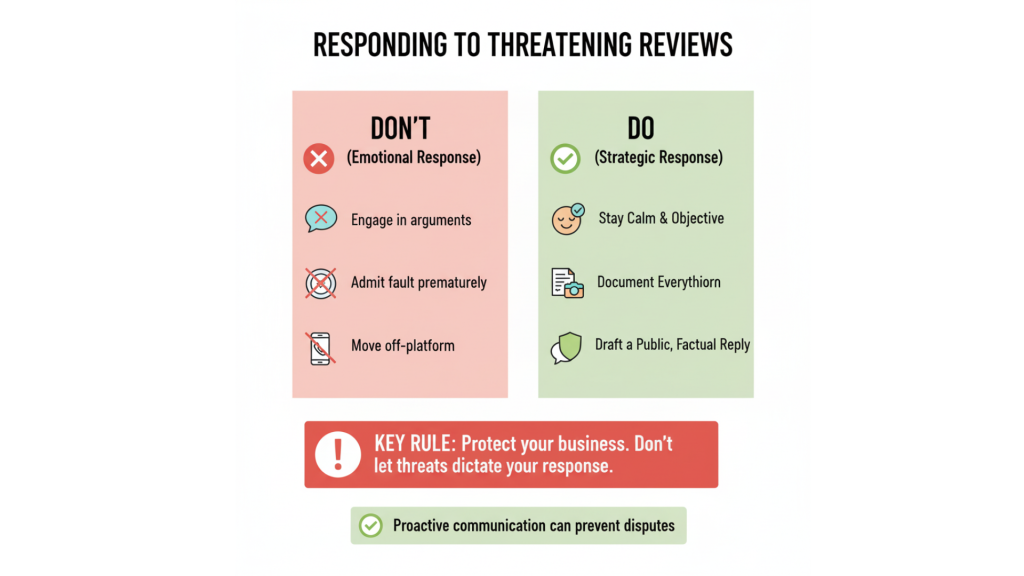
When a guest threatens you, follow this three-step approach that turns threats into credibility.
Step 1: Document Everything Immediately
Photograph the room condition, especially anything they complained about. Screenshot every message. Note the timeline: when they checked in, when they supposedly noticed the problem, when they finally mentioned it. Record what you offered to resolve the situation.
One hotel manager dealt with a guest claiming a toilet leak ruined their belongings. Post-checkout inspection revealed the toilet was clogged with excessive toilet paper and the showerhead aimed at the floor, the guest likely caused the problem themselves.
Task management systems help assign documentation responsibilities so nothing gets missed.
Step 2: Don’t Negotiate Under Duress
Stand firm on your policy. Instead of saying “we can’t give you a refund,” say “we’ve chosen not to issue a refund because the issue was never reported during your stay.” This language is assertive and policy-based, not defensive.
Shield your team from abuse. If a guest launches into threats, handle it yourself. You can offer a future stay credit as goodwill, but don’t offer immediate cash refunds when guests are actively threatening you.
Step 3: Let Them Post the Review
This feels counterintuitive, but it’s your most powerful move. Don’t try to prevent the review. Let them post it. Most platforms have anti-extortion policies, and you can report threats. But more importantly, the review gives you a platform to tell your side.
Your public response is your real opportunity. Review platforms typically don’t allow guests to reply to management responses, you get the last word. Future guests will read your calm, factual explanation and judge who was reasonable.
Crafting Your Public Response
Your public reply isn’t for the angry guest, it’s for hundreds of potential guests who will read it. Start by thanking them for feedback. Then state the facts: “We have a policy requiring guests to report maintenance issues during their stay. We received no communication about this issue until checkout, despite our 24/7 availability.”
Mention what you offered: “We offered a complimentary future stay, which was declined.” Keep your tone factual and professional. No sarcasm, no personal attacks, no excessive apologies for things that weren’t your fault.
Here’s a response structure:
“Thank you for your feedback. We maintain a policy of addressing maintenance issues immediately when reported, and our team is available 24/7. We have no record of receiving communication about this concern during your stay. At checkout, we offered [specific solution], which was declined. We take all feedback seriously and will continue maintaining high standards.”
Examples of professional management responses from major brands show how factual, non-emotional responses build credibility.
When It’s Obvious Extortion
Some threats warrant special handling. Watch for guests who cause damage and then threaten bad reviews if you charge their security deposit. Another red flag is evidence suggesting guests created the problem intentionally.
Most platforms, TripAdvisor, Airbnb, Booking.com, have explicit anti-extortion policies. Report threats quickly with documentation. Forward messages where guests explicitly threaten bad reviews in exchange for refunds. You can report before the review is even posted.
Protecting Your Business Long-Term
Create a “Do Not Rent” list for guests who threaten staff or attempt extortion. Train your team to recognize threats and escalate to management. Make policies visible before booking. Implement mid-stay check-ins to catch issues early.
Document every guest interaction automatically. Take photos at check-in. Use communication templates that create paper trails. If you charge for damages, do it with photographic evidence. Advanced property management systems integrate these safeguards into one platform.
Most guests are wonderful people. But having systems in place protects you when you encounter the small percentage who try to manipulate the review system.
💬 What’s your experience with guests threatening bad reviews? Join the conversation in the VacationRentals community, where property managers share real stories and strategies.
Conclusion
The next time a guest threatens you with a bad review, remember: your strategic response builds reputation better than appeasement. Document everything, stand firm on reasonable policies, and craft a public response that speaks to future guests. Managers who implement these strategies find their reputation actually improves because potential guests see them as fair, professional operators.
Learn more about tools that streamline documentation and guest communication.
FAQs
Q: Should I respond to bad reviews when guests threaten me first?
A: Yes, absolutely. Your response isn’t for the threatening guest, it’s for the hundreds of potential guests who will read it. A calm, factual response that explains the guest never reported issues during their stay shows future guests your professionalism and reasonableness. Many travelers specifically look for how property managers respond to bad reviews before booking.
Q: How do I respond to bad reviews without sounding defensive?
A: Stick to facts and avoid emotional language. Thank them for feedback, state your policy clearly, mention what you offered to resolve the issue, and explain why it couldn’t be addressed (they never reported it). Use assertive language like “we’ve chosen not to” rather than defensive phrases like “we can’t.” Keep it brief and professional.
Q: Can review platforms remove reviews if guests threatened me?
A: Yes. Most platforms including TripAdvisor, Airbnb, and Booking.com have anti-extortion policies. If a guest explicitly threatens a bad review unless you provide refunds or compensation, you can report this as extortion. Save all messages where threats were made and submit them to the platform’s fraud detection team promptly.
Q: What if the guest posts lie in their review?
A: Respond with documented facts that contradict false claims. Mention that you have photos, communication logs, and timeline records that show a different story. Don’t call the guest a liar directly, just present your evidence calmly. Future guests can read between the lines when management provides specific facts versus vague complaints.
Q: Should I offer refunds to prevent negative reviews from guests?
A: No. Guests who threaten bad reviews typically post them whether you comply or not. Offering refunds under duress encourages more guests to try the same tactic. Instead, stand firm on your policies, document everything, and let them post the review. Your professional public response will matter more than their complaint to future guests reading reviews.

Welcome to Tokeet’s Podcast — your trusted source for insights, trends, and strategies shaping the vacation rental industry. Each episode features expert interviews, data-driven analysis, and practical tips to help property managers grow their businesses, improve guest experiences, and stay ahead in a rapidly evolving market. Whether you’re new to short-term rentals or managing a large portfolio, tune in to stay informed and inspired.
Some days just don’t work for a guest arrival, whether it’s a holiday, a maintenance window, or a turnover day your team can’t cover. This episode walks through check-in and check-out restrictions, the most requested feature in AdvanceCM, now live in the Rentals module. You’ll hear how to block arrivals or departures for a date range, such as December 24 to 26, and how to allow check-ins only on the weekdays you choose. We also cover channel-specific rules, like keeping Airbnb to Friday and Saturday arrivals while direct bookings stay open through Sunday. Finally, we explain what to check before switching rules on, from existing reservations to sync time and visibility on booking sites.
Key Takeaways:
✅ Block check-ins or check-outs for any date range
✅ Limit arrivals to the weekdays you choose
✅ Set different rules for each booking channel
✅ Existing reservations stay unchanged
✅ More restrictions mean fewer guests can book, so review rules each season
Related Links:
Company: https://www.tokeet.com/Blogs: https://www.tokeet.com/blog/Blog: Check-in and Check-out Restrictions: How to Set Them in AdvanceCM 👉 https://blog.tokeet.com/check-in-and-check-out-restrictions/
This is a public episode. If you would like to discuss this with other subscribers or get access to bonus episodes, visit podcast.tokeet.com