
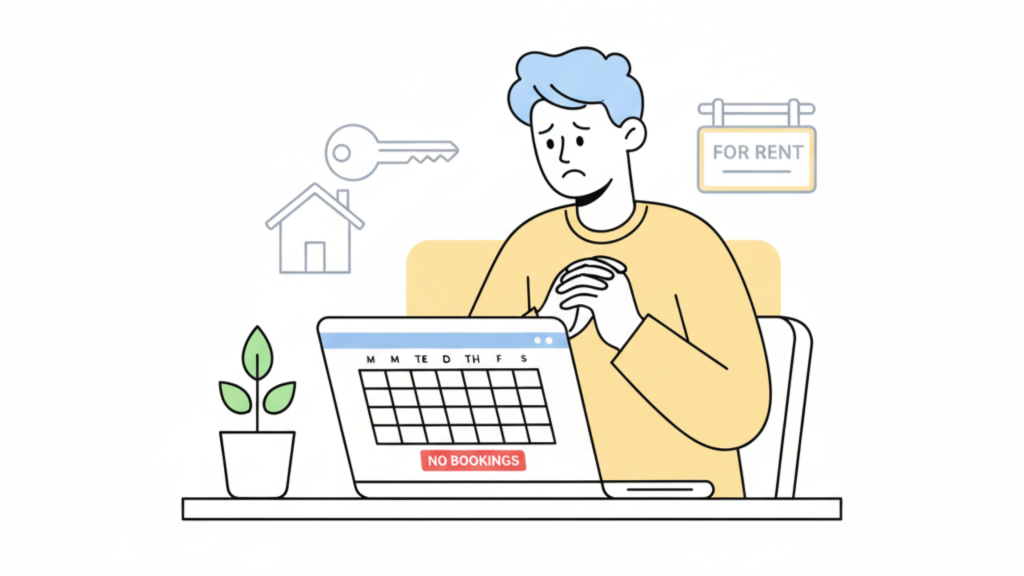
Vacation rental software isn’t optional anymore; it’s insurance. Last summer, a Superhost in Rome watched their thriving vacation rental, one that had maintained 85-98% occupancy for over a year, suddenly stop getting bookings completely. Zero reservations for two months straight during peak season. The property hadn’t changed. The reviews were still five stars. However, something invisible had shifted, and their business was bleeding.
Nevertheless, here’s what happened next: One phone call to customer support, and bookings started rolling in again within hours. The property went from 0% to 50% occupancy in five days.
If you’re managing vacation rentals, this scenario should terrify you. It reveals what most hosts learn too late: without proper vacation rental software, relying on a single platform to run your rental business is a massive, unnecessary risk.
The Platform Dependency Problem
The vacation rental landscape has changed dramatically since 2022. Here’s why single-platform reliance is dangerous:
- Platform instability: Hosts across the globe report sudden drops in visibility due to algorithm changes, random calendar blocks, or technical glitches. Sometimes a simple amenity disappears from your listing. Other times your calendar blocks off entire weeks without your input. These aren’t rare occurrences—they’re happening to hosts every day.
- Market oversaturation: During the pandemic, thousands of new properties entered the short-term rental market. According to Statista, the global vacation rental market is projected to reach $125.60 billion by 2029. However, with inflation and return-to-office mandates, travel spending has normalized. There are more properties competing for fewer bookings than during the 2020-2022 boom years.
- Evolving guest behavior: Travelers are booking more last-minute than ever before. Additionally, they’re frustrated with high fees and inconsistent experiences, making them more selective about where they stay.
So what’s the solution? Stop putting all your eggs in one basket.
What Vacation Rental Software Actually Does
Think of vacation rental software as your business operating system. Instead of managing everything through a single platform’s dashboard, you control your entire operation from one central hub.
The Channel Manager Advantage
A channel manager connects your property to 50+ booking platforms simultaneously. Not just the big names, but specialized sites in different countries and regions.
As a result, when a guest books on any platform, your availability updates everywhere instantly.
How It Works Behind the Scenes
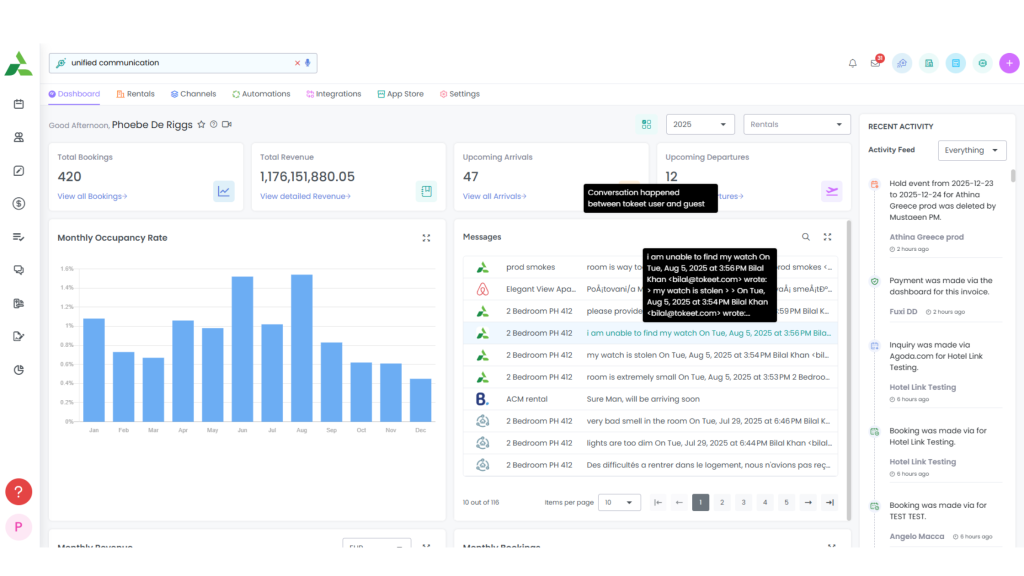
First, your calendar syncs in real-time across every platform. When someone books for July 15-22, those dates become unavailable everywhere within seconds.
Second, rates update automatically based on market conditions, occupancy levels, and local events. For example, if there’s a major conference in your city, your prices adjust accordingly.
Third, guest messages flow into one unified inbox. That inquiry from a potential guest, the check-in question, and the maintenance request, all manageable from the same place.
Finally, automated workflows handle repetitive tasks. Booking confirmations, check-in instructions, and review requests are all sent automatically.
Key Features That Matter Most
Not all vacation rental software is created equal. However, here’s what actually moves the needle for hosts.
Multi-Channel Distribution
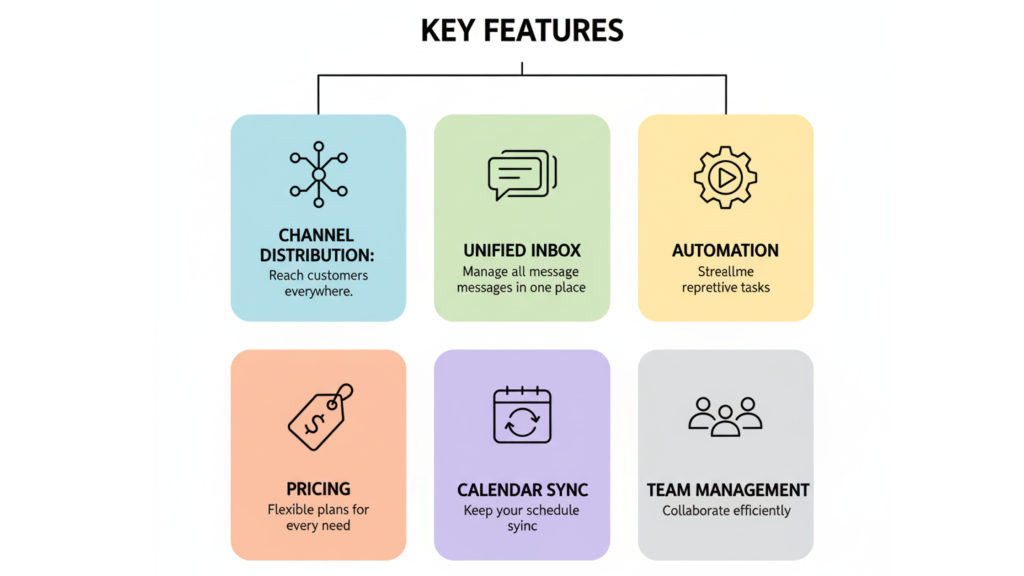
Distribution across multiple platforms is non-negotiable in 2025. Simply put, you need your property listed everywhere potential guests are looking.
That means major platforms, regional sites, and international booking channels. In fact, research from Grand View Research shows the vacation rental market growing at 3.7% annually.
Furthermore, online bookings are expected to account for 78% of total revenue. Therefore, if one platform’s algorithm suppresses your listing, you’ve got 50 others still generating revenue.
Unified Inbox
A unified inbox saves hours every single day. Instead of logging into five different platforms to check messages, everything appears in one place.
Moreover, you can see the entire guest conversation history regardless of which platform they booked through. For instance, hosts managing multiple properties find this alone justifies the software investment.
Automated Workflows
Automated workflows turn you into a hospitality machine. Set up your communication sequences once, and every guest receives the same professional, timely information.
Specifically, key automation capabilities include welcome messages and local recommendations. Additionally, check-in instructions with access codes get sent automatically.
Moreover, checkout reminders and cleaning protocols ensure smooth turnovers. Finally, review requests go out after guest departure without manual effort.
As a result, guests get a consistent experience, and you get your time back.
Revenue Optimization
Dynamic pricing ensures you’re not leaving money on the table. Essentially, your rates adjust based on local demand, competitor pricing, events, and dozens of other factors.
In fact, hosts report revenue increases of 20-30% just from implementing intelligent pricing instead of static rates. Specifically, tools like RateGenie monitor your market continuously and adjust accordingly.
Calendar Synchronization
Real-time calendar sync protects your reputation. Essentially, the software prevents calendar conflicts by synchronizing availability across all channels instantly.
Therefore, you’ll never have to deliver bad news to a guest because you accidentally accepted overlapping reservations. In other words, the system physically blocks dates the moment a booking comes through.
Team Management
Team management becomes critical as you scale. Specifically, multiple team members can access the system with different permission levels.
For example, your cleaning coordinator sees check-out schedules. Meanwhile, your co-host handles guest communication.
Similarly, your accountant accesses financial reports. Ultimately, everyone works from the same real-time data.
Who Needs Vacation Rental Software?
The short answer: anyone serious about running vacation rentals as a business rather than a hobby. However, the long answer depends on where you are on your journey.
Single Property Owners
For single property owners, professional systems provide a competitive edge against larger operators. Automation and dynamic pricing help solo hosts deliver five-star experiences without working around the clock.
After all, you can’t physically respond to messages 24/7, but your software can.
Growing Operators (2-50 Properties)
On the other hand, growing operators with 2-50 properties hit a wall fast without proper software. What worked for managing one or two rentals manually becomes impossible at five or ten.
Consequently, the software provides the infrastructure to scale efficiently without hiring a large team.
Professional Managers (50+ Properties)
In contrast, professional managers with 50+ properties absolutely need enterprise-level systems. Coordinating teams, managing hundreds of bookings simultaneously, and maintaining financial oversight require sophisticated tools.
For instance, platforms like AdvanceCM scale from 50 to 500 to 1,000+ properties without breaking.
The Bottom Line
Ultimately, here’s the key insight: the right vacation rental software grows with you. You start with basic channel management and automation, then layer in advanced features as your business expands.
Making the Switch: What to Look For
When evaluating vacation rental software, focus on these factors. Not all platforms are built the same way.
Cost Structure
First, cost structure matters. Look for per-property pricing rather than percentage-of-bookings fees. Quality platforms charge $2-$15 per property monthly, a fraction of what enterprise solutions cost.
Moreover, avoid platforms that take a cut of every booking. Compare pricing options to find what fits your budget and scale.
Integration Capabilities
Next, evaluate integration capabilities. How well does the software play with your existing tools? Can it connect to your pricing software? Your accounting system? Your door locks?
Clearly, the more integrations available, the more powerful your system becomes.
Support Quality
Additionally, support quality becomes critical when problems arise. Look for 24/7 support with fast response times.
In fact, some platforms offer under one-minute average response times, that level of accessibility matters when you’re dealing with guest emergencies.
Trial Periods
Finally, consider trial periods. They let you test-drive before committing. Quality vacation rental software offers 15-day free trials with full feature access, no credit card required.
💬 Thousands of hosts are discussing platform strategies and software solutions. Share your experience or ask questions on Reddit.
Conclusion
The Rome Superhost’s experience isn’t unique—it’s a warning. Depending entirely on a single platform to run your vacation rental business means one algorithm change, one technical glitch, or one policy update can devastate your income overnight.
Therefore, vacation rental software with a robust channel manager doesn’t just make your life easier. It’s insurance against the unpredictable nature of platform-based businesses.
Moreover, it’s the infrastructure that lets you scale from one property to one hundred without losing your mind. Most importantly, it puts you back in control of your business.
Ready to protect your revenue and scale efficiently? Start your free 15-day trial today, no credit card required.
FAQs
Q: How much does vacation rental software typically cost?
Quality platforms charge $2-$15 per property monthly, far cheaper than enterprise solutions at $250+ monthly minimums. Additionally, look for no booking fees, no usage fees, and free trials. The software pays for itself within the first month through time savings and increased bookings.
Q: Will vacation rental software work if I only have one property?
Absolutely. In fact, even single-property owners see 20-30% revenue increases from dynamic pricing and save hours weekly through automation. Moreover, many platforms offer free or low-cost tiers for 1-3 properties. You don’t need a large portfolio to justify it, you need to value your time.
Q: How long does it take to set up a channel manager?
Initial setup takes 2-4 hours. During this time, you’ll connect booking platforms, configure pricing rules, and create message templates. Fortunately, most platforms offer setup wizards and support. Once configured, it runs automatically and saves dozens of hours monthly.
Q: Can vacation rental software prevent double bookings completely?
Yes, when properly configured. Essentially, the software syncs your calendar in real-time, typically within seconds. When a guest books on any platform, those dates become unavailable everywhere else immediately. However, just ensure all booking channels are connected through the software.
Q: What’s the difference between basic software and a full property management system?
Basic software handles channel management and calendar sync. In contrast, a full PMS adds automation, unified messaging, dynamic pricing, financial tools, and team coordination. Ultimately, choose based on scale: 1-3 properties need basics, while 10+ properties benefit from full PMS features.
Welcome to Tokeet’s Podcast — your trusted source for insights, trends, and strategies shaping the vacation rental industry. Each episode features expert interviews, data-driven analysis, and practical tips to help property managers grow their businesses, improve guest experiences, and stay ahead in a rapidly evolving market. Whether you’re new to short-term rentals or managing a large portfolio, tune in to stay informed and inspired.
Some days just don’t work for a guest arrival, whether it’s a holiday, a maintenance window, or a turnover day your team can’t cover. This episode walks through check-in and check-out restrictions, the most requested feature in AdvanceCM, now live in the Rentals module. You’ll hear how to block arrivals or departures for a date range, such as December 24 to 26, and how to allow check-ins only on the weekdays you choose. We also cover channel-specific rules, like keeping Airbnb to Friday and Saturday arrivals while direct bookings stay open through Sunday. Finally, we explain what to check before switching rules on, from existing reservations to sync time and visibility on booking sites.
Key Takeaways:
✅ Block check-ins or check-outs for any date range
✅ Limit arrivals to the weekdays you choose
✅ Set different rules for each booking channel
✅ Existing reservations stay unchanged
✅ More restrictions mean fewer guests can book, so review rules each season
Related Links:
Company: https://www.tokeet.com/Blogs: https://www.tokeet.com/blog/Blog: Check-in and Check-out Restrictions: How to Set Them in AdvanceCM 👉 https://blog.tokeet.com/check-in-and-check-out-restrictions/
This is a public episode. If you would like to discuss this with other subscribers or get access to bonus episodes, visit podcast.tokeet.com