

The Ultimate Guide: Managing Long & Short-Term Rentals
The world of property management has changed. Today, more property owners and hosts are handling a mix of long-term and short-term rentals, sometimes even in the same building. This can feel like managing two completely different businesses at once. The needs of a long-term guest are different from those of a vacation renter. But what if there was a way to handle it all without the headache?
This guide is for property managers, hosts, and owners who want to get a real handle on managing long- and short-term rentals. We’ll cover the key differences between the two, share insights from experts, and show how a single platform can make your life easier.
Mastering the Rental Portfolio: The Ultimate Guide
The Long-Term Rental Landscape: Legal and Operational
When you manage long-term rentals, you’re working within a clear set of laws and expectations. It’s a structured environment where consistency is key. Understanding the legal side of things is a must for any property owner.
Understanding the Legal Framework
For example: California has specific rules that protect both property owners and their guests. The legal side can feel complex, but knowing the basics helps you avoid trouble.
- The Tenant Protection Act (AB 1482): This act set rules for statewide rent increases and put in place requirements for evictions. This means you need a valid reason to ask a long-term guest to move out.
- Security Deposits and Fees: In California, there are legal limits on how much you can charge for a security deposit. A property owner can charge up to two months’ rent for an unfurnished property and three months’ rent for a furnished one. You also have to follow a process for returning it when a guest moves out.
- Fair Housing Laws: California has strict laws that protect guests from discrimination based on things like race, gender, and family status. Following these laws is important for everyone involved.
Operational Demands
Beyond the legal requirements, there’s the day-to-day work of managing your properties. From finding the right guests to handling maintenance, you need a solid system to keep everything running smoothly. A great system for a property manager who wants to build a consistent and reliable business must have a managing long- and short-term rentals in its focus.
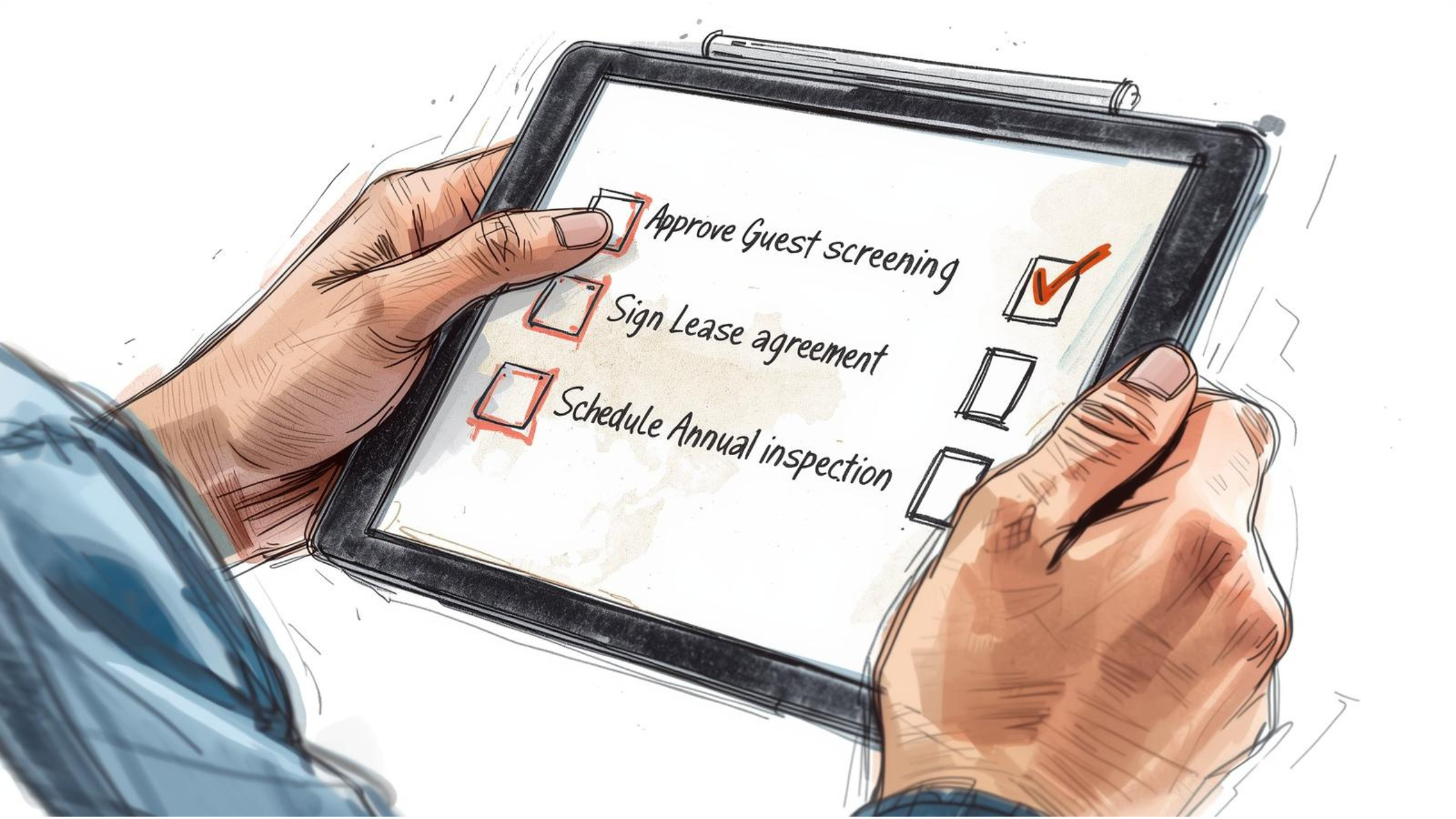
- Guest Screening: A thorough screening process helps you find reliable, long-term guests.
- Lease Agreements: A strong lease agreement protects both you and your guests by clearly outlining responsibilities and expectations.
- Incidents and Maintenance: A crucial part of success is having an effective system for tracking incidents, maintenance requests, and tasks which is vital for guest satisfaction and legal compliance.
The Short-Term Rental Market: A Different Game
Short-term rentals operate differently from long-term ones. It’s less about long-term contracts and more about creating an excellent guest experience. This is where your property manager skills are really tested.
The Guest-Centric Approach
The main goal for a short-term rental host is to get great reviews and repeat bookings. This means every interaction and every detail matters.
- Dynamic Pricing: Unlike a fixed monthly rent, short-term rental prices can change based on the season, local events, or even the day of the week.
- Guest Communication: A host has to be ready to communicate constantly, from the moment a guest books to their check-out. You need to answer questions about the property, offer local tips, and handle any issues that come up, all in real time.
- Positive Reviews: A good review score is everything in the short-term rental world. Happy guests lead to better rankings on booking sites and more reservations.
Operational Logistics
The quick turnaround for short-term rentals means a different set of challenges. You’re handling a higher volume of transactions and more frequent cleanings.
- Booking and Channel Management: A host often has their property listed on multiple sites like Airbnb and Vrbo. Keeping the calendars synced and avoiding double bookings can be tricky.
- Cleaning and Transitions: The time between one guest leaving and the next one arriving is often short. You need to have a seamless process for cleaning and preparing the property between bookings.
- Local Regulations: Mention the complexity of navigating diverse city-specific short-term rental laws, including permits and transient occupancy taxes (TOT).
Long-Term vs. Short-Term: Expert Insights
When you’re deciding between long-term and short-term rentals, it helps to hear from the pros. Experts agree that both types have good and bad points, and the right choice depends on what a property manager wants to accomplish.
- Pros & Cons of Short-Term Rentals: Experts point out that short-term rentals can bring in a lot more money, especially during high seasons. They also offer a lot of freedom for the owner to use the property themselves. On the other hand, the income can be unstable, and there’s a lot more work involved with managing them. You also have to deal with higher cleaning and maintenance costs and a constant risk of vacancy between guests.
- Pros & Cons of Long-Term Rentals: With long-term rentals, you get a steady, predictable income and much less work to manage the property on a day-to-day basis. They are also seen as less risky investments. However, the profit isn’t as high, and you have less flexibility with the property once a guest moves in.
- Choosing a Strategy: The best approach really depends on what a property owner wants. Do you want steady income or the potential for higher profits? How involved do you want to be? Do you want a lot of control over the property or not? Experts say that an investor’s goals, the property’s location, and local rules all play a big part in the final decision.
Bridging the Gap with a Unified Solution
So you’re a property manager who wants to do both. You have a long-term rental for steady income and a vacation rental for the extra cash. It’s hard to keep track of everything when you’re using different tools for each. This is where a single, smart solution comes in.
Managing a mixed portfolio can provide many benefits but also requires a firm grasp on the operations behind both. Learn more about how to manage a mixed portfolio of short-term and multifamily rentals and streamline your processes effectively.
Introducing the All-in-One Solution
Imagine a platform that handles everything for you, no matter the rental type. An all-in-one system helps you move past the mess and into a more organized way of doing business. It’s a modern approach for the modern property owner.
AI for Property Management
This is where the real power lies. A platform that uses AI for property management can handle a lot of the work for you. For long-term rentals, it can send automated reminders for rent payments. For short-term rentals, it can handle dynamic pricing to maximize your earnings. AdvanceCM is a great solution for this exact need.
- Centralized Management: You get a single dashboard that gives you a complete view of all your properties. No more switching between different apps.
- Comprehensive Task & Incident Tracking: This is a big one. You can log and manage every task, from a long-term guest’s repair request to a short-term guest’s complaint about a broken TV. The platform keeps a detailed record of every conversation and action. This helps you resolve issues quickly and efficiently.
- Integrated Communication: The platform can send automated messages that are customized for both guest and host interactions. This makes communication easy and consistent.
The goal is to simplify managing long- and short-term rentals so you can focus on growing your business.

Common Questions About Managing Mixed Portfolios
Q: What are the main legal differences between long- and short-term rentals? The main difference is the type of legal agreement. A long-term rental uses a lease agreement with specific protections for the guest, like eviction laws and rent caps. A short-term rental uses a booking agreement, and its rules are often set by the booking site and local regulations.
Q: Is it more profitable to manage short-term rentals? Not always. While short-term rentals can bring in a higher daily rate, they also have higher expenses for cleaning and maintenance. The income can be unpredictable, especially during slow seasons. Long-term rentals offer more stable, predictable income.
Q: How can I manage guest communication effectively for both types of rentals? The best way is to use an automated system. For long-term guests, you can set up automated rent reminders. For short-term guests, you can automate check-in instructions and welcome messages.
Q: Is it hard to track maintenance for a mixed portfolio? It can be, but not with the right tools. An all-in-one platform like AdvanceCM allows you to log all maintenance issues in one place, whether it’s a leaky faucet in a long-term unit or a broken hot tub in a short-term one.
Q: How does AI help with property management? AI helps with many tasks that used to be manual. For example, it can handle dynamic pricing for vacation rentals, screen long-term guest applications, and respond to common inquiries. An investment in AI for property management is a good way to save time and money.
Conclusion
Managing a mixed portfolio of rental properties is a big job, but it doesn’t have to be complicated. By understanding the unique challenges of each market and using a single, intelligent platform to handle them all, you can take control of your business. The future of property management is all about smart, simple solutions.
Run your rentals. Don’t let them run you. Try AdvanceCM for free.

Welcome to Tokeet’s Podcast — your trusted source for insights, trends, and strategies shaping the vacation rental industry. Each episode features expert interviews, data-driven analysis, and practical tips to help property managers grow their businesses, improve guest experiences, and stay ahead in a rapidly evolving market. Whether you’re new to short-term rentals or managing a large portfolio, tune in to stay informed and inspired.
Some days just don’t work for a guest arrival, whether it’s a holiday, a maintenance window, or a turnover day your team can’t cover. This episode walks through check-in and check-out restrictions, the most requested feature in AdvanceCM, now live in the Rentals module. You’ll hear how to block arrivals or departures for a date range, such as December 24 to 26, and how to allow check-ins only on the weekdays you choose. We also cover channel-specific rules, like keeping Airbnb to Friday and Saturday arrivals while direct bookings stay open through Sunday. Finally, we explain what to check before switching rules on, from existing reservations to sync time and visibility on booking sites.
Key Takeaways:
✅ Block check-ins or check-outs for any date range
✅ Limit arrivals to the weekdays you choose
✅ Set different rules for each booking channel
✅ Existing reservations stay unchanged
✅ More restrictions mean fewer guests can book, so review rules each season
Related Links:
Company: https://www.tokeet.com/Blogs: https://www.tokeet.com/blog/Blog: Check-in and Check-out Restrictions: How to Set Them in AdvanceCM 👉 https://blog.tokeet.com/check-in-and-check-out-restrictions/
This is a public episode. If you would like to discuss this with other subscribers or get access to bonus episodes, visit podcast.tokeet.com