
 Streamlining Multi-Unit Rental Management with AdvanceCM
 Streamlining Multi-Unit Rental Management with AdvanceCM
Managing multiple rental units efficiently is essential for property managers handling large-scale operations. AdvanceCM’s Multi-Unit feature is designed to simplify this process by linking multiple sub-units to a main unit, ensuring seamless availability, pricing, and booking management across various channels. Whether you’re hosting a group, event, or need to manage several units at once, this new tool streamlines the booking process and enhances your guests’ experience.
 Understanding multi-unit rentals in AdvanceCM
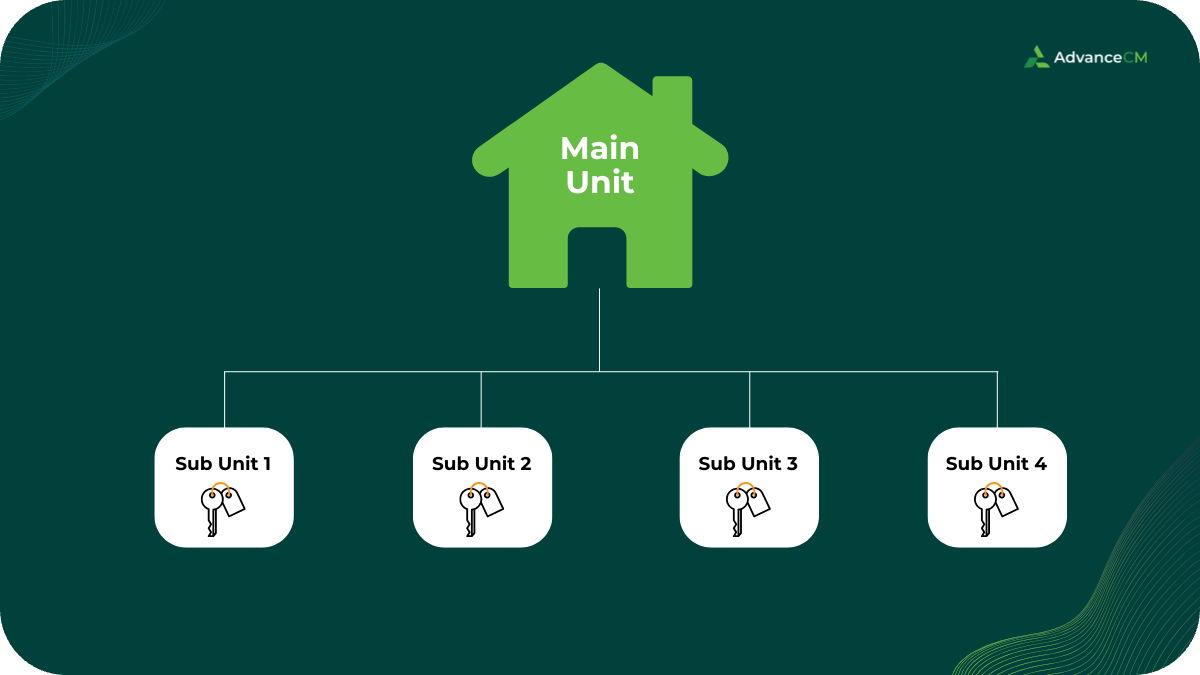 Understanding multi-unit rentals in AdvanceCM
The Multi-Unit feature in AdvanceCM allows users to manage a group of rental properties under one main unit while maintaining individual sub-unit availability. This setup is ideal for properties such as hotels, apartment complexes, and vacation rental portfolios with identical listings. For a detailed FAQ on Multi-Unit Rentals, check out our Multi-Unit Rentals Relationship FAQs.
Key benefits:
- Group Bookings: Perfect for large groups or families looking to stay together in multiple units, increasing your booking potential.
- Corporate Stays: Hosts can easily accommodate business teams needing separate rooms or apartments while staying in the same property.
- Centralized Multi Calendar: Manage all your units from a single platform, making it easy to view availability, bookings, and guest information.
- Higher Booking Value: With the ability to book multiple units at once, you increase the potential for higher earnings from larger group reservations..
- Peak Season Efficiency: In high-demand times, this feature allows you to efficiently manage and fill all available units.
Key features and functionality
 1. Main unit vs. sub-unit rentals
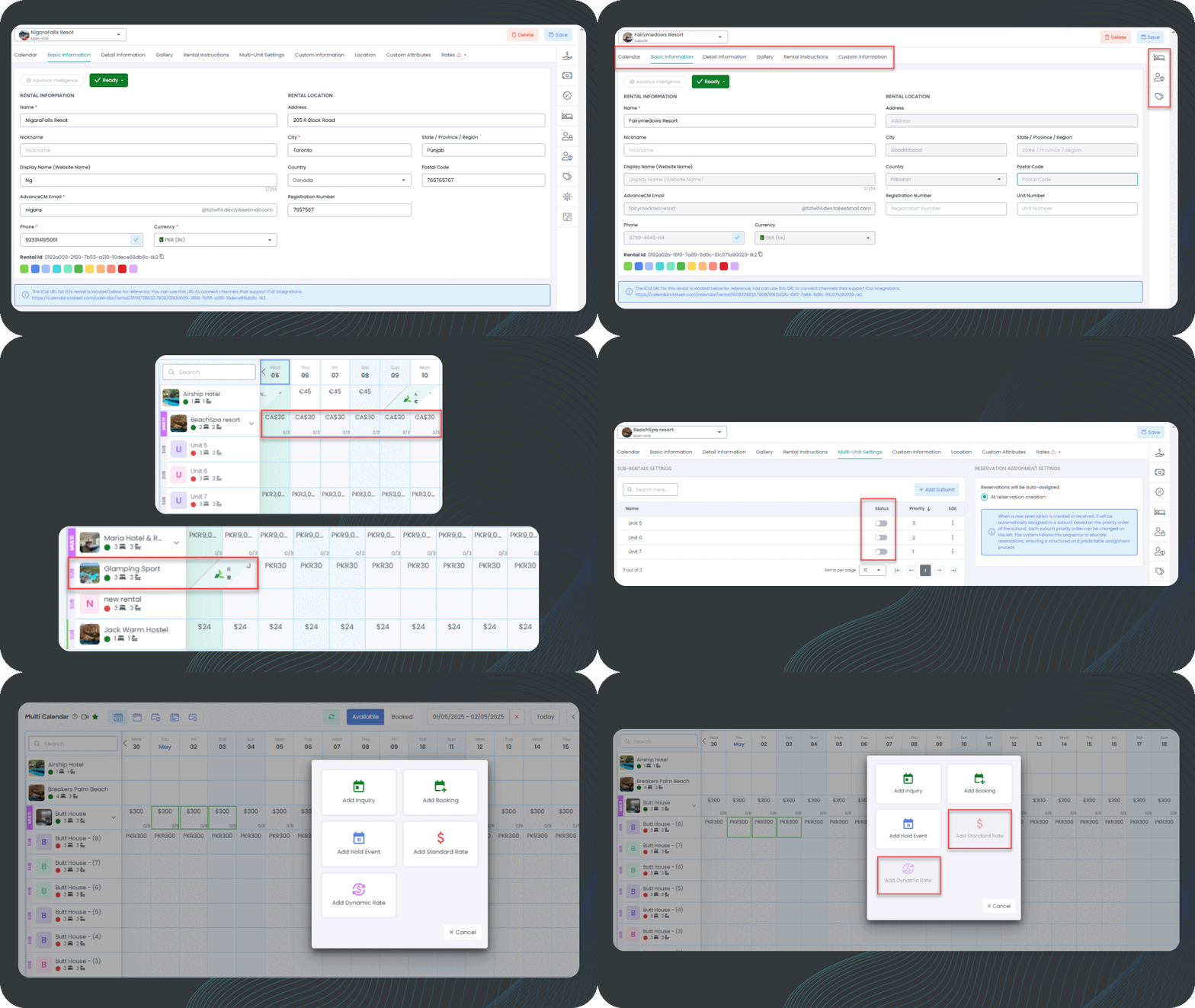 1. Main unit vs. sub-unit rentals
- The main unit serves as the central point for managing rates and availability.
- Sub-units are linked to the main unit and inherit its pricing structure.
- Bookings are assigned to sub-units based on a priority rule.
For more details on the differences between Main and Sub-Unit Rentals, visit our article that explores this topic in detail!.
2. Booking management
- Bookings created for a main unit are automatically assigned to an available sub-unit.
- Sub-units can be booked individually.
- Existing bookings on a rental remain in place when it is converted into a main unit.
3. Pricing and availability control
- Rates can be set at the main unit level and are applied to all sub-units.
- Availability updates are pushed to Online Travel Agencies (OTAs) such as Booking.com and Airbnb.
- If a sub-unit is booked, the system updates the availability count for the main unit accordingly.
OTA Connectivity and channel management
One of the most significant advantages of the Multi-Unit feature is its ability to sync with major OTAs, ensuring real-time availability updates:
- Booking.com: The “Rooms to Sell” count is updated based on sub-unit availability.
- Airbnb: The “available_count” field is adjusted when sub-units are booked.
- Expedia: The inventory count reflects real-time sub-unit availability.
- Agoda: The allotment will be updated accordingly. If a user has two sub-units and one is booked, Agoda will show allotment count = 1.
- Other OTAs (VRBO, GVR, Holidu, Marriott, Trip.com, Tiket): Currently, the Multi-Unit feature is not supported on these platforms.
Editing and managing multi-unit relationships
Maintaining clear connections between your main and sub-units is essential for efficient management. Within the Rentals module, users have the flexibility to create, modify, or remove these relationships as needed.
- Users can create, edit, or delete multi-unit relationships via the Rentals module.
- A sub-unit can only be linked to one main unit at a time.
- If a multi-unit relationship is removed, each unit reverts to an independent rental.
Comparing multi-unit vs. parent-child relationships
While AdvanceCM also supports Parent-Child rental relationships, there are notable differences:
- Rate management: In a Parent-Child setup, each rental has independent rates, whereas Multi-Unit rentals inherit rates from the main unit.
- Booking behavior: Parent rentals generate hold events across child rentals, while Multi-Unit rentals assign bookings to sub-units dynamically.
- Availability updates: Parent-Child relationships update availability for each unit separately, whereas Multi-Unit updates reflect total sub-unit availability.
For an in-depth comparison, read our article on Major Differences Between Multi-Unit Rental and Parent-Child Rental Relationships.
Final thoughts
AdvanceCM’s Multi-Unit feature provides property managers with an efficient way to manage multiple rental units under a unified system. By streamlining pricing, availability updates, and booking assignments, it ensures a smooth operational workflow while enhancing OTA connectivity. For those managing large-scale rental operations, this feature is a game-changer in optimizing property management processes.
Need further assistance? Our support team is always ready to help!

Welcome to Tokeet’s Podcast — your trusted source for insights, trends, and strategies shaping the vacation rental industry. Each episode features expert interviews, data-driven analysis, and practical tips to help property managers grow their businesses, improve guest experiences, and stay ahead in a rapidly evolving market. Whether you’re new to short-term rentals or managing a large portfolio, tune in to stay informed and inspired.
Some days just don’t work for a guest arrival, whether it’s a holiday, a maintenance window, or a turnover day your team can’t cover. This episode walks through check-in and check-out restrictions, the most requested feature in AdvanceCM, now live in the Rentals module. You’ll hear how to block arrivals or departures for a date range, such as December 24 to 26, and how to allow check-ins only on the weekdays you choose. We also cover channel-specific rules, like keeping Airbnb to Friday and Saturday arrivals while direct bookings stay open through Sunday. Finally, we explain what to check before switching rules on, from existing reservations to sync time and visibility on booking sites.
Key Takeaways:
✅ Block check-ins or check-outs for any date range
✅ Limit arrivals to the weekdays you choose
✅ Set different rules for each booking channel
✅ Existing reservations stay unchanged
✅ More restrictions mean fewer guests can book, so review rules each season
Related Links:
Company: https://www.tokeet.com/Blogs: https://www.tokeet.com/blog/Blog: Check-in and Check-out Restrictions: How to Set Them in AdvanceCM 👉 https://blog.tokeet.com/check-in-and-check-out-restrictions/
This is a public episode. If you would like to discuss this with other subscribers or get access to bonus episodes, visit podcast.tokeet.com