

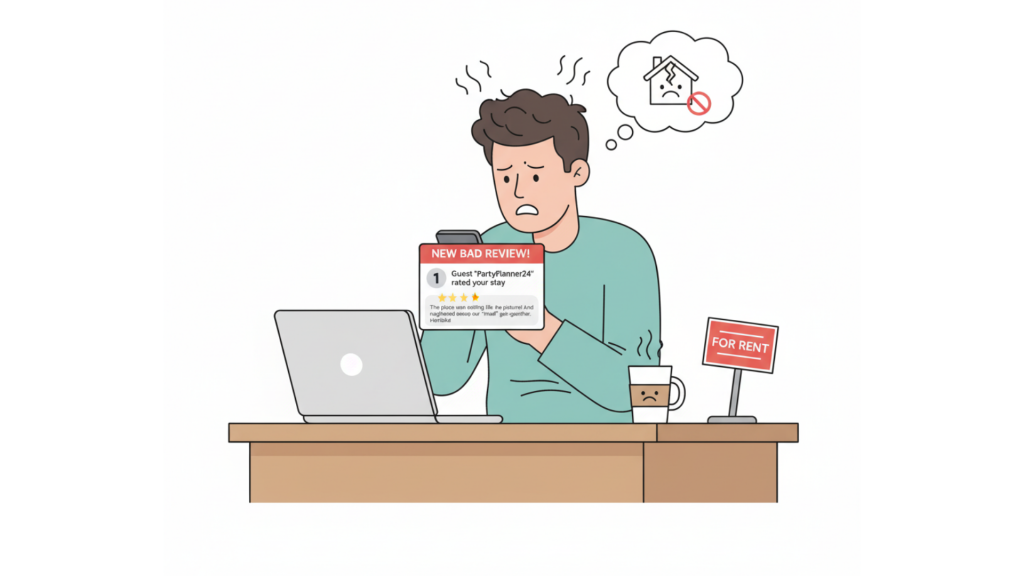
Another notification pops up. You read the 4-star review: “Everything was perfect! Beautiful property, amazing host, would definitely stay again!” Your stomach drops, perfect experience, mediocre rating. Or maybe it’s worse: negative guest reviews because it rained at your beach house, or your lake property wasn’t “convenient to downtown” despite clearly stating it’s 30 minutes outside the city. You followed every rule, disclosed every detail, and somehow reviews keep appearing that make zero sense.
Here’s the truth: most bad reviews aren’t about you. One host analyzed their ratings and found 84% of complaints were about things they’d explicitly documented. Another got 1 star because their beach had “too much sand.”
This article breaks down the 4 categories of unfair guest reviews, why they happen, and proven prevention strategies.”
Why Negative Guest Reviews Feel So Unfair
The disconnect between guest expectations and reality drives most frustrating reviews. Guests book properties based on photos, then penalize hosts for the exact features they selected. This expectation-reality gap destroys ratings and revenue.
The 4-Star Paradox is worse. Hosts regularly receive reviews saying “absolutely gorgeous,” “amazing time,” and “would definitely stay again”, with 4 stars attached. Guests don’t realize anything below 5 stars actively hurts you. They think 4 means “good” when algorithms interpret it as “problematic.” Research from Cornell University confirms this systematic bias in online review systems.
Lower ratings mean lower search placement, fewer bookings, and lost revenue. Your Superhost status vanishes. Future guests see 4.7 and book elsewhere. One weather complaint cascades into weeks of lost income.
The 4 Categories of Unfair Guest Reviews
After analyzing hundreds of host experiences, unfair reviews fall into four distinct patterns. Understanding these categories helps you recognize legitimate feedback versus irrational expectations. Here’s what hosts are getting penalized for.
Location, Weather, and Natural Environment
Remote properties get criticized for being remote. Desert stays get bad reviews for insufficient rain.
One host got dinged because a guest didn’t see a bear, despite bear warnings being about safety, not wildlife guarantees. Another received 1 star for a “foggy and rainy weekend” in the Pacific Northwest in November. That’s literally the climate. Guests book lake houses 30 minutes from Nashville, then complain about the downtown distance. They select properties advertised as “quiet area, short drive to town, car recommended,” then rage because restaurants aren’t walkable. They choose beaches, then complain sand “was irritating and got all over.”
Guest-Caused Problems
Hosts report unfair guest reviews for incidents guests created themselves. These aren’t service failures, these are guests dodging accountability.
One guest fell through a glass door after tripping. The host paid for her emergency room visit. She left a bad review because “her vacation was ruined by falling.” Another followed GPS incorrectly, drove off a hill, destroyed her car, and then blamed the property. A third changed her facelift surgery location mid-stay and demanded a refund, then left negative reviews when denied.
Property Misunderstandings
Some complaints defy logic entirely. Guests penalize hosts for providing MORE than advertised or ignoring photographic evidence.
A guest gave 4 stars for “accuracy” because the host provided MORE than listed, an unadvertised library and piano. Another complained about rain in an outdoor hot tub despite photos clearly showing no roof. One left 2 stars for “unadvertised stairs” in a listing labeled “2-story 1-bed loft” with stairs visible in photos. Then there are ghost stories, curtains that “move like ghosts in the wind” and alleged hauntings that turned out to be possums on the roof.
Infrastructure Beyond Host Control
The internet goes out neighborhood-wide, you get 4 stars for “unreliable WiFi.” These reviews treat hosts as responsible for municipal infrastructure.
Caribbean hosts report guests listing every appliance affected by power outages: “The power is out, the WiFi is also not working, and the ACs are not working either, nor are the TVs,” none of which hosts control.
How to Prevent Negative Guest Reviews
You can’t control weather or geography, but you can dramatically reduce unfair reviews through radical transparency. Hosts with consistently high ratings over-communicate potential issues and catch problems before checkout. Here’s the framework that works.
Radical Transparency in Your Listing
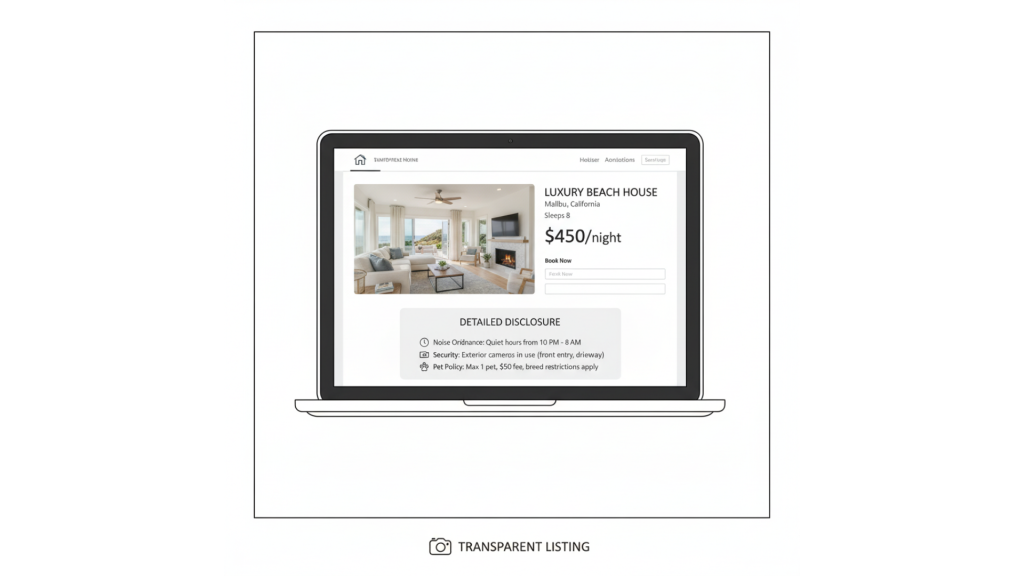
Disclose everything that could disappoint a guest, even obvious things. This filters wrong-fit bookings and attracts guests who appreciate honesty.
One Caribbean host warns about the rainy season, hurricane potential, utility disruptions, muddy roads after rain, and distant construction noise. Their golden rule: “Be upfront about anything that can affect a guest.” List exact distances and drive times. Not “near downtown”, say “30 minutes to downtown, car recommended.” Describe seasonal weather. Mention beaches have sand. Your listing should read like informed consent, not marketing fluff.
Exceptional Customer Service
Research shows guests who had problems resolved rate higher than guests with no problems. Quick responses and problem-solving turn complaints into loyalty.
AdvanceCM’s Unified Inbox centralizes guest messages across booking channels, ensuring you never miss critical conversations while juggling multiple platforms.
Pre-Checkout Feedback Conversations
Ask before they leave: “Is there anything that could have made your stay even better?” This surfaces fixable frustrations while you can still address them.
The flickering lightbulb you immediately replace becomes a story about responsiveness, not an annoyance. Guests need an outlet for concerns during the stay, not after.
Responding to Unfair Guest Reviews
Sometimes prevention fails and unfair reviews happen anyway. Your response isn’t for the reviewer, it’s for future guests deciding whether to book. Here’s when responses help versus when they make things worse.
Respond to factually incorrect claims. If a guest says “no WiFi” during a regional outage, note it was neighborhood-wide and temporary. Don’t respond to subjective complaints like “The curtains moved like ghosts.” Engaging looks defensive. Sometimes absurd reviews discredit themselves, one host’s 1-star “too much sand” review made future guests laugh and book anyway.
Keep responses brief and professional. Acknowledge their experience, provide context, and note actions taken. Example: “We’re sorry the November weather didn’t cooperate. As noted in our weather section, November through March brings rain and fog.”
When to Appeal to Platforms
Some reviews violate policies and can be removed. Document everything: messages, screenshots, and specific policy violations.
Hosts have successfully removed reviews where guests threatened bad reviews for refunds, incidents outside the property, or profanity-laced attacks. Platform policies are governed by consumer protection regulations. AdvanceCM’s task management helps track disputes and follow-up timelines. Frustratingly, platforms used to protect hosts from weather reviews but removed these protections.
Common Mistakes That Amplify Review Damage
Even experienced hosts make errors that turn 4-star reviews into reputation crises. Some responses backfire spectacularly, and some prevention attempts increase complaints. Understanding these pitfalls saves time, money, and stress.
- Arguing with guests publicly. Future guests see defensiveness, not accuracy. Keep responses brief or stay silent.
- Over-disclosing. “Occasional bears, possible outages, slow internet, construction noise” reads like a disaster zone. Focus on regular conditions, not every hypothetical.
- Incentivizing 5-star reviews. This violates platform policies and feels tacky. Create conditions where 5 stars happen naturally.
- Ignoring patterns. Three guests mention firm mattresses? Add a topper or update your listing. Dismissing patterns guarantees repeat feedback.
- Waiting until checkout for feedback. By then, they’ve mentally written their review. Ask mid-stay when you can fix issues, day 2-3 of week-long stays works best.
Building a Review-Proof System
Perfect hosts still get 4 stars from guests who think it means “good.” You can build systems that minimize unfair reviews and maximize recovery when they happen. Here’s what high-performing hosts do differently.
Automate communication. AdvanceCM’s Autopilot handles pre-arrival instructions, check-in details, and mid-stay check-ins automatically, freeing you for relationship-building when issues arise. Track patterns in a spreadsheet: complaint category, disclosure status, and response. After 20-30 reviews, patterns emerge. Adjust listing language based on actual feedback, not assumptions.
Take immediate action. Add a “Things to Note” section covering seasonal weather, distances, and limitations. Set up automated mid-stay check-ins asking, “How’s everything going?” Create response templates you can customize quickly. Property managers ready to scale can explore AdvanceCM’s pricing to find the right tier for their portfolio.
Document everything. Save acknowledgment conversations, screenshot weather forecasts, and record utility outages. This documentation becomes essential for appeals.
💬 Dealing with irrational negative guest reviews? You’re not alone in this frustration. Join the conversation with other hosts navigating the same absurd complaints.
Conclusion
Negative guest reviews for uncontrollable factors will keep happening, that’s vacation rental reality when guests rate you for weather and geography. But hosts who protect ratings build transparent listings, deliver exceptional service, and respond strategically instead of emotionally. Your business is too valuable to leave exposed to every irrational complaint. Audit your listing today, implement pre-checkout feedback conversations, and document everything. When the inevitable 4-star “perfect stay!” review arrives, you’ll be prepared.
FAQs
Q: Can I be penalized for canceling a high-risk booking after receiving an alert?
A: No, most platforms allow penalty-free cancellation when you’ve received a high-risk alert, and the guest receives a full refund without affecting your listing. Document your reasons and save the alert notification as proof in case questions arise later.
Q: What’s the fastest way to rebook after receiving negative guest reviews?
A: Immediately update your calendar across all platforms and adjust your minimum stay requirement if needed. Property managers using channel managers can push availability updates to 20+ booking sites simultaneously, often filling cancellations within 48 hours during peak season.
Q: How long should my response to an unfair guest review be?
A: Keep responses under 75 words, brief, professional acknowledgment with relevant context works better than detailed rebuttals. Future guests skim reviews quickly, and long responses signal defensiveness regardless of how right you are.
Q: Should I respond to every negative guest review I receive?
A: No, respond only when you can add valuable context for future guests or correct factual errors. Don’t respond to purely subjective complaints or reviews so absurd they discredit themselves, selective responses look more professional than responding to everything.
Q: What percentage of my bad reviews should come from disclosed issues before I change my listing?
A: If more than 25% of your negative reviews mention the same disclosed issue, your disclosure isn’t working effectively and needs to be more prominent or reconsidered. Track patterns for 20-30 reviews before making major listing changes.

Welcome to Tokeet’s Podcast — your trusted source for insights, trends, and strategies shaping the vacation rental industry. Each episode features expert interviews, data-driven analysis, and practical tips to help property managers grow their businesses, improve guest experiences, and stay ahead in a rapidly evolving market. Whether you’re new to short-term rentals or managing a large portfolio, tune in to stay informed and inspired.
Some days just don’t work for a guest arrival, whether it’s a holiday, a maintenance window, or a turnover day your team can’t cover. This episode walks through check-in and check-out restrictions, the most requested feature in AdvanceCM, now live in the Rentals module. You’ll hear how to block arrivals or departures for a date range, such as December 24 to 26, and how to allow check-ins only on the weekdays you choose. We also cover channel-specific rules, like keeping Airbnb to Friday and Saturday arrivals while direct bookings stay open through Sunday. Finally, we explain what to check before switching rules on, from existing reservations to sync time and visibility on booking sites.
Key Takeaways:
✅ Block check-ins or check-outs for any date range
✅ Limit arrivals to the weekdays you choose
✅ Set different rules for each booking channel
✅ Existing reservations stay unchanged
✅ More restrictions mean fewer guests can book, so review rules each season
Related Links:
Company: https://www.tokeet.com/Blogs: https://www.tokeet.com/blog/Blog: Check-in and Check-out Restrictions: How to Set Them in AdvanceCM 👉 https://blog.tokeet.com/check-in-and-check-out-restrictions/
This is a public episode. If you would like to discuss this with other subscribers or get access to bonus episodes, visit podcast.tokeet.com