

Guest property damage insurance becomes crucial when incidents occur at your vacation rental, but figuring out who actually pays can be confusing. A tree branch falls on a guest’s car, a windshield cracks in your driveway, or personal belongings get damaged during a stay. These scenarios happen more often than you’d think, and choosing the wrong insurance path can cost you thousands.
Understanding VRBO host liability and insurance options protects your business from unnecessary expenses and legal risks.
This guide breaks down exactly which insurance should cover guest property damage and how to handle these situations without admitting fault.
Understanding Guest Property Damage Insurance
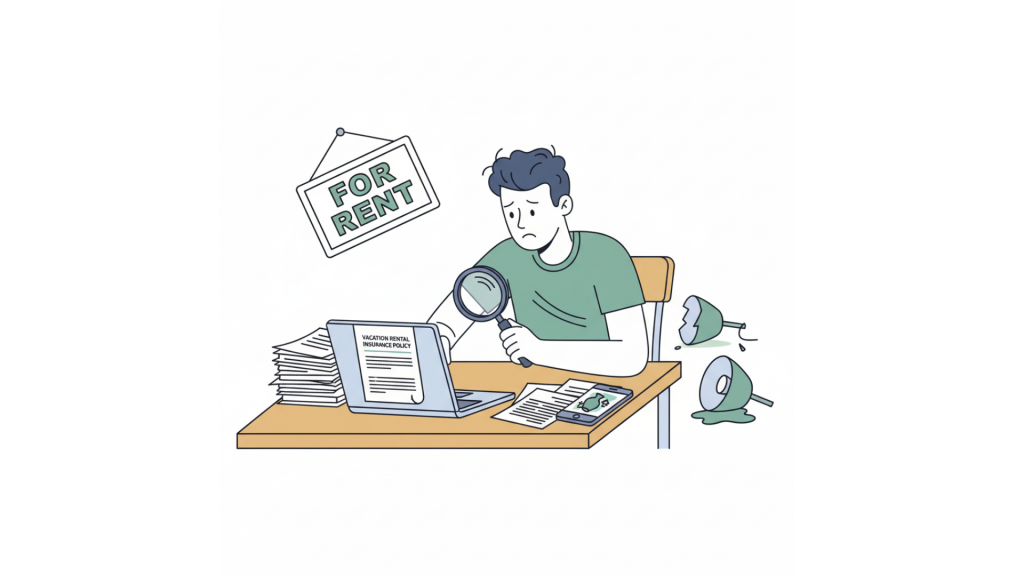
Guest property damage insurance refers to coverage for a guest’s personal belongings or vehicle when damaged during their stay at your vacation rental. This is different from damage guests cause to your property. Many hosts confuse these two scenarios and file claims through the wrong insurance company.
When a guest’s property gets damaged, three insurance options potentially apply: the guest’s own insurance (auto or renters), your homeowner’s or landlord policy, or platform protection programs. Each option has different cost implications and liability considerations.
The key is knowing which insurance should take the lead. Filing through the wrong channel can signal liability admission, increase your premiums, or result in paying deductibles that exceed the actual damage cost.
The Three Insurance Paths for Property Damage
Property damage incidents at vacation rentals trigger different insurance policies depending on what happened and who’s potentially at fault. Understanding these three paths helps you make informed decisions that protect both your finances and legal standing.
Guest’s Personal Insurance (Auto or Renter’s)
The guest’s own insurance should be your first recommendation in most property damage scenarios. This approach avoids any implication that you’re accepting responsibility for the damage. Insurance adjusters communicate between companies if liability needs to be established.
When this applies:
- Guest’s vehicle damaged while parked on your property
- Guest’s personal belongings damaged during their stay
- Items left in their car that were affected by an incident
- Electronics or valuables that break during normal use
Let the professionals determine fault rather than making that decision yourself. Some states mandate that auto insurance cover windshield replacement with no deductible, according to National Association of Insurance Commissioners guidelines. This can resolve vehicle damage incidents at zero cost to anyone involved.
Host’s Homeowner’s or Landlord Insurance
Your homeowner’s insurance should be your last resort for guest property damage. Most policies carry deductibles between $1,000 and $2,000. For minor damage like a cracked windshield, paying out of pocket costs less than meeting your deductible.
Why to avoid this path:
- High deductibles make small claims financially pointless
- Claims increase your premiums or risk policy cancellation
- Filing frequency affects your insurability long-term.
- Can be interpreted as accepting fault for the incident
Insurance companies track claim frequency, and multiple claims can make you uninsurable. Property managers who minimize homeowners’ insurance claims maintain better rates and coverage over time.
Platform Protection Programs (VRBO, Airbnb)
VRBO and similar platforms offer limited protection programs, but these come with significant restrictions. Most experienced hosts view platform protection as a backup option rather than a primary solution.
Key limitations to know:
- VRBO requires damage reports within 24 hours of discovery.
- Coverage focuses mainly on property damage caused by guests, not guest property damage.
- Uncertain whether claims will actually be covered
- After the 24-hour window, only homeowner’s insurance or out-of-pocket remains.
Always read the specific coverage terms before assuming platform protection will help. The 24-hour window and uncertain coverage make it unreliable for many situations.
VRBO Host Liability: A Real-World Case Study
A recent VRBO host forum discussion revealed how easily liability situations can spiral. A tree branch fell and cracked a guest’s windshield while their car was properly parked in the driveway. The host asked whether to file through homeowner’s insurance.
The community response was nearly unanimous: don’t file through your insurance. Direct the guest to their auto insurance company. If the guest’s insurer determines the host is liable, they’ll contact the host’s insurance company through proper channels.
One host warned that proactively filing a claim signals guilt and could “bite you in the ass” legally. Another noted that with typical deductibles, the host would spend more on the deductible than the actual repair cost.
The consensus revealed an important principle: being helpful doesn’t mean taking financial responsibility. You can assist guests in understanding their insurance options without filing claims on their behalf.
The Liability Communication Trap
One phrase can turn a helpful conversation into a legal admission of fault. Many hosts naturally say, “I’m sorry this happened” when guests experience property damage. This common courtesy can be used against you in insurance disputes or legal proceedings.
What to Say (and Not Say)
Avoid any language that implies you accept responsibility for the incident. Platforms like AdvanceCM help property managers maintain professional, neutral communication through standardized message templates.
Instead of apologizing, use neutral language:
- “I understand this is frustrating” instead of “I’m sorry this happened.”
- “Here’s how to file with your insurance” instead of “Let me take care of this.”
- “I can provide documentation” instead of “I’ll pay for the damage.”
- “This is unfortunate” instead of “This is our fault.”
The Unified Inbox feature ensures consistent messaging across all guest interactions, reducing liability risks from inconsistent communication. Document everything objectively—time, date, conditions, and facts without speculation about cause or fault.
State-Specific Insurance Variables
Insurance requirements and coverage mandates vary significantly by state. Some states require auto insurance policies to cover windshield replacement with no deductible. If your state has this law, a guest’s windshield damage becomes a non-issue.
Other states have different liability standards for property owners. Understanding your state’s specific requirements helps you know when you might actually be liable versus when you’re not. Property owners aren’t automatically liable for every incident that occurs on their property.
Where to Check Your State’s Rules
Check your state insurance department website for specific coverage requirements and liability standards. The Insurance Information Institute provides state-by-state insurance information and requirements.
Key questions to research:
- Does your state mandate no-deductible windshield coverage?
- What are the property owner liability standards?
- Are there specific notification requirements for incidents?
- What documentation is legally required?
This 10-minute research investment can save thousands in unnecessary claims or payments.
The Decision Framework: Which Insurance to Use
Follow this step-by-step approach when guest property damage occurs at your vacation rental. Property management systems with task management features help teams follow consistent protocols for every incident.
Step 1: Document immediately. Take photos, note the time and conditions, and gather any witness information. Objective documentation protects all parties and provides necessary information for insurance claims.
Step 2: Research state-specific laws. Check if your state has special coverage requirements that might resolve the situation automatically. Windshield coverage mandates or other state-specific rules can eliminate the entire problem.
Step 3: Assess damage severity versus deductibles. If the repair costs less than your insurance deductible, filing a claim makes no financial sense. Minor damage often costs less to pay directly than to involve insurance companies.
Step 4: Direct the guest to their insurance. In most cases, the guest’s auto or renter’s insurance is the appropriate coverage. Provide any documentation they need for their claim, but let them initiate the process with their insurer.
Step 5: Communicate carefully and neutrally. Help the guest understand their options without making statements that imply fault. Professional, factual communication protects you legally while still providing good customer service.
Automated workflows ensure nothing gets missed and communication remains professional and neutral.
Preventing Costly Insurance Mistakes
The best approach to guest property damage insurance is preventing mistakes before they happen. Standardized communication templates eliminate the risk of saying something that implies liability. Digital documentation systems ensure incidents are recorded objectively and completely.
Automation Reduces Human Error
Many professional property managers use automation to handle incident reporting and guest communication. When something happens, the system generates neutral documentation and guides staff through appropriate responses.
Key prevention strategies:
- Pre-approved incident response protocols for your team
- Template messages that avoid liability language
- Automatic documentation triggers when incidents are reported
- Staff training on proper communication during incidents
Consider implementing these safeguards before an incident occurs. When your team knows exactly what to say and do, they can respond quickly without making liability mistakes. The AdvanceCM pricing includes features specifically designed for professional property management operations, including communication automation and task management that reduce liability risks.
💬 Want to discuss your specific liability situation with other vacation rental hosts? Join the conversation on Reddit.
Conclusion
Guest property damage insurance situations require careful handling to avoid costly mistakes. The guest’s own insurance should be your first recommendation in most scenarios, protecting you from unnecessary claims and liability implications. Your homeowner’s insurance should be a last resort due to high deductibles and premium risks.
Communication matters as much as the insurance decision itself. Neutral, factual language helps guests without admitting fault. Document everything objectively and understand your state’s specific insurance requirements.
Professional property management systems help automate neutral communication and consistent incident handling. When you have the right processes in place, guest property damage becomes a manageable situation rather than a legal or financial crisis.
FAQs
Q: Should I file a claim through my homeowner’s insurance if a guest’s car is damaged on my property?
A: No, direct the guest to file through their own auto insurance first. Their insurer will contact yours if they determine you’re liable. Filing proactively can be seen as admitting fault and will likely cost more than the damage itself due to your deductible.
Q: What’s the time limit for filing a VRBO property damage claim?
A: VRBO requires damage reports within 24 hours of discovery. After this window closes, your only options are homeowner’s insurance or paying out of pocket.
Q: Can saying “I’m sorry” to a guest create legal liability?
A: Yes, apologizing can be interpreted as accepting fault. Instead, acknowledge the situation neutrally and provide factual information about filing insurance claims without implying you’re responsible.
Q: Do all states require insurance to cover windshield damage with no deductible?
A: No, only certain states mandate no-deductible windshield coverage. Check your state’s specific auto insurance requirements to see if this applies to your guests.
Q: What documentation should I collect when guest property damage occurs?
A: Take photos, note the exact time and date, document weather or other conditions, and collect any witness information. Record only objective facts without speculation about cause or fault.

Welcome to Tokeet’s Podcast — your trusted source for insights, trends, and strategies shaping the vacation rental industry. Each episode features expert interviews, data-driven analysis, and practical tips to help property managers grow their businesses, improve guest experiences, and stay ahead in a rapidly evolving market. Whether you’re new to short-term rentals or managing a large portfolio, tune in to stay informed and inspired.
Some days just don’t work for a guest arrival, whether it’s a holiday, a maintenance window, or a turnover day your team can’t cover. This episode walks through check-in and check-out restrictions, the most requested feature in AdvanceCM, now live in the Rentals module. You’ll hear how to block arrivals or departures for a date range, such as December 24 to 26, and how to allow check-ins only on the weekdays you choose. We also cover channel-specific rules, like keeping Airbnb to Friday and Saturday arrivals while direct bookings stay open through Sunday. Finally, we explain what to check before switching rules on, from existing reservations to sync time and visibility on booking sites.
Key Takeaways:
✅ Block check-ins or check-outs for any date range
✅ Limit arrivals to the weekdays you choose
✅ Set different rules for each booking channel
✅ Existing reservations stay unchanged
✅ More restrictions mean fewer guests can book, so review rules each season
Related Links:
Company: https://www.tokeet.com/Blogs: https://www.tokeet.com/blog/Blog: Check-in and Check-out Restrictions: How to Set Them in AdvanceCM 👉 https://blog.tokeet.com/check-in-and-check-out-restrictions/
This is a public episode. If you would like to discuss this with other subscribers or get access to bonus episodes, visit podcast.tokeet.com