
With the new year fast approaching, we return to a news piece that first broke in July 2017. Various news and VRM-centric outlets were reporting on Google’s intentions to enter the vacation rental market. VRMintel included an insider quote stating a wide-release was likely coming in 2018. So what was it and where is it now? And, more importantly, how will it affect us?
Google’s VR Plans
Google’s approach into the VR market will seek to make it easier for users to find and book vacation rentals through a familiar meta-search interface. The system is currently already in place for traditional hotels.
If a user were to search for “hotels in Detroit”, they would be presented with a listing widget embedded in the results. It includes a map, pricing, and hotel listings with images. Essentially, it looks and functions like any hotel booking website.
Google is currently beta-testing a filter option that will display vacation rentals instead of traditional hotels. Their testing is live in various regions outside of the US. For example, if one were to visit google.co.uk and perform a search for “hotels in Paris”, they’d be able to test this new feature out.
To save you a few clicks, we’ll show you how it works now.
Google VR Listing in Action
Performing a search in one of Google’s test regions for “hotels in [x]” will present you with a modified version of the hotel meta-search widget. At first look, it’ll be quite familiar.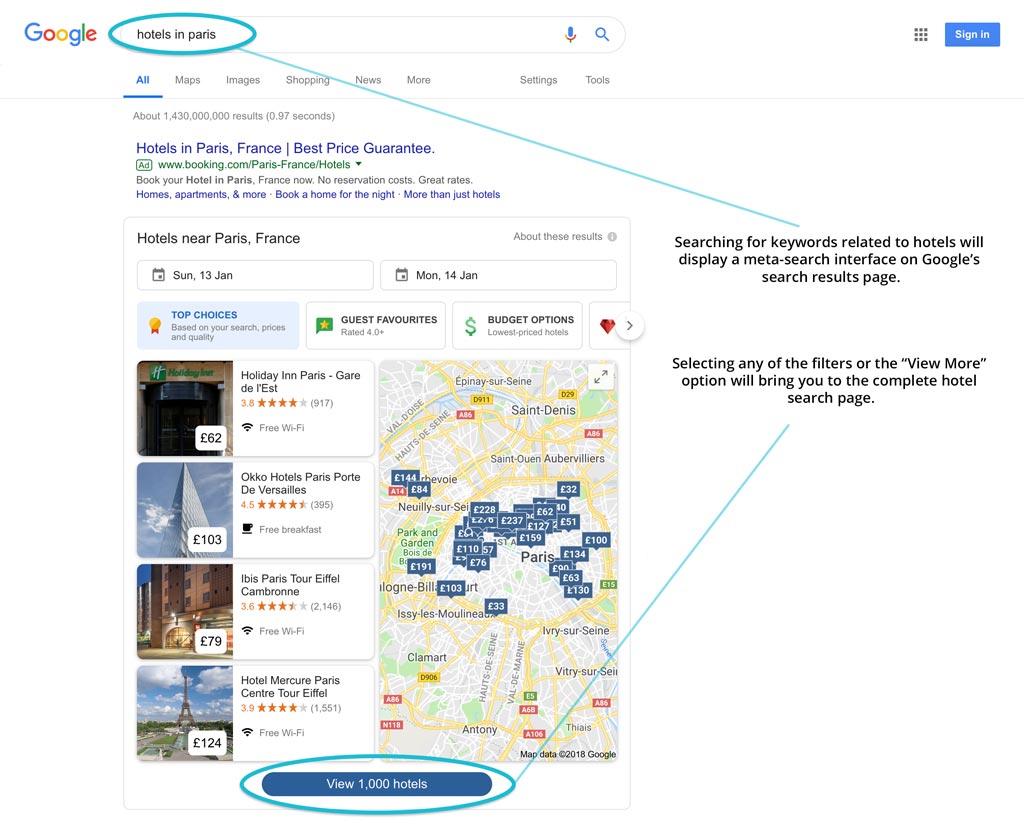 Clicking the More Filters dropdown, you’ll be given the option to limit search results to vacation rentals.
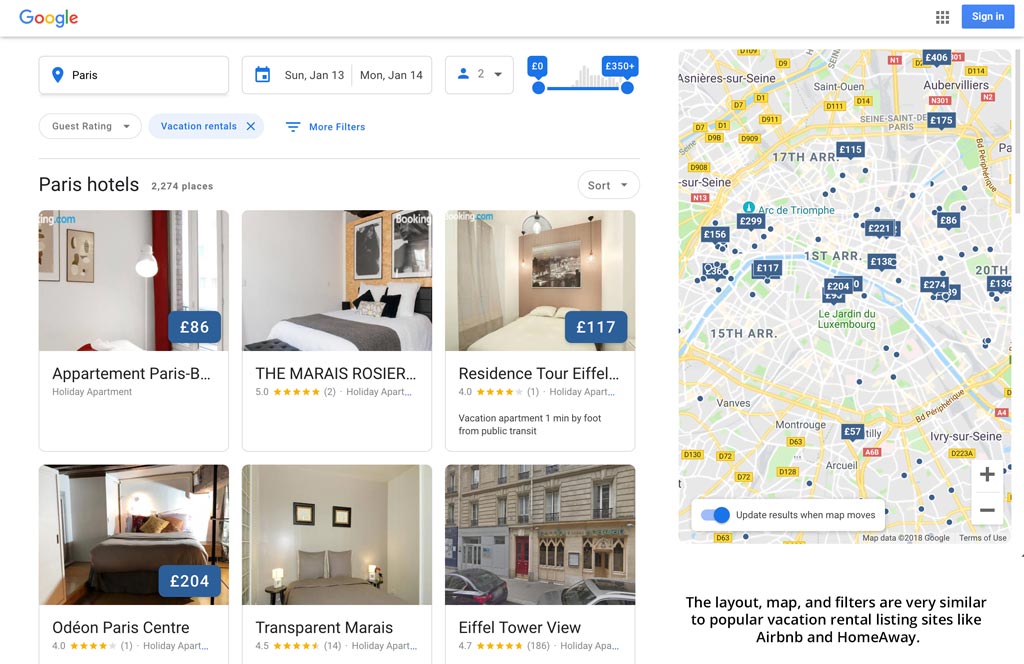
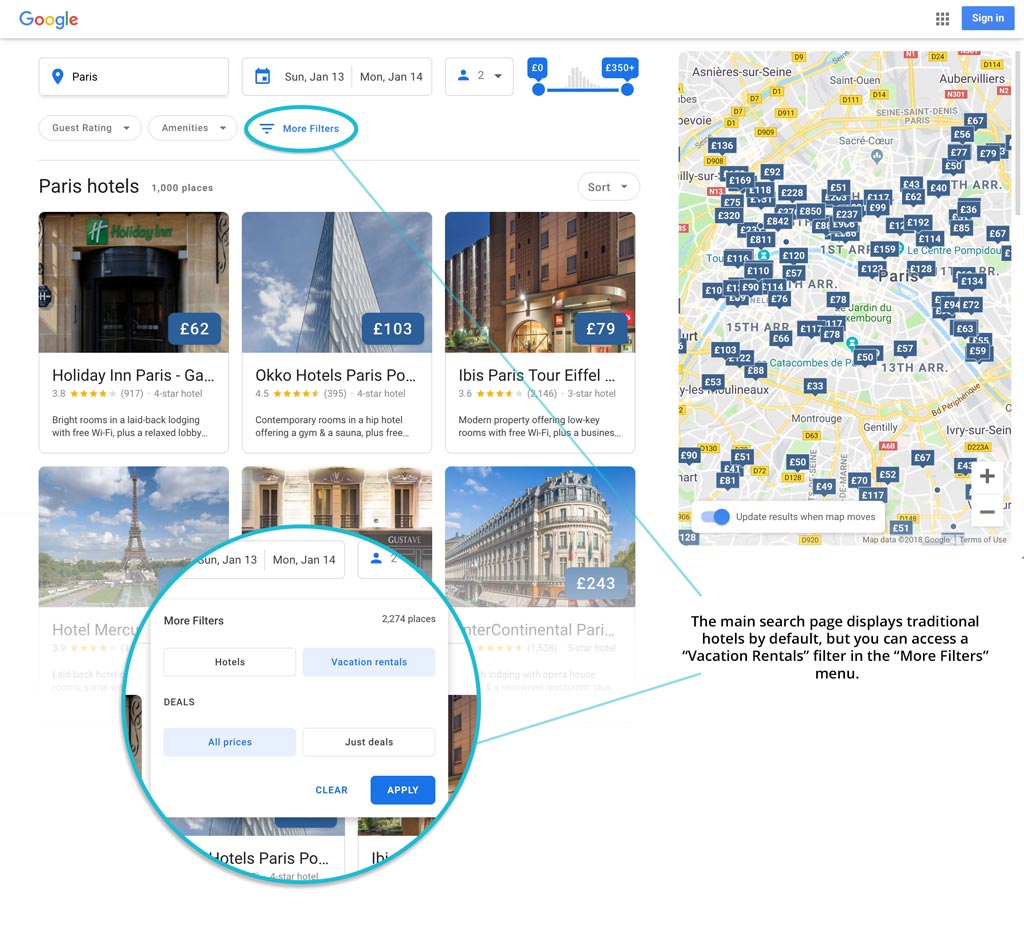 From there, you’re presented with a list of vacation rental properties in the area – adjusting the map position will repopulate the list with local options. You might forget for a moment that you’re not on Airbnb or Agoda – the layout is very familiar.
 When a rental property is selected, you’re taken to a full listing page. Data filters, focused info, a map with nearby attractions and transit info, pricing, and availability are all included. The most important feature of Google’s VR listing meta-search is the price comparison. Listings for the property in focus are pulled from various outlets with their respective prices.
The beta version includes listings from a few sites – Booking.com, PriceLine, Hotels.com, etc. The complete version will undoubtedly aggregate the remaining major listing sites.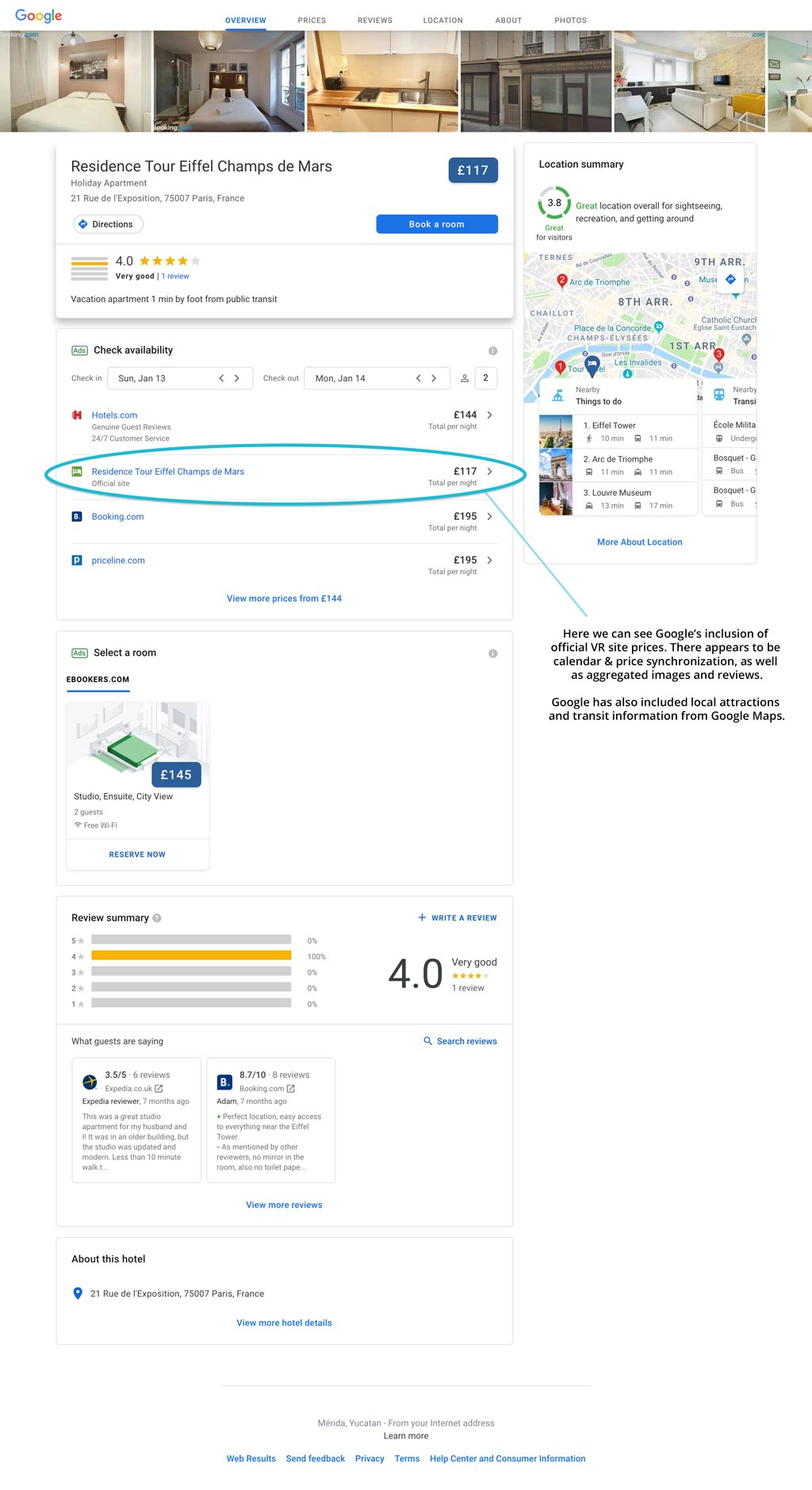
What Will Google’s VR Venture Mean for Owners & Managers?
Even though the beta version isn’t complete, we can make a few educated guesses based on Google’s past market leveling projects. Here’s some possible outcomes:
- More potential guests are introduced to vacation rentals. This is a given, being that Google is an ubiquitous authority on the web.
- Popular listing sites will adjust booking fees to compete for Google users. Google is stripping the listings down bare data, throwing away any extraneous features or functions from the sites they’re drawn from. The only prominent competitive factor to work with is the price. Since the most common reason for price variation between listing sites is compensation for booking fees…you get it.
- MORE DIRECT BOOKINGS. Google has (thankfully) included owner-run vacation rental sites in their listing aggregation. That means owners with booking engines will have the perfect opportunity to reel users to their sites for the checkout process. All it takes is a dollar or two in price difference.
How will this be implemented?
While it’s unclear at this moment, it’s very likely that Google will be using a structured data system that can be utilized by site owners through the Search Console. It’ll appear in the rich cards menu along with the others.
Considering they’ve just about missed their 2018 projection, we can expect Google’s VR searching to go into effect globally in 2019.

Welcome to Tokeet’s Podcast — your trusted source for insights, trends, and strategies shaping the vacation rental industry. Each episode features expert interviews, data-driven analysis, and practical tips to help property managers grow their businesses, improve guest experiences, and stay ahead in a rapidly evolving market. Whether you’re new to short-term rentals or managing a large portfolio, tune in to stay informed and inspired.
Some days just don’t work for a guest arrival, whether it’s a holiday, a maintenance window, or a turnover day your team can’t cover. This episode walks through check-in and check-out restrictions, the most requested feature in AdvanceCM, now live in the Rentals module. You’ll hear how to block arrivals or departures for a date range, such as December 24 to 26, and how to allow check-ins only on the weekdays you choose. We also cover channel-specific rules, like keeping Airbnb to Friday and Saturday arrivals while direct bookings stay open through Sunday. Finally, we explain what to check before switching rules on, from existing reservations to sync time and visibility on booking sites.
Key Takeaways:
✅ Block check-ins or check-outs for any date range
✅ Limit arrivals to the weekdays you choose
✅ Set different rules for each booking channel
✅ Existing reservations stay unchanged
✅ More restrictions mean fewer guests can book, so review rules each season
Related Links:
Company: https://www.tokeet.com/Blogs: https://www.tokeet.com/blog/Blog: Check-in and Check-out Restrictions: How to Set Them in AdvanceCM 👉 https://blog.tokeet.com/check-in-and-check-out-restrictions/
This is a public episode. If you would like to discuss this with other subscribers or get access to bonus episodes, visit podcast.tokeet.com