
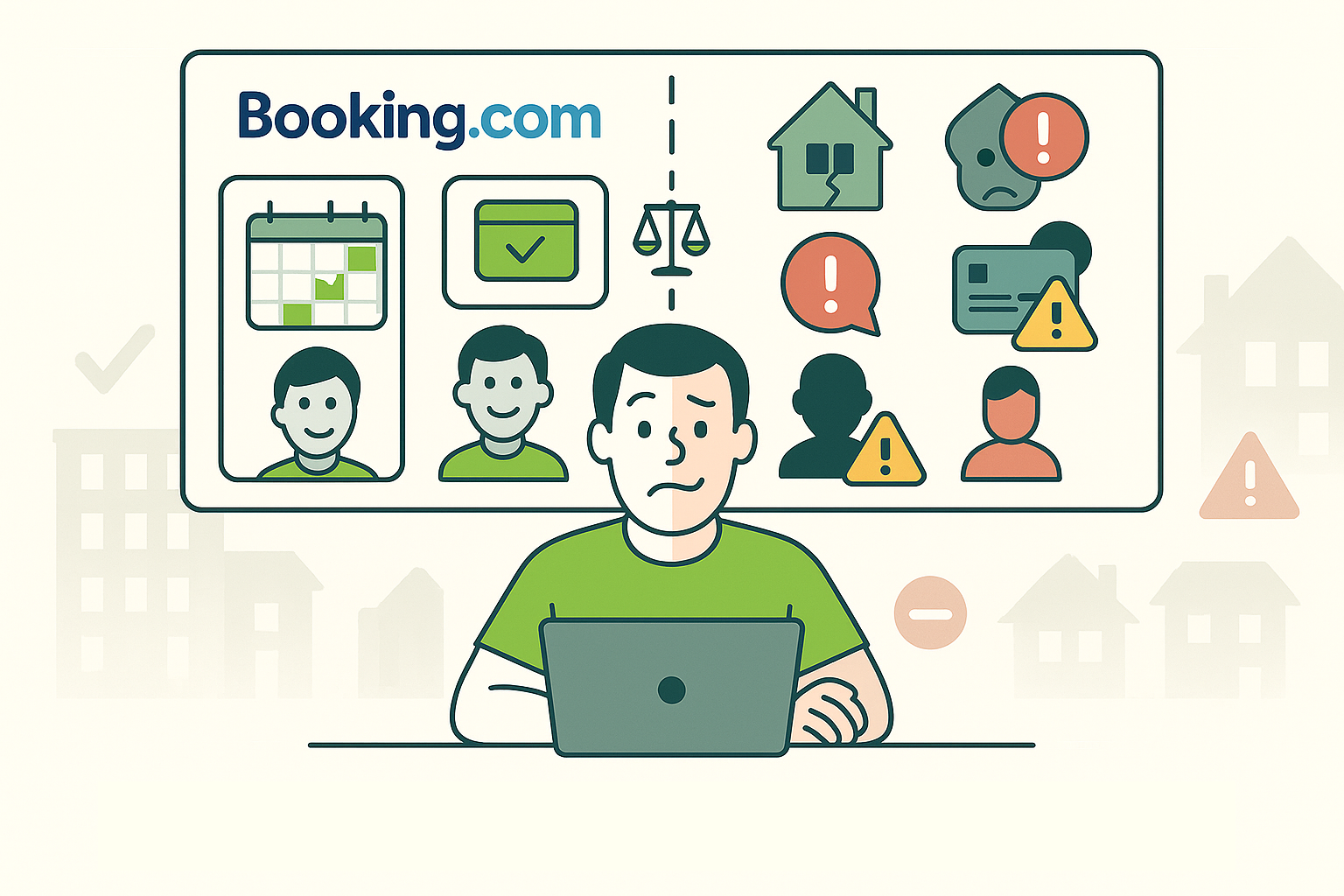
For property owners and managers, Booking.com offers a huge global audience and a powerful way to fill up a rental calendar, especially with those last-minute bookings. This seems like a fantastic chance to grow a business, but many hosts quickly find out that the experience is very different from what they expected. The platform comes with hurdles and frustrations you don’t hear about in marketing materials. The honest truth is, conversations in host forums and online communities reveal a very different story. The most significant of these challenges is the issue of payment collection.
The Problem: A Manual Payment Nightmare
Many hosts face a core problem on Booking.com that goes beyond just a missed payment. This issue affects a host’s entire business operation and creates a high-friction experience that can be frustrating.
The Burden on New Hosts
The most pressing issue for many hosts, particularly those who are new to the platform, is that Booking.com may not process guest payments on their behalf. This specific policy shifts the entire responsibility of payment collection onto the property manager. As one host put it, “Booking doesn’t take a payment from the guest at all when the host is new.” This means a host has to manually set up their own methods for charging guests after a reservation is made, adding a lot of extra work right from the start.
The Domino Effect of Financial Risk
When a host is responsible for collecting payments, it creates a ripple effect of problems. They are exposed to the financial risks that the platform should handle. For example, hosts have to deal with no-shows and chase down guests with invalid credit cards. This manual process is made worse by a lack of accountability when guests cause damages. In host communities, it’s common to see comments like, “My worst guests have come from booking.com, and there was no accountability when reporting them.” This leads to real financial loss. One host mentioned a failure to get “payment for broken items with proof,” which shows a tangible risk tied to the platform’s resolution process.
The Solution: Automated Payments with AdvanceCM
These payment challenges don’t have to be a source of stress. A property management system (PMS) like AdvanceCM can solve these problems by automating key parts of the process, giving you the control you need to run your business professionally.
How the System Works
A PMS with a payment gateway integration can solve the payment problem automatically. The system works by seamlessly capturing a guest’s credit card details from their Booking.com reservation and saving them securely in a connected payment gateway. It’s a simple, reliable process that takes the manual work out of your hands. The information is held securely within the gateway, not on the system’s own servers, to keep everything safe. This allows a host to charge the card with a single click from an invoice, turning a manual headache into a streamlined workflow. .
More Than Just a Payment Tool
A good PMS does more than just handle payments. It provides a complete framework for managing the broader risks of hosting. For example, a unified inbox helps hosts manage all guest messages from a single dashboard. This feature prevents misunderstandings and makes it easy to handle every interaction from one organized place. The platform also helps you deal with those “broken items” you read about. The operations module gives you a structured way to document and resolve issues, helping you manage incidents in a professional manner. For a property manager, reducing reliance on any single platform is a smart move. A robust channel manager can connect you to many booking sites, helping you diversify your bookings.
Conclusion
Booking.com can be a valuable tool for any property manager, but it’s not without its challenges. The key to success is to go into the partnership with your eyes wide open and armed with the right tools. A platform like AdvanceCM gives hosts the control they need to handle payments, manage communications, and turn potential headaches into a professional, profitable business.
💬 See how other property managers are handling this in the Reddit thread.
FAQs
Q: Does Booking.com handle payments for all hosts? No, not always. While the platform has expanded its “Payments by Booking.com” service, some hosts, especially new ones, may still be required to collect payments directly from guests. It’s important to check your settings and status in the Booking.com Extranet to see what applies to you.
Q: What should I do if a guest damages my property? Booking.com has a “Damage Program” that allows you to request a damage fee from a guest. You must document all damages and file a claim through this formal process. However, the platform’s liability insurance does not cover damages to your own property, so you may need to use this program or have your own separate insurance.
Q: How do I handle virtual credit cards? To accept virtual cards, you need to make sure your payment gateway is configured correctly. For example, if you use Stripe, you might need to contact them to ensure your account’s Merchant Category Code (MCC) is set to 7011, which allows you to accept these types of payments.

Welcome to Tokeet’s Podcast — your trusted source for insights, trends, and strategies shaping the vacation rental industry. Each episode features expert interviews, data-driven analysis, and practical tips to help property managers grow their businesses, improve guest experiences, and stay ahead in a rapidly evolving market. Whether you’re new to short-term rentals or managing a large portfolio, tune in to stay informed and inspired.
Some days just don’t work for a guest arrival, whether it’s a holiday, a maintenance window, or a turnover day your team can’t cover. This episode walks through check-in and check-out restrictions, the most requested feature in AdvanceCM, now live in the Rentals module. You’ll hear how to block arrivals or departures for a date range, such as December 24 to 26, and how to allow check-ins only on the weekdays you choose. We also cover channel-specific rules, like keeping Airbnb to Friday and Saturday arrivals while direct bookings stay open through Sunday. Finally, we explain what to check before switching rules on, from existing reservations to sync time and visibility on booking sites.
Key Takeaways:
✅ Block check-ins or check-outs for any date range
✅ Limit arrivals to the weekdays you choose
✅ Set different rules for each booking channel
✅ Existing reservations stay unchanged
✅ More restrictions mean fewer guests can book, so review rules each season
Related Links:
Company: https://www.tokeet.com/Blogs: https://www.tokeet.com/blog/Blog: Check-in and Check-out Restrictions: How to Set Them in AdvanceCM 👉 https://blog.tokeet.com/check-in-and-check-out-restrictions/
This is a public episode. If you would like to discuss this with other subscribers or get access to bonus episodes, visit podcast.tokeet.com