

In most markets, the bed bug scam in short-term rentals is now a known move, not a horror story. One “hero” guest films a single bug, threatens support, and suddenly your listing, month, and sanity are all at risk.
This guide shows you how one host flipped an attempted Airbnb bed bug scam into a clean win using refund-and-exit, maintenance proof, and platform rules. You’ll see exactly how to read the guest dynamics, force a decision, protect your reviews, and turn it into a repeatable incident playbook for the next “hero bug.”
See the steps →
What the bed bug scam in short-term rentals actually looks like
Picture the setup: 12–13 guests, low price per head, and a tag-along friend (not the booker) who suddenly “discovers” a single, big bedbug on camera. The video looks off; the bug sits there and then sprints only when the camera is ready. Everyone insists there’s a health emergency, but no one actually wants to leave, which is the biggest tell in any Airbnb bed bug scam.
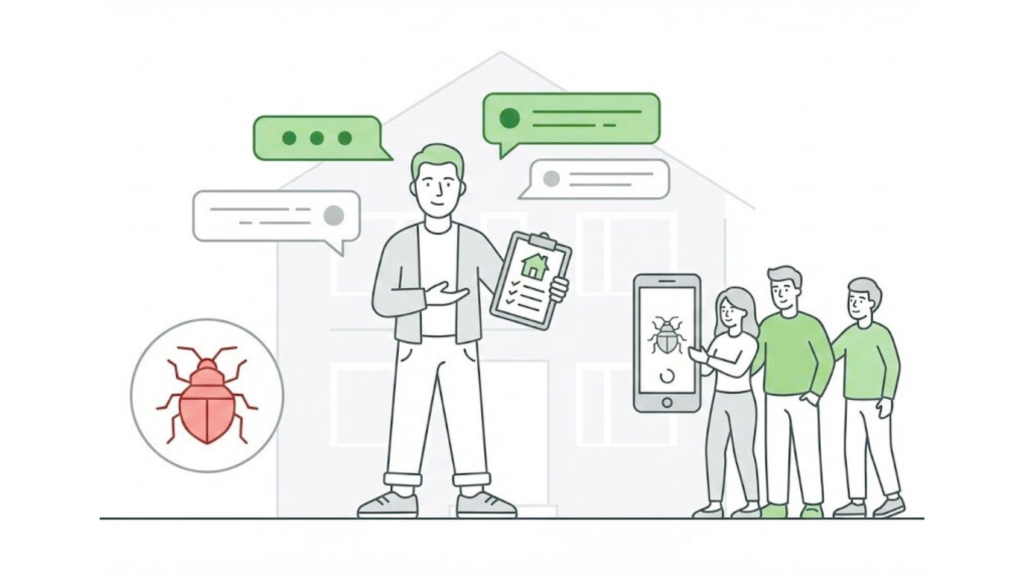
When a “hero guest” finds a single bug, your job isn’t to panic, it’s to manage the bed bug scam in short-term rentals like a process, not a crisis.
The host ignores the drama and goes straight for structure: talk directly to the booker, not the loudest friend. The booker is the one whose account, reviews, and payment are on the line. While the tag-along pushes for freebies, the rest of the group quietly wants to stay, especially when they know they can’t find the same deal anywhere else. For a more operational breakdown of a clean response, check the Tokeet guide on how to handle bed bug complaints step by step.
Before:
- The guest waves a bug video and demands “compensation.”
- Host panics, argues, and ends up with a bad review and a partial refund.
After:
- The host runs a clear refund-and-exit protocol in writing.
- The guest either leaves with a clean refund or stays and loses all leverage.
Step-by-step: running a refund-and-exit protocol
Here’s the core protocol for an Airbnb bed bug scam and similar “manufactured emergency” plays: it’s not about proving where the bug came from, it’s about forcing a real decision.
- Acknowledge the claim calmly. Thank the guest for flagging it and avoid arguing about whether the bug is real or how it got there.
- Offer a 100% refund for all unused nights on one strict condition: the group must check out by a clear time (like 11:00 AM).
- Put it in writing on-platform: confirm that once you process the refund and they check out, your responsibility ends.
- Make the choice explicit: tell them they’re free to use the refund to book anywhere they feel comfortable, but you won’t fund or arrange extra nights beyond that refund.
- Add the calm objection-killer: “If this really feels unsafe to you, the fastest option is to take the full refund and move somewhere you feel comfortable.”
- If they refuse to leave after the offer, document it: repeat their choice in the app so it’s clear they decided to stay in a place they called “unsafe.”
- After checkout, inspect and treat the unit if needed so you’re covered both for safety and future claims.
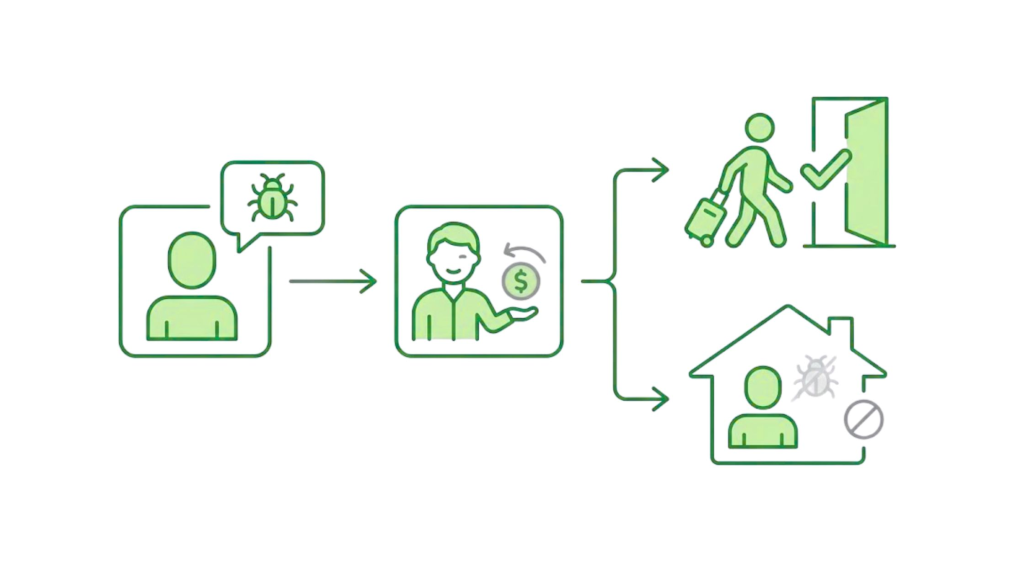
The refund-and-exit protocol turns a shaky bed bug claim into a forced choice: leave with a clean refund or stay and lose leverage.
Tools like AdvanceCM can help you centralize incidents and tasks so every message, note, and follow-up lives in one place instead of scattered across texts. Start with one property and turn this into a saved incident template you can reuse.
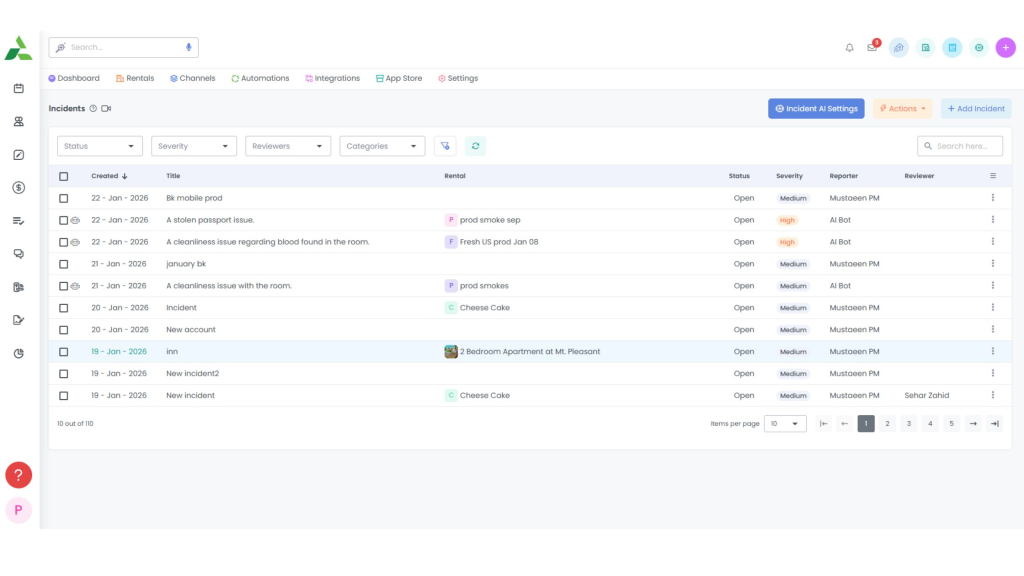
Log every “bed bug emergency” as an incident in AdvanceCM, messages, tasks, and notes in one workspace instead of scattered across apps.
Maintenance-validated defense: proof before the claim
The reason this host never panicked is simple: they knew the bed was clean the day before. They had stripped the bed, washed the protectors, and checked the box spring, mattress seams, and frame as part of normal turns. That “maintenance-validated defense” meant they could answer a shaky bed bug scam in short-term rentals with specific, recent facts instead of nerves.
Your goal is to turn every bed into a documented system, not a mystery. Use layering (encasements, box spring protectors, under-sheets) plus routine visual checks and photos in your turnover checklist. When you do need outside help, third-party pest control and public health resources like CDC guidance on bed bugs back up your case that you take genuine infestations seriously. That combo, photos, timestamps, and professional reports, makes it much easier to fight off a staged clip of one random “visitor” on the comforter.
Using platform rules to protect reviews and revenue
The first to report usually wins. In any suspected Airbnb bed bug scam, hit support before the guest does and calmly frame it as a suspicious, single-bug situation with a full refund-and-exit offer already on the table. When you later dispute a review, you can show that you acted fast and gave options, and the guest chose to stay in a property they called “unsafe.” For review-heavy issues, pair this play with the tactics from Tokeet’s guide on how to handle retaliatory Airbnb guest reviews.
Next, work the 14-day review rule. For any high-risk guest, wait until the final hours of the window, leave a short, factual review, and move on. Keep all serious conversations on the platform: if you talk by phone or text, recap in the app and ask simple confirmations like, “Just confirming you’re choosing to stay after we offer a full refund and checkout by 11:00 AM, correct? ” That one line can crush a lot of drama later.
Red flags that scream bed bug scam in short-term rentals
Certain patterns show up again and again in a bed bug scam in short-term rentals. A single big bug appears in daylight on top of the bedding, not in seams or crevices. The guest is “magically” filming the exact spot where the bug appears. The price per head is dirt cheap for a big group, complaints start on day one, and somehow nobody actually wants to pack a bag and leave. That’s textbook Airbnb bed bug scam energy.
Real infestations look different: multiple bugs in seams, specks on sheets, and guests desperate to leave regardless of refund, sometimes even willing to dump luggage. When behavior is weird but not yet hostile, it’s worth remembering that some guests are just tough, not scammers. If you need a more general behavior playbook, Tokeet’s article on dealing with difficult guests is a solid companion to your incident protocol.
Here are two copy-paste scripts you can steal:
- To the booker, early:
“Hey [Name], thanks for flagging this. I’ve offered a full refund for unused nights if you check out by 11:00 AM so you can find somewhere you feel comfortable, if you’d prefer to stay, we’ll treat the room after checkout and won’t be able to offer extra compensation later.” - To confirm the choice in the app:
“Just confirming here in writing that you’ve chosen to stay after we offered a full refund and checkout by 11:00 AM, and you’re not requesting relocation at this time.”
Conclusion
The bed bug scam in short-term rentals is scary only when you don’t have a script. Once you have refund-and-exit, maintenance-validated proof, and a clear platform strategy, a single “Instagram bug” goes from crisis to data point. The real power move isn’t arguing about the insect; it’s forcing a choice between a full refund and a genuine exit, which exposes whether this was ever about safety at all. Turn this play into your default response the next time a “bed bug emergency” pops up. Turn it on →
FAQs
- Can guests really fake a bed bug problem just to get a refund?
Yes, some guests try to stage an Airbnb bed bug scam with a single bug and a dramatic video, especially on long or cheap group bookings. The good news is that a clear refund-and-exit policy and strong documentation neutralize most of these attempts fast. - What should I do in the first 5 minutes after a guest says “bed bugs”?
Stay calm, acknowledge the concern, and check your recent maintenance notes so you know what’s been inspected. Then outline your full-refund-if-you-leave option in writing on the platform and start documenting everything. - Do I always have to give a full refund for a suspected bed bug scam in short-term rentals?
You don’t have to, but a full refund tied to immediate checkout is often the fastest way to kill a fake claim. If they stay after refusing that option, it’s much easier to show support agents that this wasn’t a genuine emergency. - How can I prove my place was clean if a guest sends “evidence” later?
Use layered mattress protection, routine photo inspections, and pest control receipts to build a timeline before any claim. When your logs show a clean inspection 24 hours before a stay, it’s much harder for a staged clip to rewrite reality. - Will a bed bug dispute get my listing suspended or banned on major platforms?
A real infestation handled badly can cause trouble, but a suspected Airbnb bed bug scam with clean documentation usually won’t. Report first, show your refund-and-exit offer, and provide maintenance proof so support sees you as the responsible operator, not the problem.

Welcome to Tokeet’s Podcast — your trusted source for insights, trends, and strategies shaping the vacation rental industry. Each episode features expert interviews, data-driven analysis, and practical tips to help property managers grow their businesses, improve guest experiences, and stay ahead in a rapidly evolving market. Whether you’re new to short-term rentals or managing a large portfolio, tune in to stay informed and inspired.
AdvanceCM now connects natively to Staido, a booking engine that runs inside a host’s own website.
In this episode, we break down why website traffic doesn’t always turn into bookings, and where most vacation rental hosts lose guests in the process. We walk through how the AdvanceCM–Staido integration keeps availability, rates, and bookings synced automatically, so there’s no second calendar to manage.
We also cover how guest payments route directly to the host’s own Stripe account, and how abandoned bookings get recovered with automated reminders.
Pricing, the AdvanceCM/Tokeet partner rate, and the October 5 onboarding date are all covered in detail. This is a practical look at what the partnership actually changes for hosts, not just an announcement.
Key Takeaways:
✅ AdvanceCM and Staido now sync automatically — availability, rates, bookings, and cancellations update in both systems without manual entry
✅ Guest payments go directly to the host’s own Stripe account; Staido never holds booking revenue
✅ Abandoned bookings get an automated, branded reminder instead of just disappearing
✅ Pricing is 2.9% per completed booking, or 2.5% for AdvanceCM and Tokeet customers through October 5, 2027
✅ Host onboarding opens October 5, 2026 — the waitlist is open now
Related Links:
Company: https://www.tokeet.com/Blogs: https://www.tokeet.com/blog/Blog: AdvanceCM + Staido: How to Improve Direct Booking Conversion👉https://blog.tokeet.com/advancecm-staido-direct-booking-conversion/
This is a public episode. If you would like to discuss this with other subscribers or get access to bonus episodes, visit podcast.tokeet.com