

Airbnb search algorithm fixes start with the small operating gaps guests notice first. A listing can look healthy on paper and still slide in search when replies are “mostly fast,” photos are “mostly current,” and the calendar is “mostly full.”
For property managers, Airbnb ranking is not just an SEO problem. It is a daily workflow problem across messages, listing accuracy, reviews, pricing, and channel sync.
Review those gaps through the channel manager.
The Airbnb search algorithm rewards listings that stay accurate, responsive, competitive, and trusted. PMs should fix the workflows behind those signals: message handling, review monitoring, listing updates, pricing checks, and channel sync. The goal is not one ranking trick. There are fewer operational misses.
What the Airbnb search algorithm rewards
Airbnb says listing quality, popularity, price, and location heavily influence search placement. Quality includes listing content, ratings, reviews, host-guest communication, cancellation information, customer service signals, and amenities. Popularity includes guest engagement, such as saves, bookings, and messages. Airbnb explains how search results work.
The Airbnb search algorithm does not reward random activity. It rewards clean signals repeated over time: accurate details, fair pricing, fast communication, strong guest feedback, and enough availability to match guest searches. For more context, use this Airbnb search ranking rewards guide.
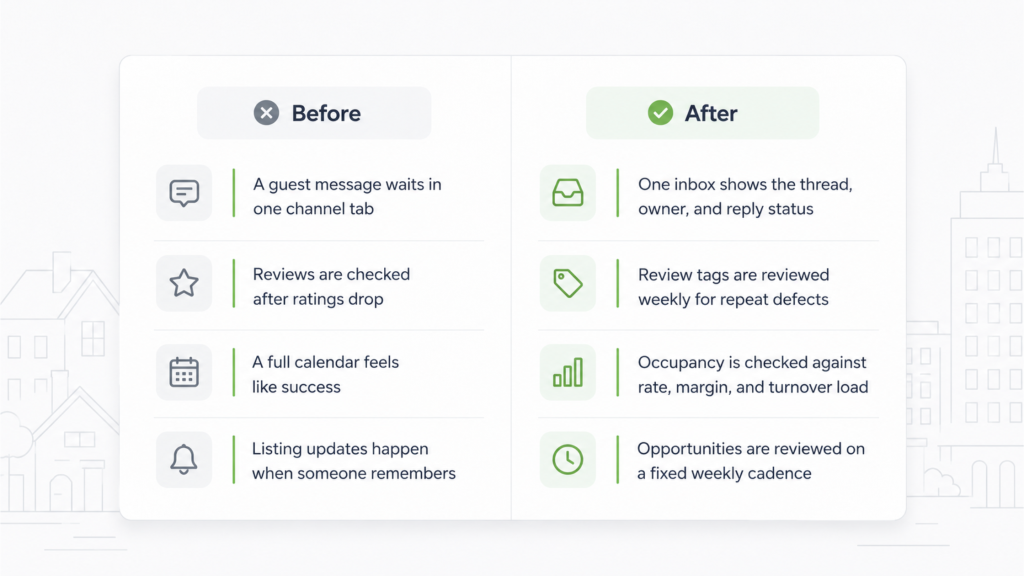
A cleaner workflow helps property managers catch message, review, occupancy, and listing update issues before they affect visibility.
Fix response-rate leaks before they hit Airbnb rankings.
The Airbnb search algorithm also watches reliability signals. Airbnb’s Superhost standard includes a 90% or higher response rate, a 4.8 or higher overall rating, a less than 1% cancellation rate, and enough completed reservations over the evaluation period.
The fix is a three-tier communication workflow. Use scheduled messages for booking confirmations, check-in, and checkout. Use quick replies for WiFi, parking, early check-in, and house rules. Save manual replies for maintenance, refunds, disputes, and high-emotion guest issues.
A unified inbox supports this by keeping guest threads in one place, so the team can see the message, assign the issue, and track the reply without hunting through channel tabs. That protects response habits before they become an Airbnb ranking problem.
For the host-status side, this Airbnb Superhost communication guide goes deeper on the response-rate workflow.
Use reviews, Guest Favorite signals, and occupancy as defect maps.
This is where AdvanceCM belongs in the workflow. Not as a magic fix, but as the place where PMs connect Airbnb signals to operating actions: Opportunities for listing gaps, Reviews for guest feedback patterns, and Notifications for account alerts. The platform home base shows how those pieces sit beside channel management and automation.
Turn Guest Favorite signals into a defect map
Guest Favorite signals turn reviews into operating clues. Airbnb says Guest Favorite and highlight factors include overall ratings, review feedback, communication, category ratings for check-in, cleanliness, accuracy, host communication, location, and value, plus reliability signals like cancellation rate and quality-related customer service issues. Guest Favorites and highlights.
Here is what breaks in real life. A PM updates check-in instructions in one message template but forgets the Airbnb listing still shows the old lockbox note. The next guest struggles at arrival, leaves a weaker check-in tag, and the issue shows up as a review problem. The real failure was not hospitality. It was a broken update workflow.
You don’t need new tools to start—just fix the edge cases first. If recent reviews mention confusing entry steps, the fix is not “ask for better reviews.” The fix is clearer arrival messaging, updated check-in details, and a cleaner handoff before the next stay.
Read occupancy as a pricing signal, not a scoreboard
Occupancy can mislead PMs too. The Airbnb search algorithm considers price, but a full calendar is not always the goal. If a listing sits near 100% occupancy for long stretches, the rate may be too low, turnover pressure may rise, and margins may shrink. Use this Airbnb occupancy rate benchmark guide to read occupancy as a pricing signal, not a scoreboard.
Use automation to keep the workflow from drifting
For recurring work, Autopilot can support scheduled messages, rates, reviews, and task rules. The point is control: fewer manual checks, fewer missed updates, and less room for channel drift.
A 30-day Airbnb search algorithm workflow
- Audit listing accuracy.
Check photos, amenities, WiFi details, check-in method, house rules, fees, and descriptions. If guests arrive and the property does not match the listing, accuracy can become an Airbnb ranking problem. - Build the response workflow.
Set scheduled messages for routine touchpoints. Create quick replies for repeat questions. Decide which issues require a human reply, such as maintenance problems or refund-sensitive situations. - Review guest favorite weak spots.
Look at cleanliness, check-in, accuracy, communication, location, and value patterns. One complaint may be noise. A repeated theme is a workflow defect. - Check pricing against occupancy.
If occupancy is low, review total price, minimum stays, photos, and availability. If occupancy is too high, test rate increases or tighter stay rules before assuming the listing needs more bookings. - Review opportunities, reviews, and notifications weekly.
Opportunities show listing gaps. Reviews show guest experience patterns. Notifications show account actions that should not get buried. This step protects the Airbnb search algorithm signals that get damaged when small issues repeat.
Use this ranking checklist help article to turn the 30-day workflow into a weekly operating rhythm.
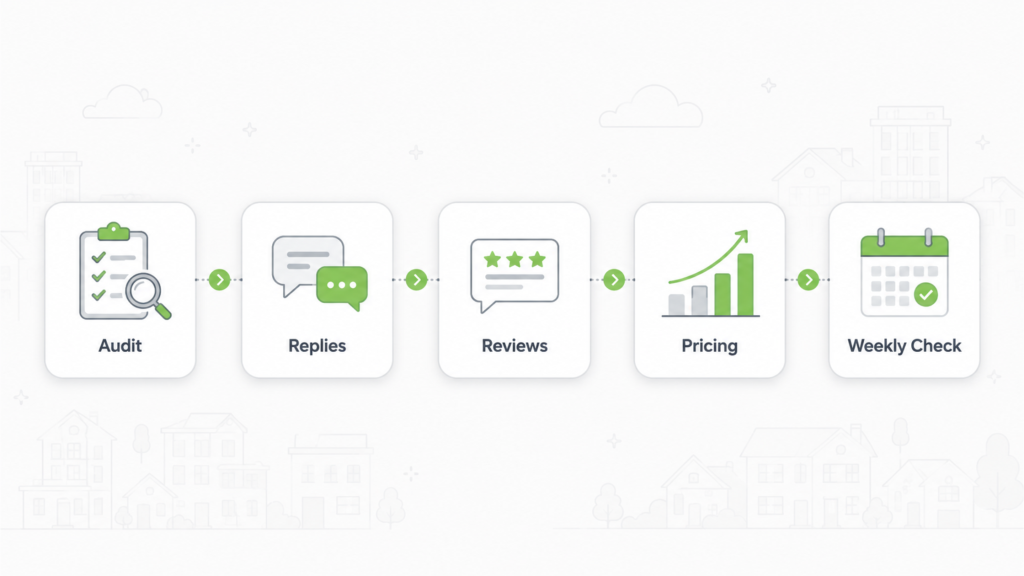
A simple 30-day operating rhythm helps PMs turn Airbnb ranking work into repeatable weekly checks.
Conclusion
The Airbnb search algorithm is not solved by one trick. It is protected by cleaner operations: faster replies, stronger review follow-up, accurate listings, controlled pricing, and fewer channel gaps.
PMs win when the workflow catches problems before guests do. Airbnb search algorithm fixes should make the listing easier to trust, easier to book, and easier to manage across every property. The goal is not to chase the algorithm. The goal is to stop sending it messy signals.
Use the Opportunities, Reviews, and Notifications workflow guide to keep those checks in one place.
FAQs
- What does the Airbnb search algorithm care about most?
Airbnb points to quality, popularity, price, and location as major search factors. PMs have the most control over quality, pricing, availability, response habits, and listing accuracy. - Does response rate affect Airbnb ranking?
Yes, because response habits connect to reliability and Superhost standards. The practical fix is not faster typing; it is scheduled messages, quick replies, and clear escalation rules. - Can 100% occupancy hurt revenue?
It can when the listing is priced too low or turnover pressure creates cleaning misses, wear, and guest issues. Occupancy should guide pricing decisions, not replace margin thinking. - How often should PMs review Airbnb workflows?
Check messages, notifications, and guest issues weekly. Review pricing monthly, and refresh listing details or photos quarterly so accuracy does not drift. - Where do these workflows fit inside a channel manager?
They fit where guest messages, rates, reviews, notifications, and channel updates can be checked without jumping across separate tabs. That is how PMs turn Airbnb ranking work into a repeatable operating rhythm.

Welcome to Tokeet’s Podcast — your trusted source for insights, trends, and strategies shaping the vacation rental industry. Each episode features expert interviews, data-driven analysis, and practical tips to help property managers grow their businesses, improve guest experiences, and stay ahead in a rapidly evolving market. Whether you’re new to short-term rentals or managing a large portfolio, tune in to stay informed and inspired.
Some days just don’t work for a guest arrival, whether it’s a holiday, a maintenance window, or a turnover day your team can’t cover. This episode walks through check-in and check-out restrictions, the most requested feature in AdvanceCM, now live in the Rentals module. You’ll hear how to block arrivals or departures for a date range, such as December 24 to 26, and how to allow check-ins only on the weekdays you choose. We also cover channel-specific rules, like keeping Airbnb to Friday and Saturday arrivals while direct bookings stay open through Sunday. Finally, we explain what to check before switching rules on, from existing reservations to sync time and visibility on booking sites.
Key Takeaways:
✅ Block check-ins or check-outs for any date range
✅ Limit arrivals to the weekdays you choose
✅ Set different rules for each booking channel
✅ Existing reservations stay unchanged
✅ More restrictions mean fewer guests can book, so review rules each season
Related Links:
Company: https://www.tokeet.com/Blogs: https://www.tokeet.com/blog/Blog: Check-in and Check-out Restrictions: How to Set Them in AdvanceCM 👉 https://blog.tokeet.com/check-in-and-check-out-restrictions/
This is a public episode. If you would like to discuss this with other subscribers or get access to bonus episodes, visit podcast.tokeet.com