
The best short-term rental platforms in 2026 don’t just send you more guests, they send you the right guests. If you’re still throwing everything on one site and hoping for the best, you’re playing a game that favors the OTAs, not you.
This article is for hosts and property managers living in an “Airbnb vs VRBO vs everything else” world who want a simple, strategic way to choose the right channels. We’ll break down how the best short-term rental platforms behave in 2026, how Airbnb vs. VRBO actually plays out in real life, and how to build a stack that protects your calendar and your properties.
The 2026 Reality of the Best Short-Term Rental Platforms
Short-term rental platforms are growing fast: one recent forecast puts the short-term rental platform market at around $9.1B in 2025, with a projected jump to over $50B by 2035, driven largely by house and apartment stays. At the same time, Airbnb, Vrbo, and Booking.com together now capture a dominant share of global STR revenue, which means your visibility, and vulnerability, are tied tightly to how you show up on these sites.
For hosts, that means you can’t think in terms of “one favorite platform” anymore; you need a flexible mix that fits your seasonality and guest types. If you’ve ever had one OTA pump your peak season full and leave your shoulder months empty, you already know why a multi-platform listing strategy matters and why guides like Should You List Your Vacation Rental on Multiple Platforms are now must-read material instead of nice-to-have.
Airbnb vs. VRBO: Different Platforms, Different Guests
When hosts talk about Airbnb vs. VRBO, they’re really asking, “Who will I attract on each platform, and what does that do to my revenue and workload? ” Data from industry breakdowns backs up what most PMs feel: Airbnb tends to win on volume, urban stays, and smaller spaces, while Vrbo leans toward whole-home, family, and group trips, often for longer stays in classic vacation markets.
That difference matters. Airbnb’s wider funnel can be great for filling gaps and attracting flexible travelers, but it can also mean more “hotel mindset” guests and shorter trips if your rules and screening aren’t tight. Vrbo, on the other hand, often skews slightly older and more family-oriented, with hosts reporting that Vrbo guests typically stay longer and book further in advance, which makes it a strong pillar for stabilizing calendars in drive-to and resort markets. If you want a deeper breakdown of how distribution works across channels, third-party guides like this vacation rental distribution overview are worth a look before you rewrite your stack.
How to Choose Your Best Short-Term Rental Platform Stack (Step by Step)
You don’t need a spreadsheet addiction to choose the best short-term rental platforms for your business, just a simple framework and a bit of honesty about who you want to host.
- Define your top guest types.
List your ideal guests: “snowbirds for 2–3 months,” “remote workers for 30+ days,” “families for a week,” or “weekend couples.” Be honest about which groups respect your space and fit your property. - Match each guest type to likely platforms.
City weekenders often start on Airbnb, while multi-gen beach trips lean VRBO, and mid-term stays increasingly flow through 30+-day filters or mid-term platforms like Furnished Finder that focus on professionals. - Set minimum stays by season, not mood.
In peak months, longer minimums protect your team and your finishes; in slower months, shorter minimums help you fill gaps without panicking on price. - Pick your “core three” channels.
For many serious operators, the best stack is one primary OTA (often Airbnb), one support OTA (often VRBO), and one mid-term/extended-stay channel for 30–90 day bookings. - Give each platform a specific job.
Decide which channels you use for flexible short stays, which for longer high-value stays, and how Airbnb vs VRBO fits into that picture, instead of letting every site chase the same nights on autopilot.
This is exactly the kind of thinking covered in Tokeet’s guide to managing long- and short-term rentals, where the focus is on designing a portfolio that behaves like a system, not a collection of random listings. Start with one property, test the framework, and refine from there, try it on one property for free.
Fees, Risk, and Guest Quality Most Hosts Overlook
Most comparison posts about the best short-term rental platforms stop at headline fees and commission percentages. In reality, your true cost sits in turns, damage, time, and regulatory risk: one overactive short-stay channel can create more wear and tear than it’s worth, especially now that some markets are tightening rules or cracking down on unlicensed listings.
Instead of chasing the highest nightly rate in Airbnb vs. VRBO debates, look at average stay length, guest behavior, and how often you’re dealing with problems after check-out. A booking that looks “cheap” after fees but comes from calmer, longer-stay guests can be far more profitable over a season than a calendar packed with two-night stays. If you need a more detailed way to think about pricing in this context, posts like How to Calculate the Best Rates for Your Short-Term Rental can help you balance nightly rates with turnover and property protection.
From Platform Chaos to a Simple System
Running multiple platforms manually is where good strategy goes to die: three dashboards, five calendars, and constant risk of double bookings or stale prices. That’s why most pros eventually plug their best short-term rental platforms into a channel manager or PMS that syncs availability, rates, and reservations across all channels from one place, cutting human error and helping avoid overbookings.

Different platforms attract different guest types, your job is to choose the right mix, not just one favorite.
A good channel manager brings all your Airbnb vs. VRBO vs. “everything else” traffic into one control center where you adjust prices once, manage a unified inbox, and see performance by channel instead of guessing. If you want to see what that looks like at a more advanced level, tools like AdvanceCM’s channel manager show how multi-channel setups can become standard, even for mid-sized portfolios.
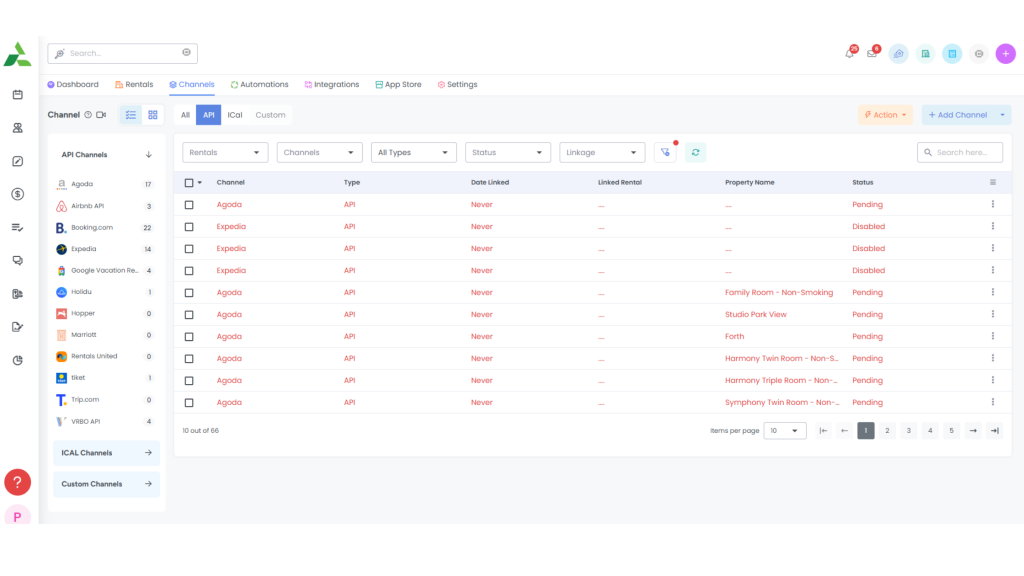
AdvanceCM pulls all your best short term rental platforms into one dashboard, so you manage channels instead of juggling tabs.
Conclusion
In 2026, there is no single champion among the best short-term rental platforms, the real winner is the mix of channels that reliably delivers your ideal guests at the stay lengths you want, without wrecking your time or your properties.
The Airbnb vs. VRBO question still matters, but only as part of a broader stack where each platform has a clear role and you control the rules. If you start by defining your guest types, tightening your seasonal minimums, and plugging your channels into one simple system, you can stop hoping one site saves your year and start running your portfolio like an actual business, connect your channels and turn it on →
FAQs
- What is the best short-term rental platform for new hosts in 2026?
For most new hosts, starting on a large OTA like Airbnb gives you fast demand and a simple setup. Once you understand your ideal guest types, you can add VRBO and other channels to build a more balanced mix. - Is Airbnb or VRBO better for whole-home bookings?
In most Airbnb vs. VRBO breakdowns, VRBO tends to attract more families and longer whole-home stays, especially in classic vacation markets. Airbnb usually brings more overall volume but a wider range of trip styles and expectations. - Which platforms work best for 30+ day or mid-term rentals?
Mid-term guests often find housing through longer-stay filters on major OTAs or dedicated 30+-day platforms that focus on traveling professionals and relocating families. Pair those platforms with clear minimum stays and screening so long bookings protect your property rather than becoming long-term headaches. - Do I really need to list on more than one short-term rental platform?
If you’re in a competitive or seasonal market, relying on one site is a genuine risk to your occupancy and revenue. A smart mix of the best short-term rental platforms lets you reach different guest types and reduces your dependence on a single algorithm or policy change. - How do I manage multiple platforms without double bookings and chaos?
A channel manager or PMS syncs calendars, pricing, and messaging in real time across all your channels. That way, you can benefit from both Airbnb vs VRBO and additional platforms without spending your life updating each listing by hand.
Welcome to Tokeet’s Podcast — your trusted source for insights, trends, and strategies shaping the vacation rental industry. Each episode features expert interviews, data-driven analysis, and practical tips to help property managers grow their businesses, improve guest experiences, and stay ahead in a rapidly evolving market. Whether you’re new to short-term rentals or managing a large portfolio, tune in to stay informed and inspired.
Some days just don’t work for a guest arrival, whether it’s a holiday, a maintenance window, or a turnover day your team can’t cover. This episode walks through check-in and check-out restrictions, the most requested feature in AdvanceCM, now live in the Rentals module. You’ll hear how to block arrivals or departures for a date range, such as December 24 to 26, and how to allow check-ins only on the weekdays you choose. We also cover channel-specific rules, like keeping Airbnb to Friday and Saturday arrivals while direct bookings stay open through Sunday. Finally, we explain what to check before switching rules on, from existing reservations to sync time and visibility on booking sites.
Key Takeaways:
✅ Block check-ins or check-outs for any date range
✅ Limit arrivals to the weekdays you choose
✅ Set different rules for each booking channel
✅ Existing reservations stay unchanged
✅ More restrictions mean fewer guests can book, so review rules each season
Related Links:
Company: https://www.tokeet.com/Blogs: https://www.tokeet.com/blog/Blog: Check-in and Check-out Restrictions: How to Set Them in AdvanceCM 👉 https://blog.tokeet.com/check-in-and-check-out-restrictions/
This is a public episode. If you would like to discuss this with other subscribers or get access to bonus episodes, visit podcast.tokeet.com