

Every experienced host knows the feeling, a wonderful guest stay, a friendly goodbye, and then a sudden, shocking review full of misinformation. Even one inaccurate review can damage your hard-earned reputation and lower your listing’s visibility. Understanding how to dispute a false guest review can save you time, protect your ratings, and help you handle support teams with confidence.
This guide walks you through every step, from identifying policy violations to documenting your case and maintaining professionalism throughout the dispute process. You’ll also learn how to remove unfair guest reviews when they clearly violate authenticity rules and how to prevent similar issues in the future.
Spotting a False or Retaliatory Guest Review
The first step in how to dispute a false guest review is recognizing when feedback crosses the line from “opinion” to “policy violation.” Most platforms protect both guests and hosts under authenticity and relevance guidelines. A review that contains false information, personal attacks, or unrelated complaints often breaches those rules.
For example, if a guest claims your property lacked amenities that were clearly listed and photographed, that’s a factual misrepresentation, not just a bad opinion. Likewise, if the review appears immediately after a denied refund or rule enforcement, it could qualify as retaliation.
Signs a Review May Violate Policy
- Claims events occurred that your booking records disprove.
- References conversations or issues that happened off-platform.
- Uses insulting or defamatory language.
- Mentions another host or compares listings.
- Appears immediately after enforcing house rules or fees.
If two or more of these apply, document everything before you respond. You’ll need clear, time-stamped proof to demonstrate that the information is false or misleading.
Gather Evidence Before Contacting Support
Once you believe a review is fraudulent or retaliatory, evidence is your strongest ally. Support agents see hundreds of cases daily, so your documentation must be clear, organized, and policy-based. Screenshots and message logs are more persuasive than emotional appeals.
Save all relevant correspondence, messages, booking confirmations, and even guest acknowledgments of your policies. Using a centralized tool such as the Unified Inbox from AdvanceCM helps consolidate these records automatically, so you can reference exact dates and conversations later.
When learning how to dispute a false guest review, remember that platforms rarely remove reviews without solid proof. Organize your evidence into a simple, chronological file.
Create a Simple Evidence File
- Screenshot the guest’s review in full, including timestamps.
- Save your own review of the guest (if applicable).
- Capture communication that contradicts the false claim.
- Export booking details or receipts showing accuracy.
- Add a short summary: “This claim is false because…”
Even a half-page summary can make your case clearer for the support team. The easier you make their job, the better your chance of resolution.
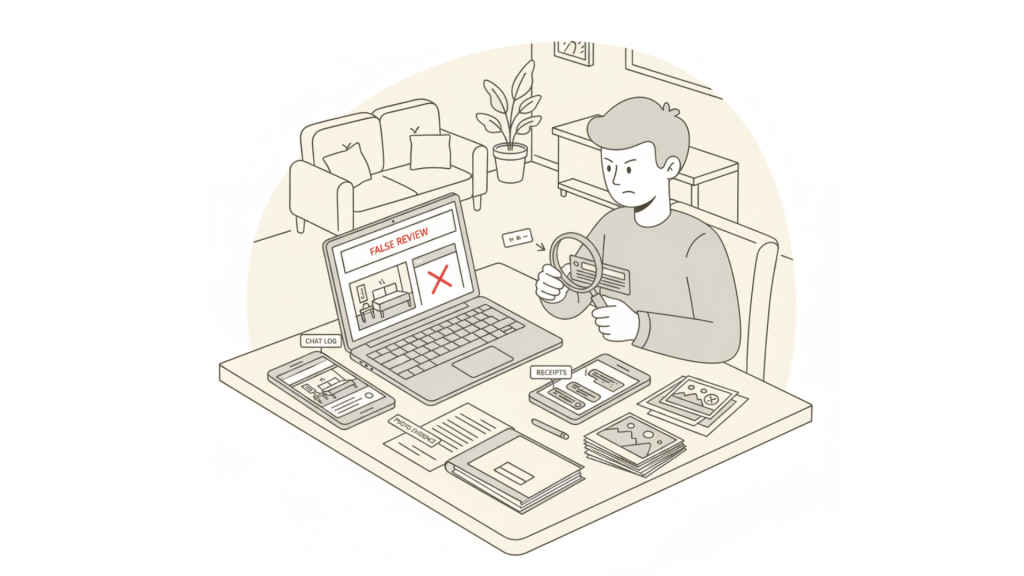
Organized screenshots, messages, and booking details make your dispute more credible.
How to Submit a Review Dispute
With your evidence ready, it’s time to submit your claim. Each platform has a review-dispute form or contact path, typically under “Report a Review” or “Support → Reviews and Ratings.” Keep your message factual, respectful, and policy-anchored.
Here’s an example message template you can adapt:
“This review contains demonstrably false information about the property. Please see attached screenshots of guest communication confirming the opposite. Under your authenticity policy, the review misrepresents the experience and damages my listing’s credibility. I’m requesting an investigation and escalation to your Reviews Team.”
When outlining how to dispute a false guest review, clarity and tone matter. Avoid emotional phrasing or blame; simply link each claim to a rule violation. Mentioning specific policy sections, “authenticity,” “irrelevant content,” or “harassment”, signals that you’ve read the rules, which often prompts faster escalation.
If your property-management system integrates with tools like Task Management or Autopilot, you can easily attach records of guest messages, cleaning reports, or inspection notes as part of your evidence packet.
Following Up When Support Denies Your Claim
Sometimes, despite clear proof, your initial request is denied. Don’t give up. Support teams handle massive volumes of cases, and first-level agents often rely on scripts. Many hosts learn how to dispute a false guest review effectively only after their second or third escalation attempt.
Start by politely restating your case. Point out which policy clauses apply, and specify what evidence shows those violations. You can even paste excerpts from the company’s own review policy. This reframes the dispute as a policy-enforcement issue rather than a personal complaint.
Example Follow-Up Message
“Thank you for reviewing my case. According to your Review Policy (Section 3: Authenticity), content that contains false or misleading statements can be removed. The attached screenshots directly contradict the guest’s claims. I respectfully request this be escalated to a senior case manager.”
If that still fails, use the “Request Escalation” or “Supervisor Review” option if available. In extreme cases, social media escalation, tagging the company’s verified support or CEO account, can help, but always stay professional. A calm, evidence-based tone carries far more influence than frustration.
What to Avoid
- Contacting the guest after a dispute begins.
- Using multiple accounts or phone numbers to reach blocked users.
- Accusing support of bias or conspiracy.
- Submitting repetitive requests without new evidence.
Maintaining composure keeps your account in good standing and shows that you’re a reliable professional, something future guests and platforms notice.
Reputation Recovery After a False Review
Even if your dispute doesn’t result in removal, you can still reduce the damage. Respond publicly to the review with brevity and professionalism. Potential guests will read your reply and judge your tone more than the complaint itself.
A model response might be:
“Thank you for your feedback. We’re sorry to hear your stay didn’t meet expectations. Our records show the amenities and services were provided as described, but we appreciate all input and continue to improve.”
This type of response signals maturity and responsibility, no defensiveness, no emotion. It also helps algorithms recognize consistent professionalism, which can positively affect ranking over time.
You can also remove unfair guest review effects by encouraging more genuine feedback from recent satisfied guests. Automated tools like Advance Intelligence (AI) analyze guest sentiment and prompt you to follow up with positive reviewers, naturally balancing your overall rating.
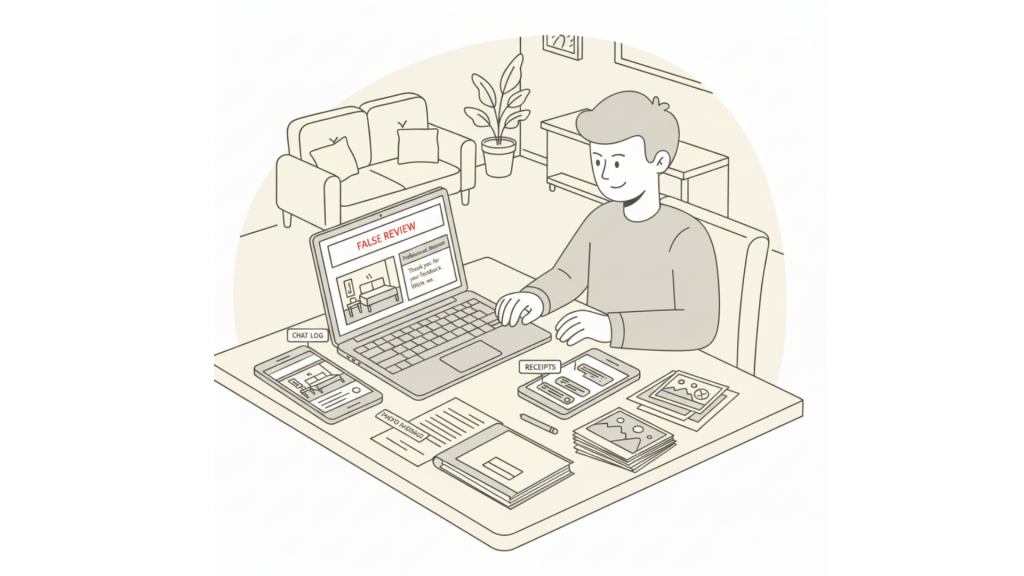
A calm, factual public reply helps restore guest trust faster than deleting emotion-driven comments
Preventing False Reviews in the Future
The best way to remove unfair guest reviews from your record is to prevent them altogether. Transparent communication, accurate listings, and consistent documentation help set expectations before problems arise. Most misunderstandings, and subsequent bad reviews, stem from unclear details or delayed communication.
Keep all messaging inside your booking platform or CRM to preserve official records. If a guest expresses frustration, respond quickly and professionally. Address small issues before checkout; unresolved tension often turns into a poor or false review.
Proactive Host Practices
- Confirm arrival details and house rules in writing.
- Send a mid-stay check-in message: “Is everything as expected? ”
- Document any incident in your task or maintenance logs.
- Encourage guests to share concerns privately before leaving.
If a false review still occurs, you’ll have a full timeline of professional interactions, exactly what support teams look for during disputes.
Why Professional Documentation Matters
Many hosts underestimate how important record-keeping is in learning how to dispute a false guest review. A consistent paper trail proves professionalism and helps third-party agents see your side clearly. This is where property-management tools such as AdvanceCM shine.
The Unified Inbox keeps every message centralized, while Task Management logs housekeeping or maintenance reports automatically. When paired with Advance Intelligence (AI), you can even detect early warning signs of potential conflicts, giving you a chance to intervene before a review turns hostile.
Well-organized data doesn’t just help you remove unfair guest reviews; it also builds a stronger reputation with returning guests and OTA platforms alike.
Ethical and Legal Perspective
Regulatory bodies like the FTC: Endorsements, Influencers, and Reviews emphasize that all online reviews must reflect real experiences and not contain deceptive claims. Hosts who provide clear, factual disputes are on the right side of that principle.
Academic research, such as the Cornell Hospitality Research Report on Online Reviews, shows that proactive review management correlates with higher trust and booking rates. In short: professional hosts who respond ethically gain credibility even when facing unfair reviews.
Understanding how to dispute a false guest review isn’t just about damage control, it’s about strengthening your reputation as a responsible, transparent operator in a trust-based industry.
💬 If you’ve ever faced a false or retaliatory review, join the conversation on Reddit. Sharing your story not only helps others learn how to dispute a false guest review effectively but also builds solidarity among professionals managing similar challenges.
Conclusion
Disputing a false review requires patience, documentation, and diplomacy. By focusing on facts, aligning your claim with policy, and using the right tools to organize evidence, you can remove unfair guest reviews while maintaining professionalism.
Even if a platform doesn’t remove the review, your calm, factual response demonstrates integrity, something future guests will value far more than one misleading comment. Over time, consistent transparency, organized communication, and technology-backed management build an unshakable reputation.
Remember: every host faces unfair feedback eventually. How you respond defines your brand far more than the review itself.
FAQs
Q: Can I get a false guest review removed?
A: Yes, if the review violates authenticity, relevance, or harassment policies, you can request its removal. Provide clear evidence showing the claims are false and refer directly to the platform’s policy language.
Q: What counts as a false or unfair guest review?
A: A review is false when it includes fabricated events, personal attacks, or details unrelated to the actual stay. Hosts can often remove unfair guest reviews that clearly misrepresent the guest experience.
Q: How long does it take to dispute a false review?
A: Most platforms respond within a few business days, but complex disputes may take up to two weeks. Keeping your evidence organized helps speed up the process.
Q: Should I respond publicly to a false review?
A: Yes, a short, professional response shows future guests that you handle issues calmly and transparently. Avoid emotion and simply state the facts, even while your dispute is under review.
Q: How can I prevent false reviews in the future?
A: Document every guest interaction through your property-management system or booking platform. Clear communication, quick problem-solving, and well-documented policies reduce the chances of false or retaliatory feedback.

Welcome to Tokeet’s Podcast — your trusted source for insights, trends, and strategies shaping the vacation rental industry. Each episode features expert interviews, data-driven analysis, and practical tips to help property managers grow their businesses, improve guest experiences, and stay ahead in a rapidly evolving market. Whether you’re new to short-term rentals or managing a large portfolio, tune in to stay informed and inspired.
Some days just don’t work for a guest arrival, whether it’s a holiday, a maintenance window, or a turnover day your team can’t cover. This episode walks through check-in and check-out restrictions, the most requested feature in AdvanceCM, now live in the Rentals module. You’ll hear how to block arrivals or departures for a date range, such as December 24 to 26, and how to allow check-ins only on the weekdays you choose. We also cover channel-specific rules, like keeping Airbnb to Friday and Saturday arrivals while direct bookings stay open through Sunday. Finally, we explain what to check before switching rules on, from existing reservations to sync time and visibility on booking sites.
Key Takeaways:
✅ Block check-ins or check-outs for any date range
✅ Limit arrivals to the weekdays you choose
✅ Set different rules for each booking channel
✅ Existing reservations stay unchanged
✅ More restrictions mean fewer guests can book, so review rules each season
Related Links:
Company: https://www.tokeet.com/Blogs: https://www.tokeet.com/blog/Blog: Check-in and Check-out Restrictions: How to Set Them in AdvanceCM 👉 https://blog.tokeet.com/check-in-and-check-out-restrictions/
This is a public episode. If you would like to discuss this with other subscribers or get access to bonus episodes, visit podcast.tokeet.com