
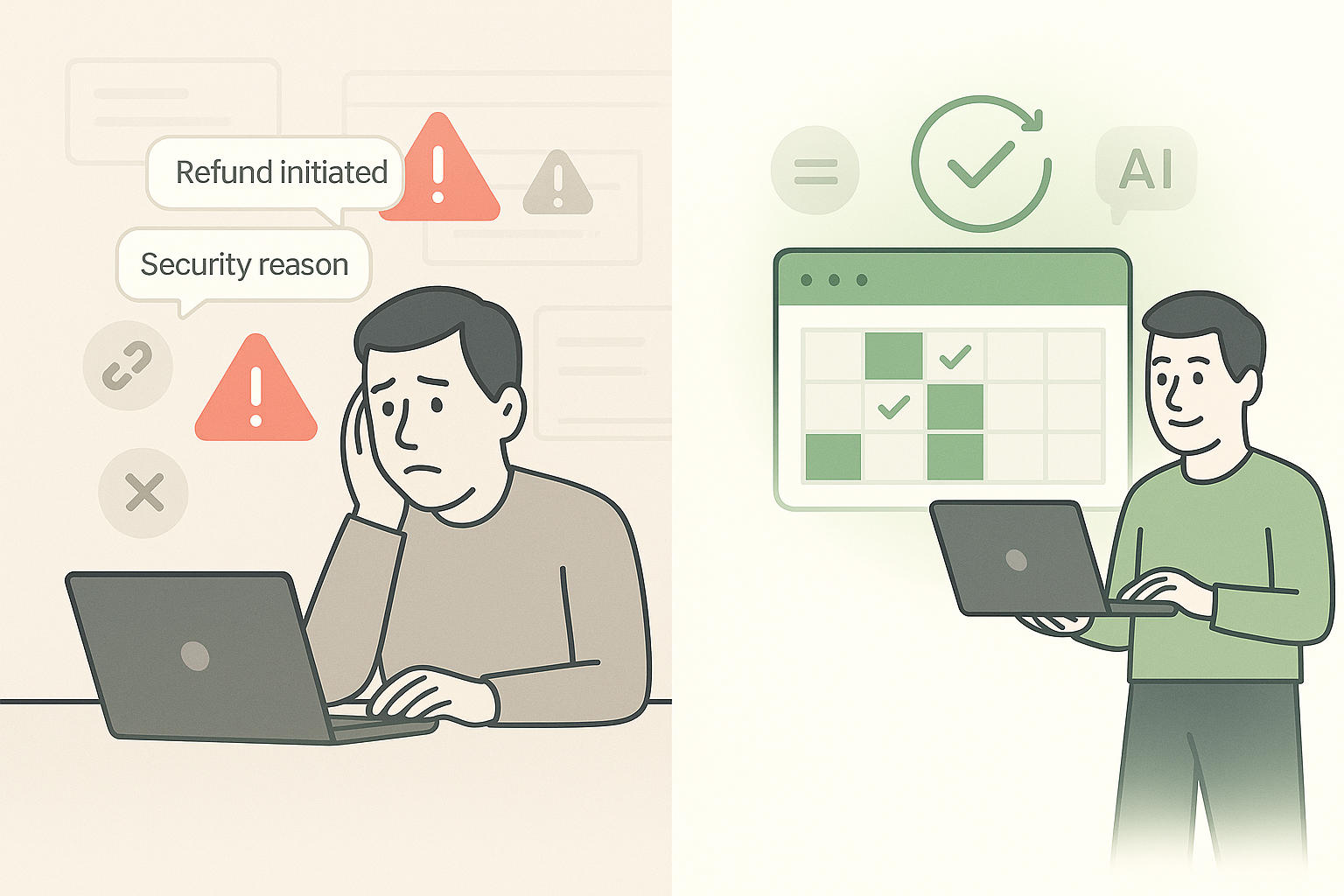
Customer support failures are costing vacation rental platforms their most valuable asset: experienced hosts. When a Superhost managing multiple properties watched a confirmed guest reservation get canceled for “security reasons,” only to see that same guest immediately book another property on the same platform, the logical inconsistency sparked a deeper investigation. What she discovered reveals why hosts are increasingly choosing platform abandonment over continued frustration.
The breakdown isn’t just about one bad experience. It’s about automated systems making illogical decisions, support teams unable to explain those decisions, and a complete erosion of trust that pushes both hosts and guests toward competitors.
This article examines the systematic support failures driving hosts away from major booking platforms and what property managers can do to protect their businesses.
The Breaking Point: When Customer Support Failures Become Unbearable
Every host tolerates occasional platform glitches. But there’s a specific moment when frustration crosses into active exploration of alternatives. For many, that moment arrives when the platform’s actions stop making logical sense.
The incident that sparked community-wide discussion involved a guest with an excellent track record, two five-star reviews in the previous 60 days. Her reservation was suddenly canceled by the platform’s security department without host consultation. The cancellation notice included her $834.48 refund and this message: “Ready to rebook? We know you loved your original stay, so we pulled together some great rebooking options.”
She immediately and successfully booked a different property on the same platform. The host’s question became a rallying cry for frustrated property managers everywhere: If the guest posed a security risk, why encourage her to book again?
Four Different Stories: The Cost of Inconsistent Communication
Customer support failures multiply in damage when explanations keep changing. Getting an answer wrong is forgivable. Getting four different wrong answers destroys credibility entirely. In this case, the host received completely contradictory explanations for the same cancellation.
First, support cited “security reasons.” Then a different message said the guest “did not meet eligibility criteria.” A phone representative suggested “suspicious activity” based on the guest’s post-booking messages asking if her family could stay and whether the host knew local realtors (she was house-hunting). Finally, after the host escalated by emailing the CEO, yet another representative claimed, “The guest opened a financial dispute that auto-canceled her reservation.”
The guest denied opening any dispute and was understandably offended by the accusation.
The False Accusation Problem
Being accused of fraud damages relationships permanently. When platforms make claims they can’t substantiate, they lose both the guest and the host. The guest declared she was “done with the platform” and switching to a competitor. The host, managing three properties, began evaluating the same move.
This pattern reveals something worse than incompetence: either internal communication is so broken that representatives genuinely don’t know what happened, or changing explanations serve as a deflection tactic. Neither option builds confidence.
Why Customer Support Failures Are Getting Worse
The problems aren’t random, they’re structural. Multiple hosts report identical experiences: support teams unable to comprehend complex issues, contradictory information, and resolution processes that prioritize closing tickets over solving problems. These patterns emerge from specific business decisions about how to handle support at scale.
Language Barriers Block Problem Resolution
Communication breakdowns occur when representatives lack the language proficiency to handle nuanced situations. One host stated, “It’s never anybody that speaks English as their first language. They do not understand the questions that I ask.”
Other hosts noted that while some non-native speakers communicate fluently, “that’s not the case for customer support, who appear to be in the early stages of learning English.” Complex situations requiring explanation beyond scripted responses hit a wall. When support calls come from international centers in the middle of the host’s night, and tickets close if you don’t respond within an hour, resolution becomes nearly impossible.
Outsourced Call Centers Create Support Barriers
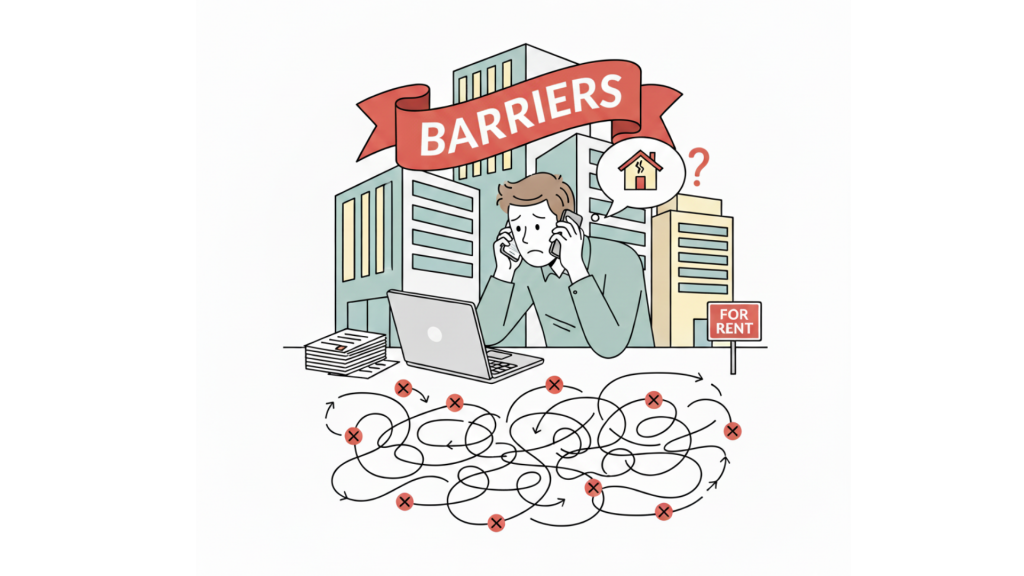
Several hosts theorized that the first support layer isn’t composed of actual platform employees. Instead, outsourced call centers in various countries act as a “barrier to avoid hosts getting to the real support team.” Research from Harvard Business Review shows that outsourced customer service often struggles with complex problem-solving when representatives lack product knowledge and decision-making authority.
These representatives lack proper training and authority to solve problems. Their hands are tied by limited system access and rigid scripts. They function as gatekeepers who prevent hosts from reaching anyone who could actually help.
Metrics Over Solutions
The most cynical interpretation might also be the most accurate. According to hosts who’ve tracked their cases, representatives prioritize closing support tickets over resolving issues. When performance is measured by tickets closed rather than problems solved, the system optimizes for the wrong outcome.
This creates a predictable pattern:
- Initial contact gets a case number
- The first representative provides incomplete or incorrect information.
- Follow-up gets assigned to someone new who claims the previous agent is “out of office or left the company.”
- Case notes mysteriously disappear.
- Host explains the entire situation again
- Ticket gets closed without resolution
The cycle repeats until the host either gives up or escalates to executive leadership.
Platform Abandonment: The Inevitable Result
When customer support failures become the norm rather than the exception, hosts start calculating. What’s the cost of staying versus leaving? For property managers with multiple listings, that calculation increasingly favors competitors promising better support infrastructure.
When CEO Escalation Becomes Standard Practice
The Superhost in this incident only got meaningful help after emailing the company’s CEO. That contact produced a representative who “clearly understood everything in the English language” and provided a final explanation (though still disputed).
When only executive intervention produces competent support, the system is fundamentally broken. Most hosts can’t or won’t email a CEO for every issue. The few who succeed shouldn’t have to. If the expertise exists somewhere in the organization, why is it inaccessible through normal channels?
Competitor Platforms Gain Ground
Customer support quality has become a significant competitive differentiator. Hosts report that alternative platforms offer superior support experiences, with some providing dedicated account managers for premium members who are “all trained and fabulous.”
Both the affected host and guest in this incident announced they were switching to competitors. The host is considering moving all three properties. The guest, offended by the false dispute accusation, is done with the platform entirely. Platform abandonment happens in pairs, when hosts leave, they take their future guests with them.
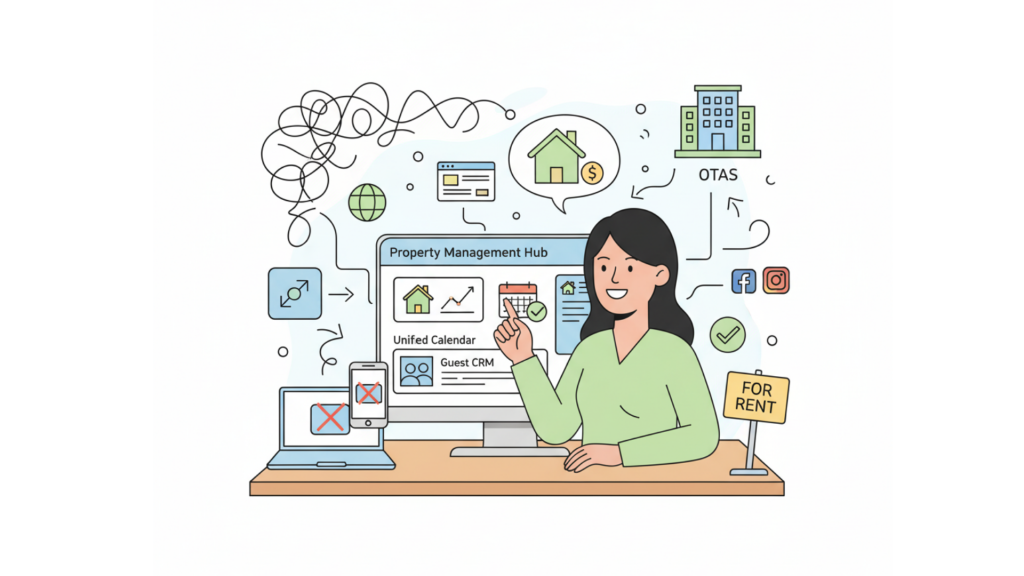
Property managers looking for more control over their operations should explore tools that reduce platform dependency. A unified inbox centralizes guest communication across channels, while comprehensive property management systems help you build direct relationships. AdvanceCM offers solutions that put hosts back in control of their businesses, regardless of which platforms they list on.
According to research from Cornell University’s School of Hotel Administration, service recovery failures, when companies mishandle customer complaints, cause significantly more damage than the original problem. Inconsistent explanations and dismissive treatment create cascading trust issues that extend far beyond a single incident.
Protecting Your Business from Support System Failures
You can’t fix a platform’s customer support failures, but you can reduce how much they affect your business. The hosts who weather these problems best have systems in place that limit their dependency on platform support.
Document Everything Systematically
Create a paper trail that exists independently of the platform. Screenshot every conversation, policy change, and cancellation notice. Keep timestamped records in a system you control. Note representative names, case numbers, and dates. When explanations contradict each other, documentation proves what you were told and when.
This isn’t paranoia, it’s business protection. If you need to escalate or dispute a decision, contemporaneous records matter.
Use Your Own Tools for Control
Platform tools work until they don’t. The hosts with the most resilience use property management systems that don’t depend on platform functionality. Control your guest data, communication history, and booking records in your own database.
Managing communications through your own system means you’re not dependent on platform support to access critical information. Track guest preferences, special requests, and interaction history where the platform can’t delete it. Consider pricing strategies that give you the tools to manage your properties independently while still benefiting from platform exposure.
Build Direct Guest Relationships
Collect guest contact information and permission to communicate outside platform systems. Send post-stay thank-you messages that include your direct booking options. Create loyalty programs that incentivize guests to book directly next time.
The strongest protection against platform abandonment is having a business that can survive without the platform. Direct bookings, repeat guests, and owned communication channels insulate you from support failures and policy changes.
💬 Got platform support horror stories of your own? Join the conversation on Reddit, where property managers share strategies for dealing with customer support failures and protecting their businesses.
Conclusion
Customer support failures aren’t just frustrating, they’re expensive. When automated systems make illogical decisions and support teams can’t provide consistent explanations, the result is predictable: platform abandonment by both hosts and guests.
The hosts who protect themselves best don’t wait for platforms to fix their support infrastructure. They build independent systems, document everything, and maintain direct guest relationships that survive platform policy changes. Whether you manage one property or thirty, reducing your dependency on platform support means their failures hurt you less.
Take control of what you can control. Your business is too valuable to leave in the hands of a support system that might not speak your language, literally or figuratively.
FAQs
Q: What should I do if I get contradictory explanations from platform support?
A: Document every explanation with screenshots and timestamps. Request case numbers for each interaction. If contradictions continue, escalate in writing, referencing the specific conflicting statements. Having a clear paper trail strengthens your position if you need to dispute decisions or escalate to leadership.
Q: Can I really email a company’s CEO about support problems?
A: Yes, executive escalation sometimes works when normal channels fail. Keep your email concise and factual, and include your case history. While you shouldn’t need to do this, some hosts report it’s the only way to reach competent support representatives who have authority to solve problems.
Q: How can I protect my business from unexpected reservation cancellations?
A: Use property management software that maintains your own booking records and guest data independently of platform systems. Build direct guest relationships so you have contact information if platform communication fails. Consider requiring deposits or partial payment outside platform systems where legally permitted.
Q: What makes customer support failures worse than other business problems?
A: Support failures are force multipliers. When something goes wrong and support can’t fix it, every problem becomes bigger. Poor support transforms minor issues into business-threatening crises because you can’t get help when you need it most. It’s the difference between a flat tire and a flat tire with no spare.
Q: Should I move my listings to a different platform because of support issues?
A: Evaluate based on your specific situation. Research supports quality at alternative platforms by asking other hosts about their experiences. Consider diversifying across multiple platforms rather than going all-in on one. Use your own property management tools to make platform switching easier if needed. The threat of leaving sometimes improves service, the actual departure always does.

Welcome to Tokeet’s Podcast — your trusted source for insights, trends, and strategies shaping the vacation rental industry. Each episode features expert interviews, data-driven analysis, and practical tips to help property managers grow their businesses, improve guest experiences, and stay ahead in a rapidly evolving market. Whether you’re new to short-term rentals or managing a large portfolio, tune in to stay informed and inspired.
Some days just don’t work for a guest arrival, whether it’s a holiday, a maintenance window, or a turnover day your team can’t cover. This episode walks through check-in and check-out restrictions, the most requested feature in AdvanceCM, now live in the Rentals module. You’ll hear how to block arrivals or departures for a date range, such as December 24 to 26, and how to allow check-ins only on the weekdays you choose. We also cover channel-specific rules, like keeping Airbnb to Friday and Saturday arrivals while direct bookings stay open through Sunday. Finally, we explain what to check before switching rules on, from existing reservations to sync time and visibility on booking sites.
Key Takeaways:
✅ Block check-ins or check-outs for any date range
✅ Limit arrivals to the weekdays you choose
✅ Set different rules for each booking channel
✅ Existing reservations stay unchanged
✅ More restrictions mean fewer guests can book, so review rules each season
Related Links:
Company: https://www.tokeet.com/Blogs: https://www.tokeet.com/blog/Blog: Check-in and Check-out Restrictions: How to Set Them in AdvanceCM 👉 https://blog.tokeet.com/check-in-and-check-out-restrictions/
This is a public episode. If you would like to discuss this with other subscribers or get access to bonus episodes, visit podcast.tokeet.com