 AI vs. Automation: What’s the Key Difference?
In today’s fast-moving world, you hear a lot about Artificial Intelligence (AI) and Automation. These terms often get used as if they mean the same thing. But they don’t. While both are powerful technologies changing how we live and work, they have important differences. Understanding these distinctions is key to seeing their true potential, especially when they work together.
This article will help clear up any confusion. We’ll look at what automation is, what AI is, and how they are fundamentally different. Then, we’ll explore how they combine to create something even more powerful: intelligent automation. You’ll also see how these technologies are making a real impact in industries like vacation rentals, making things smoother and more profitable for property managers and guests alike.
AI vs. Automation: Understanding the Core Distinctions and Powerful Synergy
Defining Automation: The Art of Doing Without Human Hands
Think about tasks you do every day that are the same, over and over. Automation is all about making machines or software do those tasks for you. It’s about setting up a process once, and then letting technology handle it without needing human help each time.
What is Automation?
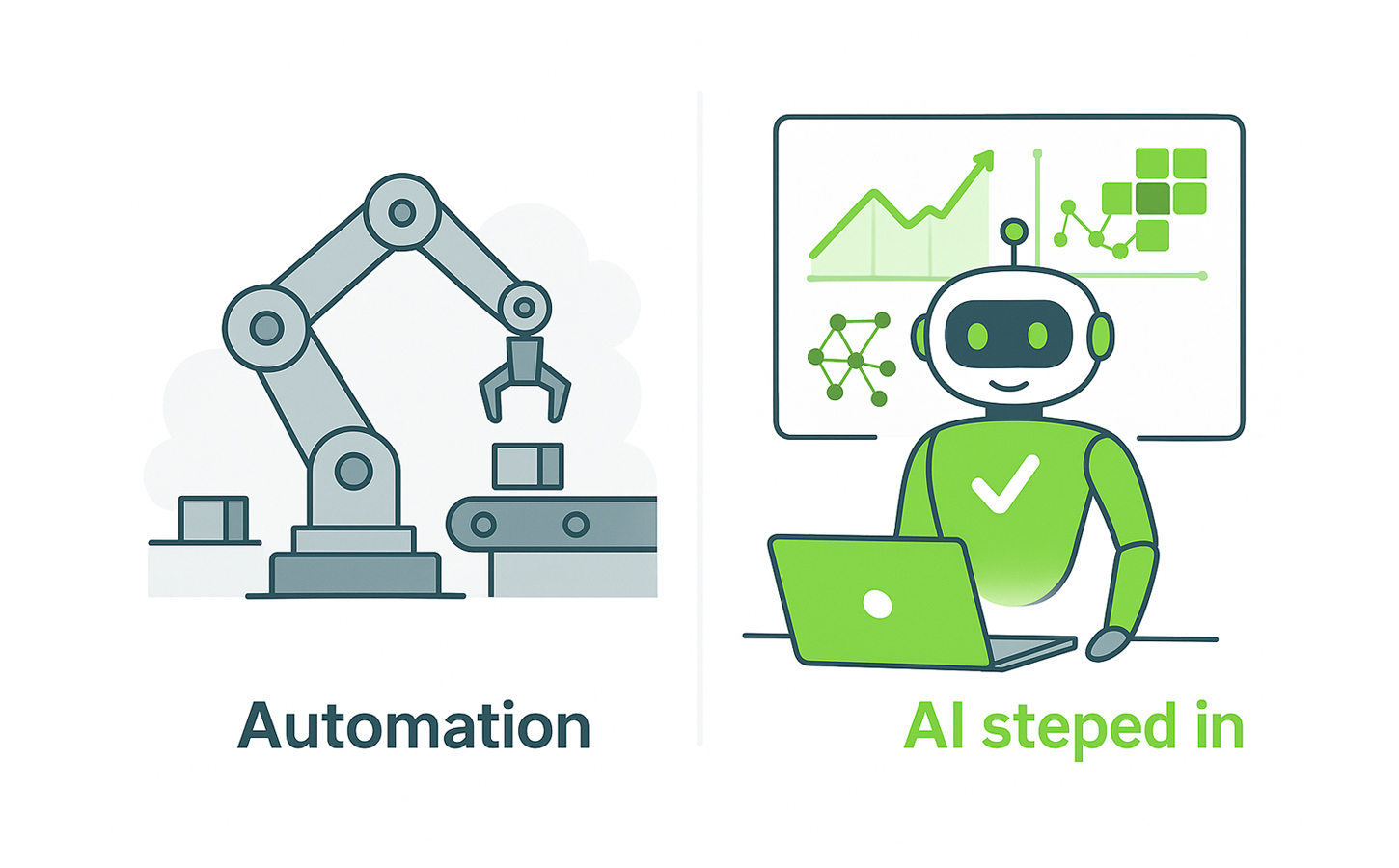
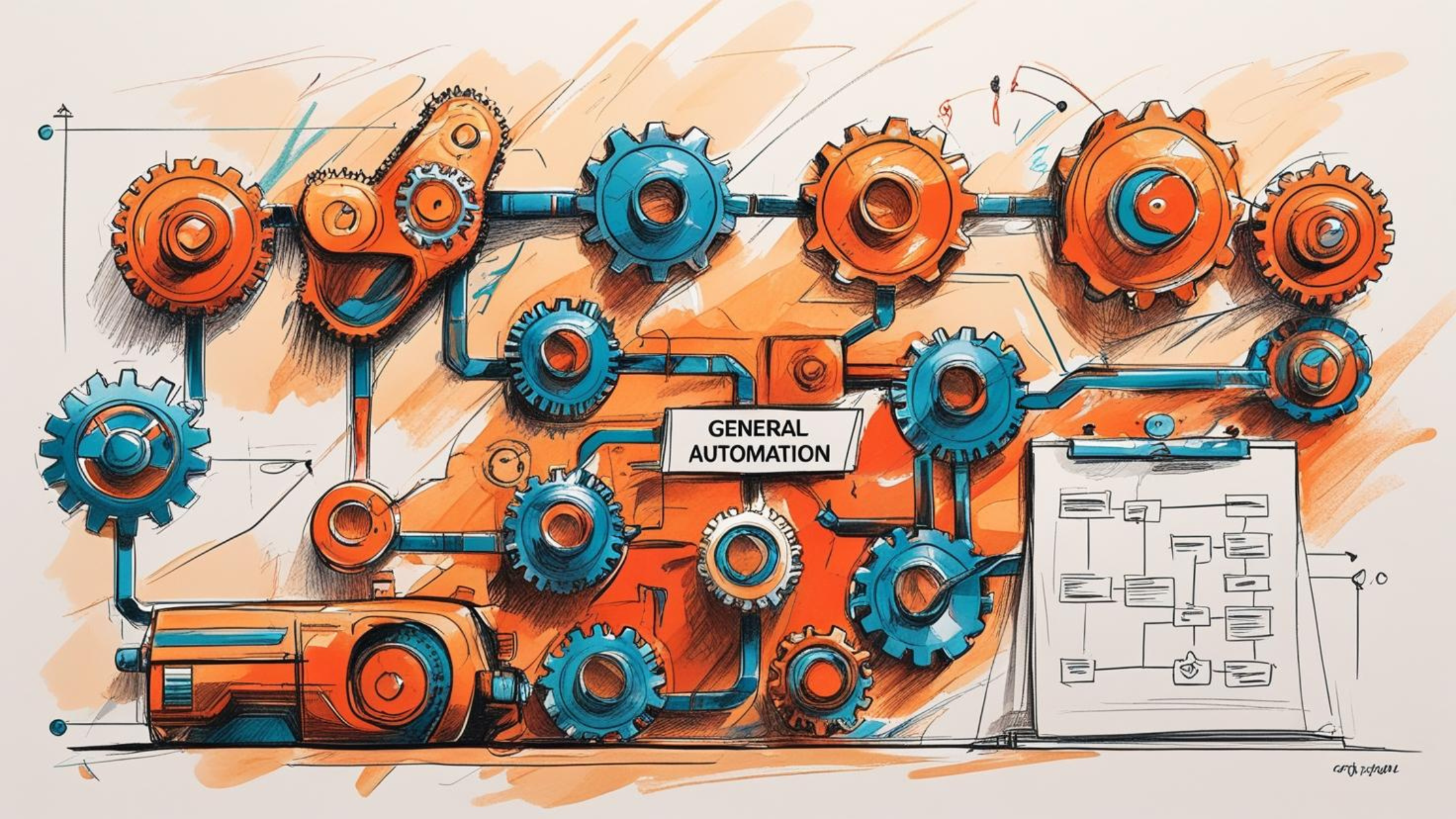
Automation means using technology to perform tasks based on a set of rules. These tasks are usually repetitive and predictable. The technology simply follows instructions that have been pre-programmed. For example, a factory assembly line is a classic example of automation. Each robot performs the same action repeatedly. In an office, setting up emails to be sent at a specific time, or having software automatically sort incoming data, are also forms of automation. The main thing to remember is that automation doesn’t “think” or “learn.” It just executes what it’s told to do.
Types of Automation
Automation comes in many forms, from simple mechanical systems to complex software.
- Fixed Automation: This is for very high-volume production of a single product. Think of a car manufacturing plant where machines perform the same welding task on every car body.
- Programmable Automation: Here, the equipment can be reprogrammed to handle different products or sequences, but it takes time to switch.
- Flexible Automation: This is more advanced, allowing for easier changes in product design or sequence without much downtime.
- Robotic Process Automation (RPA): This is a popular type of software automation. RPA tools mimic human actions when interacting with digital systems. For instance, an RPA bot can open applications, log in, copy data from one system, and paste it into another, just like a human would. This is especially useful for administrative tasks. To learn more about how RPA streamlines business processes, you can check out resources like Blue Prism’s guide on AI and automation or FlowForma’s insights on AI automation.
Defining Artificial Intelligence: Machines That Think and Learn
Now, imagine a machine that doesn’t just follow rules, but can actually understand, learn, and make decisions. That’s where Artificial Intelligence comes in. AI aims to give machines human-like intelligence.
What is Artificial Intelligence (AI)?
AI refers to computer systems designed to perform tasks that typically require human intelligence. This includes things like understanding speech, recognizing images, making decisions, and solving problems. Unlike automation, AI systems can learn from data and improve their performance over time without being explicitly programmed for every single scenario. A self-driving car uses AI to “see” the road, understand traffic, and make decisions in real-time. Recommendation engines on streaming services use AI to learn your preferences and suggest new shows. AI is all about machines showing intelligence.
The Fundamental Differences: Where AI and Automation Diverge
While they both use technology to make things easier, AI vs Automation are different at their core. It’s like the difference between a calculator and a human mathematician. Both can do sums, but one simply executes, and the other understands and reasons.
Intelligence vs. Execution
The biggest difference is intelligence. Automation is about execution. It performs tasks exactly as it’s been told. It’s predictable. AI, on the other hand, is about intelligence. It can analyze situations, interpret data, and make decisions. It can even figure out new ways to do things.
Adaptability and Learning
Automation is generally static. If something changes in the process, you have to reprogram the automated system. It won’t adapt on its own. AI is dynamic. It learns from new information and adapts its behavior over time. The more data an AI system processes, the smarter it can become. This ability to learn is what makes AI so powerful in unpredictable environments.
Complexity of Tasks
Automation is best suited for routine tasks that have clear, unchanging rules. If a task has many variables or requires judgment, traditional automation struggles. AI, however, can handle complex tasks that involve uncertainty and require problem-solving. It can adapt to situations it hasn’t specifically been programmed for.
Data Dependency
Automation doesn’t always need a lot of data to work. It just needs the rules. AI, especially machine learning, relies heavily on vast amounts of data. It needs this data to “train” itself, learn patterns, and improve its decision-making. As AlphaSense notes in their blog on the power of AI for expert insights, AI’s ability to process and derive insights from massive datasets is a game-changer. This makes AI different because it can find patterns and make predictions that humans might miss.
The Power of Synergy: Intelligent Automation
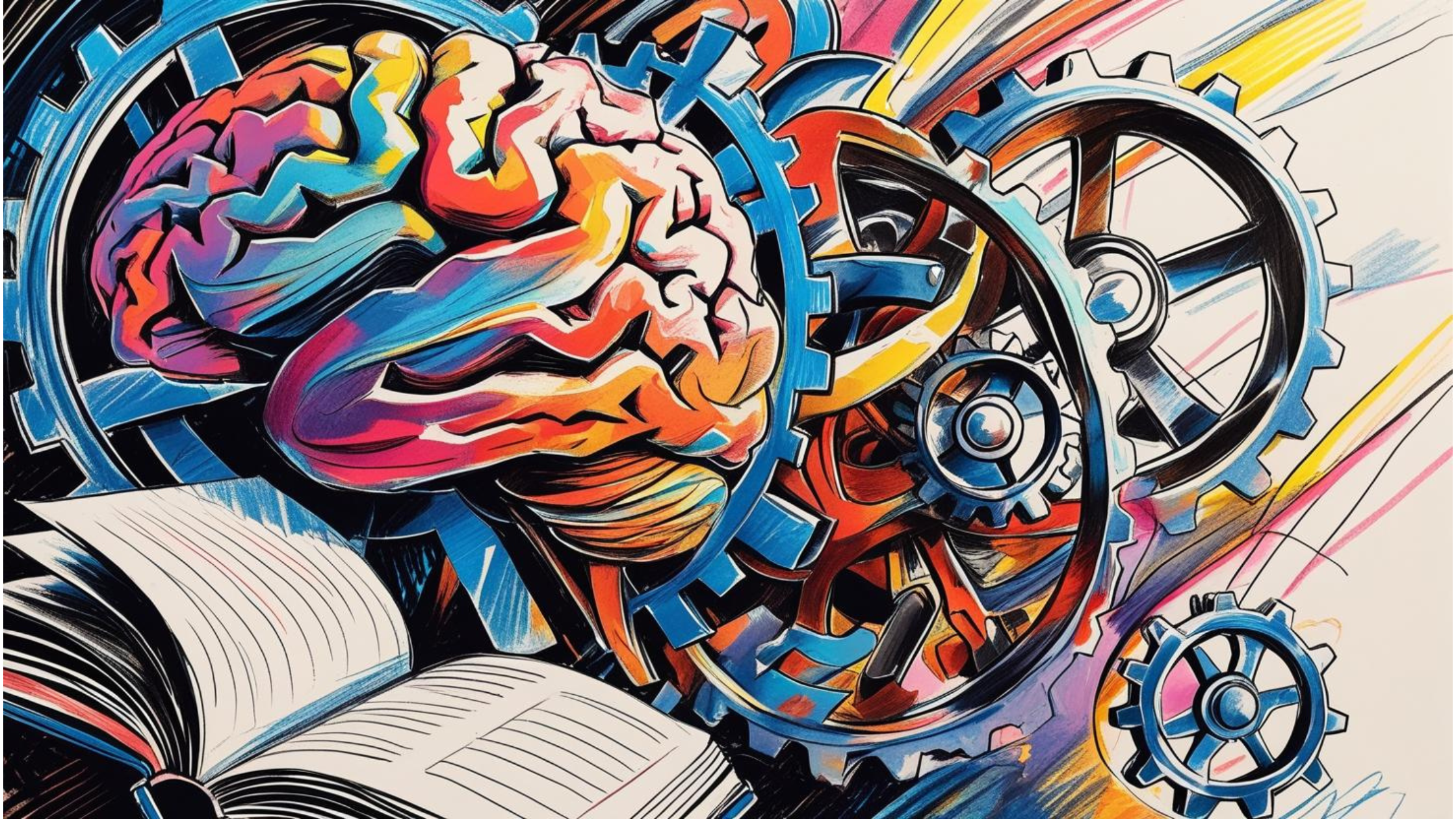
Here’s where things get really exciting. While AI and automation are distinct, they are incredibly powerful when combined. This combination is often called “Intelligent Automation” or “Hyperautomation.”
When Automation Meets AI
Intelligent automation takes the efficiency of automation and adds the “brainpower” of AI. Imagine an automated process that not only completes a task but also uses AI to make smart decisions during that task. AI enhances automation by adding capabilities like:
- Decision-making: AI can decide the best path for an automated process based on real-time data.
- Pattern Recognition: AI can spot trends or anomalies that might affect an automated workflow.
- Predictive Capabilities: AI can forecast future outcomes, allowing automation to be proactive rather than just reactive. The benefits are clear: greater efficiency, higher accuracy, and the ability to solve more complex problems than either technology could alone. For more on this powerful combination, explore insights from IBM on intelligent automation or Salesforce’s perspective on AI automation.
Real-World Applications of Intelligent Automation
Intelligent automation is transforming various sectors:
- Customer Service: Automated systems can be enhanced by AI-driven responses that understand complex queries and provide intelligent, personalized support, improving overall satisfaction.
- Data Analysis: Automated data collection can be fed into AI systems that identify hidden trends and provide actionable insights, far beyond what simple reports could offer.
- Manufacturing: AI can analyze sensor data from machines to predict when maintenance is needed, allowing for automated scheduling of repairs before a breakdown occurs.
- Finance: Automated transaction processing can be monitored by AI to detect unusual patterns, helping to identify and prevent fraud.
Evolving Industries: AI and Automation in Action (Focus on Property Management)
The short-term rental and vacation rental industry is a prime example of where Artificial Intelligence and Automation are making a huge difference. Property managers and owners face many repetitive tasks but also need to provide great guest experiences.
Automation’s Role in Property Management
Even without AI, automation has already streamlined many aspects of managing vacation rentals. Property managers use it for:
- Automated rent collection reminders.
- Scheduled maintenance alerts for properties.
- Automated lease renewals or booking confirmations. These automated processes save time and reduce errors, making operations more efficient.
How AI Elevates Property Management
When you add AI to the mix, property management becomes much smarter. AI vs Automation are truly powerful together. For instance, AI can enable:
- Predictive Maintenance: AI analyzes data from smart devices in a rental to predict when an appliance might fail, allowing property managers to schedule repairs proactively.
- Enhanced Guest Communication: AI-driven chatbots can handle common guest queries 24/7, providing instant answers and freeing up staff. This leads to a smoother and more responsive experience for guests.
- Dynamic Pricing Optimization: AI algorithms analyze market demand, local events, and competitor pricing to suggest optimal rental rates, maximizing revenue.
- Fraud Detection: AI can flag suspicious booking patterns or guest profiles, adding a layer of security for property owners. The ability of AI to learn from guest interactions and preferences also means that the experience becomes more tailored over time.
Introducing AdvanceCM: Your AI-Native Property Management Solution
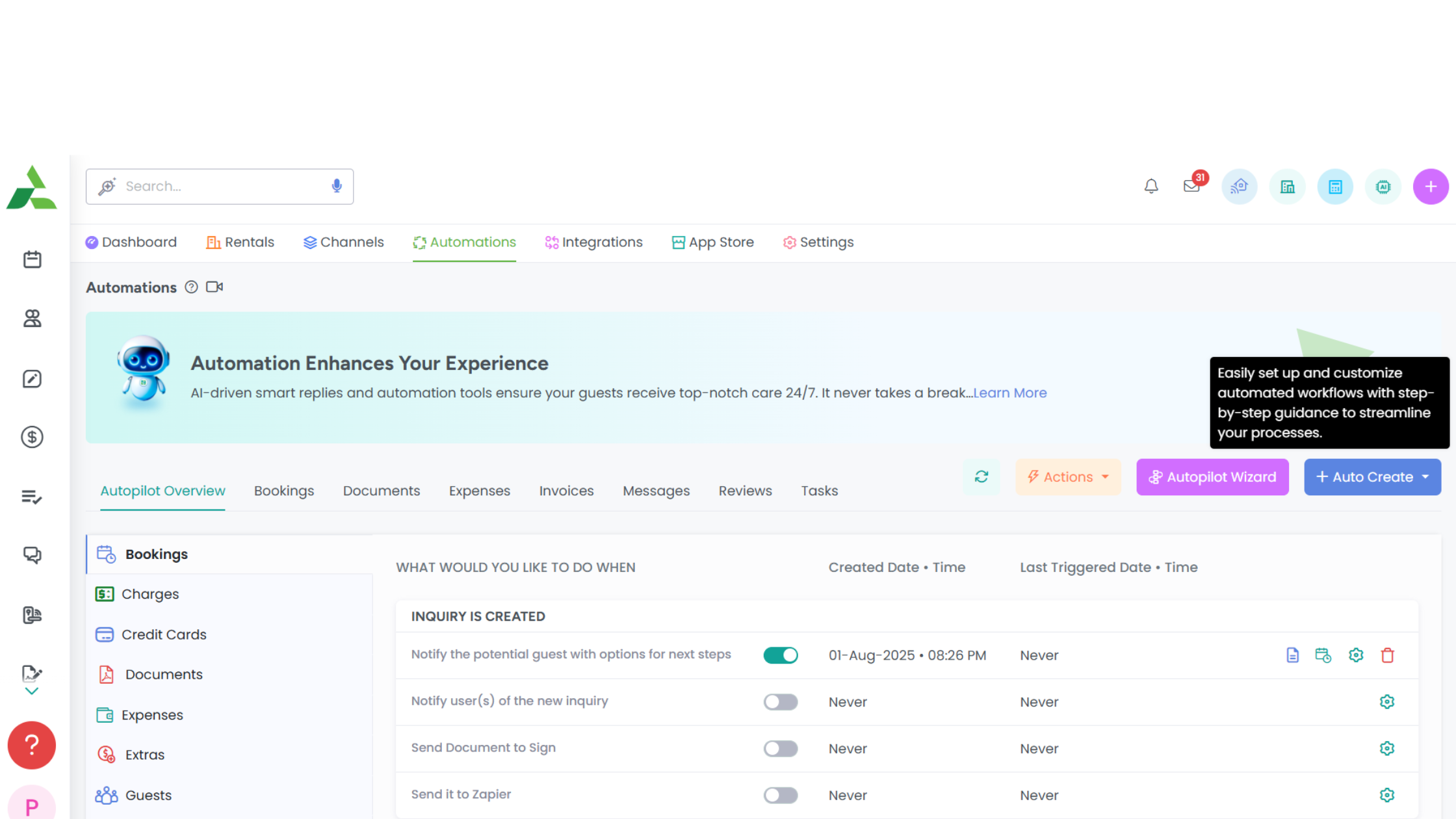
Our product, AdvanceCM, is built on the very idea of intelligent automation. It’s an AI-native property management platform designed to automate and streamline nearly every aspect of running a rental business. AdvanceCM helps property managers automate up to 90% of those repetitive tasks that used to take up so much time. For example, its Unified Inbox, powered by AI, offers smart replies that can handle common guest messages, ensuring quick and consistent communication. This means property owners can spend less time on routine tasks and more time focusing on growing their business and providing exceptional guest experiences. AdvanceCM uses AI to offer 24/7 guest support, making sure guests always feel taken care of.
FAQs
- Q1: Is AI replacing human jobs in automation? AI and automation typically change job roles, allowing people to focus on more complex, creative, and strategic work. They handle repetitive tasks, freeing up human judgment and empathy for higher-value activities.
- Q2: Can automation exist without AI? Yes, absolutely. Automation has existed for a long time without AI, using predefined rules for repetitive tasks. AI adds intelligence and adaptability, but it’s not a requirement for automation.
- Q3: What are the biggest benefits of combining AI and automation? Combining AI and automation (intelligent automation) significantly boosts efficiency, accuracy, and decision-making. It also allows for greater scalability and the handling of more complex tasks.
- Q4: How can I implement intelligent automation in my business? Start by identifying time-consuming, repetitive tasks. Then, explore how AI can add decision-making or pattern recognition to improve them. Platforms like AdvanceCM offer integrated solutions specifically for vacation rentals.
- Q5: What role does data play in AI and automation? Data is crucial for AI, as systems learn and improve by analyzing large datasets. For property management, guest data, for example, directly leads to smarter, more effective service and tailored experiences.
Final Insights: Making the Most of AI and Automation in Rentals
The terms “AI” and “Automation” are not interchangeable, but they are deeply connected. Automation is about making tasks happen without human intervention, following predefined rules. AI is about giving machines the ability to think, learn, and make decisions. When these two forces combine, they create intelligent automation, a powerful synergy that can truly transform how businesses operate.
For property managers and owners, this means a future where routine tasks are handled effortlessly, and guest experiences are proactive and tailored. Intelligent automation frees you up to focus on what truly matters: growing your business and providing outstanding service. Start your journey towards smarter, more profitable property management today.
Welcome to Tokeet’s Podcast — your trusted source for insights, trends, and strategies shaping the vacation rental industry. Each episode features expert interviews, data-driven analysis, and practical tips to help property managers grow their businesses, improve guest experiences, and stay ahead in a rapidly evolving market. Whether you’re new to short-term rentals or managing a large portfolio, tune in to stay informed and inspired.
Some days just don’t work for a guest arrival, whether it’s a holiday, a maintenance window, or a turnover day your team can’t cover. This episode walks through check-in and check-out restrictions, the most requested feature in AdvanceCM, now live in the Rentals module. You’ll hear how to block arrivals or departures for a date range, such as December 24 to 26, and how to allow check-ins only on the weekdays you choose. We also cover channel-specific rules, like keeping Airbnb to Friday and Saturday arrivals while direct bookings stay open through Sunday. Finally, we explain what to check before switching rules on, from existing reservations to sync time and visibility on booking sites.
Key Takeaways:
✅ Block check-ins or check-outs for any date range
✅ Limit arrivals to the weekdays you choose
✅ Set different rules for each booking channel
✅ Existing reservations stay unchanged
✅ More restrictions mean fewer guests can book, so review rules each season
Related Links:
Company: https://www.tokeet.com/Blogs: https://www.tokeet.com/blog/Blog: Check-in and Check-out Restrictions: How to Set Them in AdvanceCM 👉 https://blog.tokeet.com/check-in-and-check-out-restrictions/
This is a public episode. If you would like to discuss this with other subscribers or get access to bonus episodes, visit podcast.tokeet.com