
Prevent Pricing Errors That Cost Direct Bookings
Prevent pricing errors before they cost direct bookings. A guest checks your rate on an OTA, lands on your direct site, and sees a different total at checkout. That is not just a pricing issue. It is a trust issue right before payment.
For hosts, PMs, and ops teams, that gap creates extra work fast. Guests ask questions, support compares screenshots, and direct bookings lose momentum while travelers open other tabs. To prevent pricing errors, you need a one-rate workflow that controls where prices start, how they move, and what total the guest sees at the end.
This article breaks down how a channel manager workflow in AdvanceCM helps keep OTA and direct-site pricing aligned.
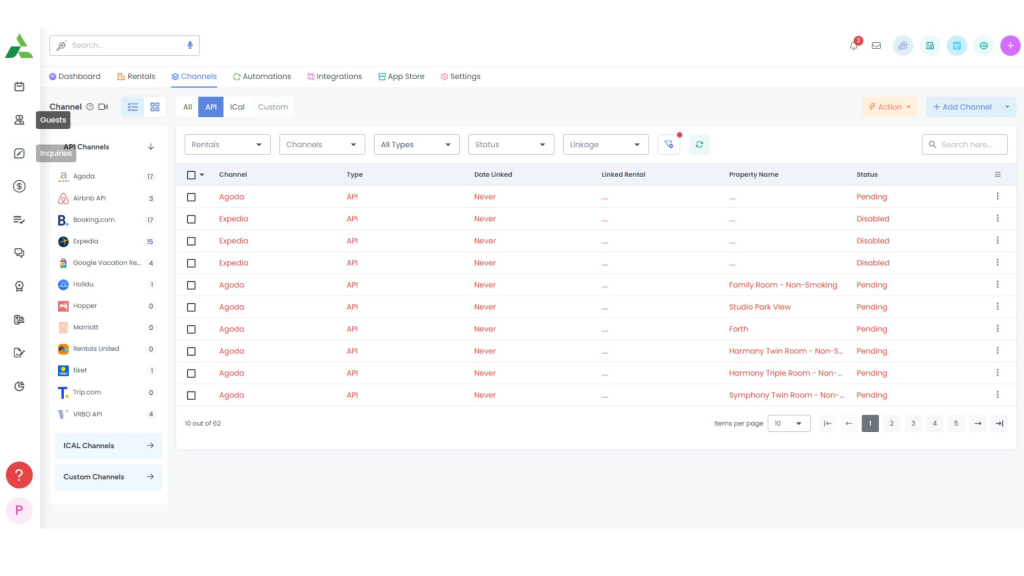
AdvanceCM gives hosts and property managers one place to manage pricing and channel updates across OTAs and direct bookings.
To prevent pricing errors, hosts and property managers need one source of truth for rates, fees, restrictions, and discounts. When updates move through one controlled workflow instead of separate dashboards, guests see a stable total, direct bookings convert with less friction, and ops teams spend less time cleaning up avoidable disputes.
Before
- Rates change in OTA extranets, the PMS, and the direct site separately.
- Discounts, fees, and stay rules drift out of sync
- Guests compare totals and question the booking.
After
- One rate source pushes updates across channels
- Pricing rules move together instead of by memory.
- Guests see one defensible total and book with more confidence.
Why Failing to Prevent Pricing Errors Kills Trust Fast
Most teams do not lose control because they never look at pricing. They lose control because the booking path has too many places where rates can split. A weekend promo goes live on one channel but not another. A cleaning fee changes on the direct site, but the OTA still shows the old total. A minimum-stay override updates late, and one channel syncs before the rest.
If you do not prevent pricing errors at the workflow level, guests end up spotting the problem before your team does. They do not care whether the gap came from a stale promotion, a lagging sync, or a fee setup issue. They only know they saw one number first and a different one later.
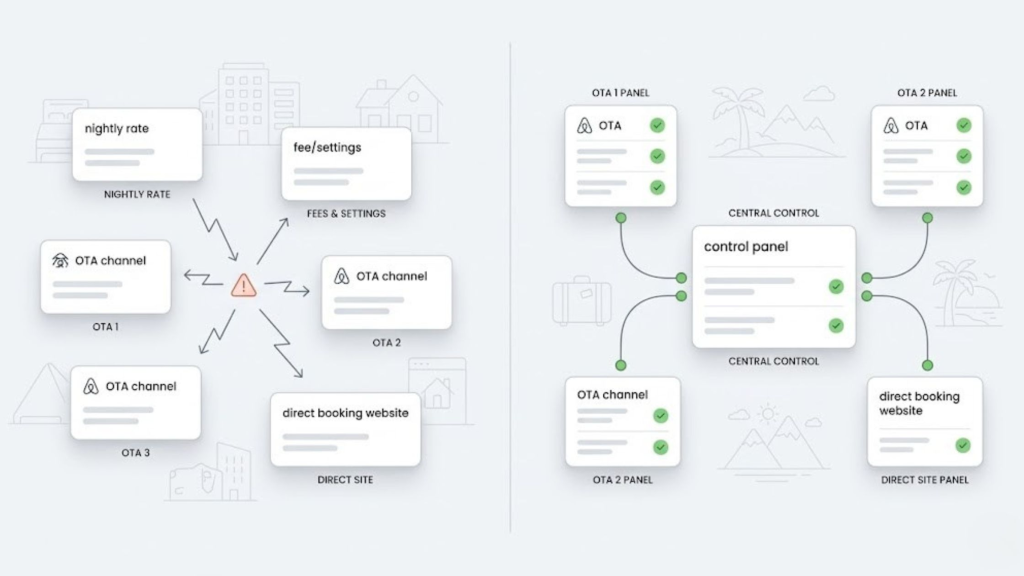
When guests see different totals across channels, trust drops before checkout.
That is why pricing consistency matters for conversion, not just operations. If a guest can take two screenshots and ask why your rate changed, your pricing workflow is doing visible damage. This older Tokeet post on what a booking channel manager does is useful background if your team still treats channel sync as a side task.
Clear guest-facing pricing also matters because rate mismatches can trigger the kind of trust problems regulators often associate with misleading pricing and checkout friction. The FTC’s guidance on pricing transparency is a useful reminder that visible consistency matters when guests compare totals.
Where Pricing Workflows Break First
The weak point is usually not one dramatic mistake. It is a stack of small misses that show up together at checkout. One person changes the base rate. Another applies a promotion. Someone else updates the direct site. Then a guest checks out before the team realizes those changes never landed the same way everywhere.
Hosts feel this when they are still touching multiple tools to manage one stay. PMs feel it when staff hand off pricing changes across shifts. Ops teams feel it when support can see the mismatch but cannot trace where the bad number started.
You don’t need new tools to start, just fix the edge cases first.
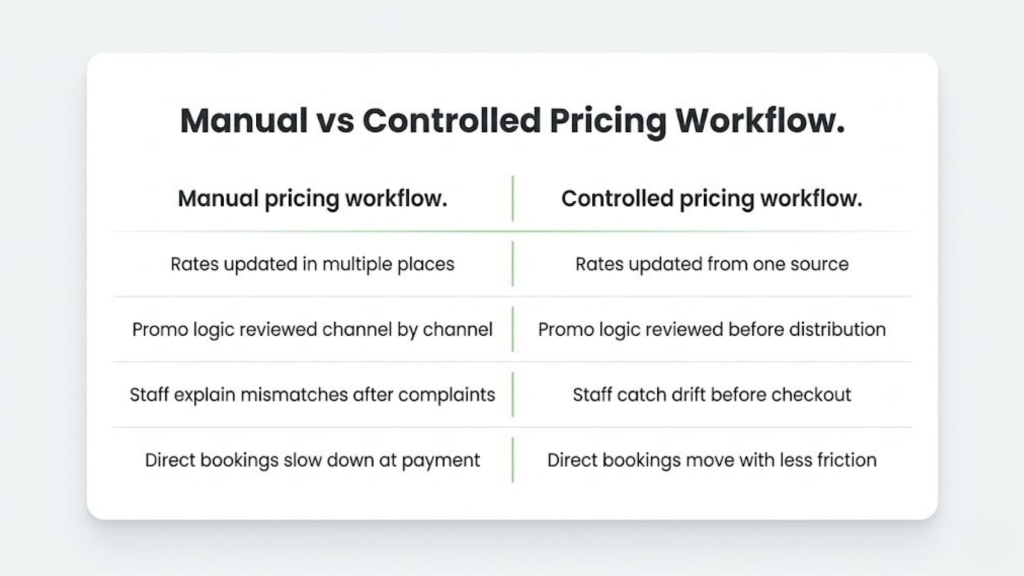
The fastest way to reduce friction is to decide who owns the final guest-facing total. If nobody owns that number from rate setup to checkout, the team is relying on hope. That is also why direct-booking growth stalls when the booking path feels unstable. This Tokeet article on why direct bookings matter fits here, because a guest will not trust your direct channel if the total looks less reliable than an OTA.
6 Steps to Prevent Pricing Errors Across OTAs and Direct Bookings
To prevent pricing errors, build one repeatable workflow your team can use on quiet weeks and messy ones.
- Choose one source of truth for pricing.
Decide where base rates, fees, discounts, restrictions, and overrides begin. If three team members were to give three different answers, your process is already too loose. - Map every place the guest can see a price.
Do not stop at the nightly rate. Include taxes, cleaning fees, length-of-stay discounts, coupon behavior, and the final checkout total on both OTAs and your direct site. - Standardize the rules before you distribute them.
A pricing engine helps only when the inputs are clean. If you use RateGenie to shape nightly pricing, make sure the floors, discounts, and stay rules are clear before that rate moves outward. - Push changes through a channel manager, not by memory.
This is where the workflow tightens. AdvanceCM consolidates rate distribution, channel connections, and availability updates into one operating layer, so a change does not depend on staff logging into multiple extranets after the fact. That matters most during weekend surges, promo launches, and last-minute overrides. - Audit the guest-facing total, not just the nightly price.
To prevent pricing errors, compare the full amount the guest approves at checkout. The nightly rate can look correct while taxes, fees, or discounts still create a mismatch that kills trust. - Run a parity check after every meaningful change.
Promotions, event pricing, seasonal shifts, and owner overrides all deserve a quick live test. To prevent pricing errors, check the booking path while the update is fresh, not after support receives the screenshot.
One place teams often get caught is in discount stacking. This Tokeet post on Booking.com dynamic pricing and surprise discounts is a good example of how rates can drift once channel rules and promotions start layering.
Want the shortest path to fewer mismatches? Start with a centralized channel manager setup before the next promo or peak date update.
How Preventing Pricing Errors Protects Direct Bookings
When you prevent pricing errors, you protect more than margin. You protect the booking moment. Guests do not judge your setup by intent. They judge it by what appears on screen. If the OTA rate, direct-site total, and final checkout number feel aligned, the booking feels safer to complete.
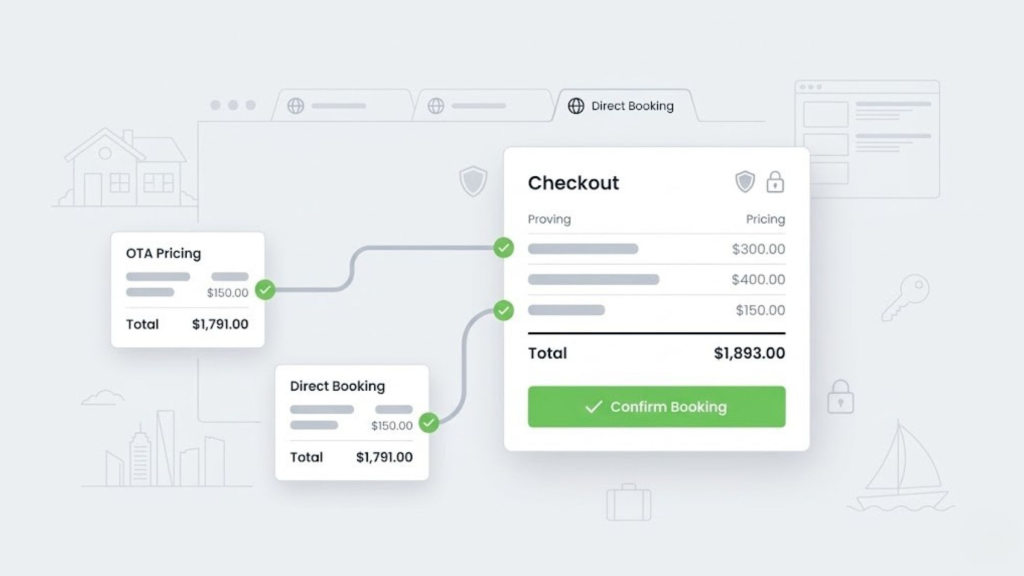
Aligned pricing helps direct bookings feel stable enough to complete.
That is why direct bookings benefit first when pricing becomes predictable. The guest stops second-guessing the total and starts moving forward. Support has fewer screenshots to compare, Ops has fewer manual fixes to make, and the booking flow feels stable instead of improvised.
That same stability also supports conversion. Search Engine Journal’s coverage of conversion optimization is a useful reminder that fewer friction points at key decision moments can help more visitors complete the path you want.
To prevent pricing errors this week, test one live property across your top OTA, your direct site, and any active promo path. Compare the nightly rate, fees, taxes, and final amount side by side. Then review who can change rates, where those edits happen, and how long each channel takes to reflect the update.
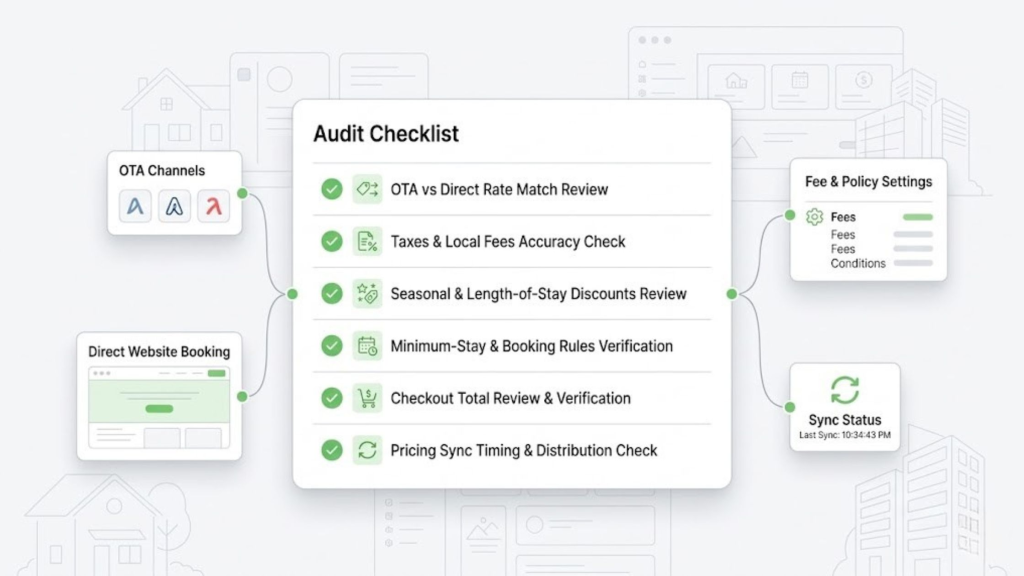
A quick pricing audit helps hosts catch OTA and direct-booking mismatches before guests do.
Conclusion
Pricing mistakes do not only leak revenue. They slow direct bookings at the exact moment the guest should feel most certain. When the total shifts between channels, trust drops before payment, and your team ends up explaining confusion instead of closing the sale.
To prevent pricing errors, narrow the workflow until one source controls the rate, one process controls distribution, and one guest-facing total holds across OTAs and direct bookings. That is how you protect direct bookings, reduce dispute pressure, and make your pricing feel stable enough to book.
If checkout mismatches keep showing up after promos, overrides, or OTA updates, see how the channel manager can keep rate distribution aligned before the next guest catches the gap.
FAQs
- What causes pricing errors in vacation rentals most often?
The usual cause is not one typo. It is a broken workflow where rates, discounts, fees, and restrictions are changed in different places by different people. - Can a channel manager prevent pricing errors on OTAs and direct bookings?
A channel manager can reduce the conditions that create drift by centralizing distribution. It works best when your rate rules are standardized before they are pushed out. - Why do guests leave when rates do not match?
A mismatch makes the booking feel unstable, even if the difference is small. Once that doubt appears at checkout, the guest starts comparing alternatives instead of finishing payment. - How often should hosts audit pricing across channels?
Run a quick parity check after any meaningful pricing change and keep one recurring weekly review. That catches the drift while it is still an ops issue instead of a guest complaint. - What is the difference between a pricing tool and a channel manager?
A pricing tool helps decide what rate you should charge. A channel manager controls how that rate, along with restrictions and availability, gets distributed across channels without manual re-entry.

Welcome to Tokeet’s Podcast — your trusted source for insights, trends, and strategies shaping the vacation rental industry. Each episode features expert interviews, data-driven analysis, and practical tips to help property managers grow their businesses, improve guest experiences, and stay ahead in a rapidly evolving market. Whether you’re new to short-term rentals or managing a large portfolio, tune in to stay informed and inspired.
Some days just don’t work for a guest arrival, whether it’s a holiday, a maintenance window, or a turnover day your team can’t cover. This episode walks through check-in and check-out restrictions, the most requested feature in AdvanceCM, now live in the Rentals module. You’ll hear how to block arrivals or departures for a date range, such as December 24 to 26, and how to allow check-ins only on the weekdays you choose. We also cover channel-specific rules, like keeping Airbnb to Friday and Saturday arrivals while direct bookings stay open through Sunday. Finally, we explain what to check before switching rules on, from existing reservations to sync time and visibility on booking sites.
Key Takeaways:
✅ Block check-ins or check-outs for any date range
✅ Limit arrivals to the weekdays you choose
✅ Set different rules for each booking channel
✅ Existing reservations stay unchanged
✅ More restrictions mean fewer guests can book, so review rules each season
Related Links:
Company: https://www.tokeet.com/Blogs: https://www.tokeet.com/blog/Blog: Check-in and Check-out Restrictions: How to Set Them in AdvanceCM 👉 https://blog.tokeet.com/check-in-and-check-out-restrictions/
This is a public episode. If you would like to discuss this with other subscribers or get access to bonus episodes, visit podcast.tokeet.com